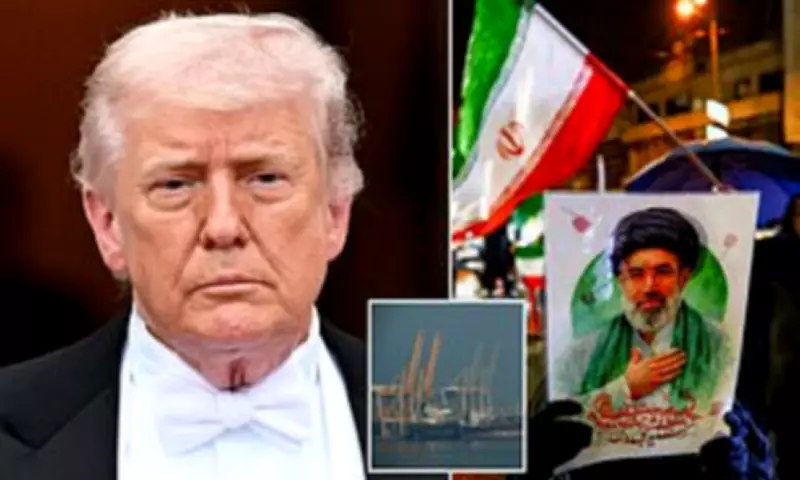
President Donald Trump is leaning toward maintaining the economic blockade of Iran and the Strait of Hormuz, betting that sustained pressure will compel Tehran to fully dismantle its nuclear program, according to reports.
Strategic Decision in the Situation Room
During a Monday meeting in the White House Situation Room, Trump favored extending the blockade over resuming airstrikes or abandoning negotiations entirely, the Wall Street Journal reported. Officials said the president views the blockade as the least risky option among those presented.
The economic measures have already devastated Iran's economy and hindered its ability to store oil, an official noted. White House spokesperson Anna Kelly stated, "The president will only accept a deal that protects the national security of our country." She added that Operation Epic Fury has achieved all military objectives and that the blockade gives the United States maximum leverage over the regime.

Stalled Peace Talks
Despite a ceasefire on April 7, peace talks have failed to produce a breakthrough. Planned negotiations with Vice President JD Vance over the weekend were canceled. Trump claimed on Truth Social that Iranian officials have admitted to being in a "State of Collapse" and are eager to reopen the Strait of Hormuz, though he believes they need to resolve their leadership situation first.
Gas prices remain elevated as the midterm elections approach, and Trump's poll numbers continue to decline. A source close to the president told Axios that "a frozen conflict is the worst thing for Trump politically and economically."
Internal Skepticism
Vice President JD Vance has raised concerns with Trump about Defense Secretary Pete Hegseth's handling of the war, particularly regarding depleted missile stockpiles. Two senior administration officials told The Atlantic that Vance questions the Pentagon's information and strategic planning.
Despite Hegseth's claims that Iran's military has been obliterated, U.S. intelligence indicates that roughly half of Iran's ballistic missile stockpiles and launch systems remain operational. Iran has also retained about 60% of its naval forces, including small speedboats used to seize oil tankers, and approximately two-thirds of its air force is still usable.
Divergent Demands
Trump's core demand is that Iran freeze its nuclear program for at least 20 years and surrender its entire enriched uranium stockpile. Iran, however, seeks control over the Strait of Hormuz and the removal of all U.S. sanctions. These conflicting positions make a deal extremely difficult to reach.