Trump Retreats from European Tariff Threats After Greenland 'Framework' Deal at Davos
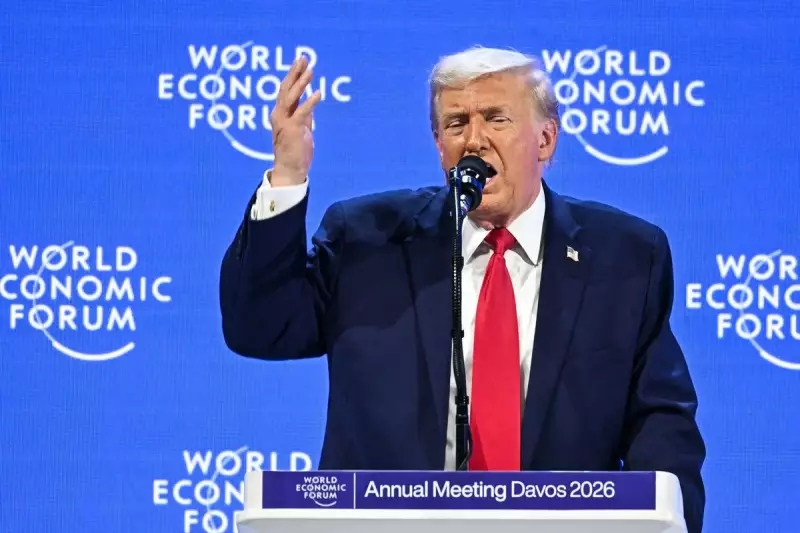
In a significant diplomatic shift, former US President Donald Trump has reversed his stance on imposing tariffs on a group of close European allies, following what he described as a "very productive" meeting with NATO Secretary General Mark Rutte at the World Economic Forum in Davos, Switzerland. The announcement came just hours after Trump delivered a fiery speech at the forum, where he lashed out at NATO and Europe while doubling down on his ambitions to secure Greenland.
The 'Framework of a Future Deal'
Writing on his Truth Social platform on Wednesday, Trump revealed that American and NATO representatives had "formed the framework of a future deal with respect to Greenland and, in fact, the entire Arctic Region" based on discussions held in a closed-door meeting. He emphasised that this solution, if finalised, would be "a great one for the United States of America, and all NATO Nations." Consequently, Trump stated he would not be imposing the tariffs that were scheduled to take effect on 1 February, marking a notable de-escalation in tensions.
International Reactions and Market Response
The decision has elicited mixed reactions from European leaders and sparked a positive response in financial markets. Denmark's Foreign Minister, Lars Lokke Rasmussen, stressed that the issue should be handled through private diplomacy rather than on social media, underscoring the importance of respecting the integrity and sovereignty of the Kingdom of Denmark and the right of the Greenlandic people to self-determination. Meanwhile, Ireland's deputy premier, Simon Harris, welcomed the withdrawal of tariff threats as a "significant development" that lends credibility to the EU's strategy, though he cautioned that much detail remains to emerge.

In the business sphere, Trump's change in posture triggered a stock market rally, with the S&P 500 index climbing by 1.2 per cent. This uptick contributed to a broader recovery following a sharp equities selloff, highlighting the economic relief felt by investors and businesses alike.
Political Commentary and Controversies
Political figures have weighed in on the development, with Liberal Democrat leader Sir Ed Davey describing Trump's change of heart as "a real relief for households and businesses." However, Davey also criticised the former president as a "fundamentally unreliable partner" prone to bullying tactics, urging for greater unity among European nations to counter such unpredictability. Adding to the controversy, White House Press Secretary Karoline Leavitt falsely claimed that Trump did not mix up Iceland and Greenland during his Davos speech, despite multiple instances where he used the wrong country's name.
Broader Implications and Future Outlook
The situation has prompted broader discussions on European defence and diplomacy. Spain's Foreign Minister, Jose Manuel Albares, has urged the EU to move towards creating a joint army as a deterrence measure, arguing that a collective effort would be more efficient than 27 separate national armies. Sweden's deputy prime minister, Ebba Busch, expressed caution, noting that "today's progress might be tomorrow's headache" and emphasising the long road ahead to rebuild trust between the EU and the US.
As the dust settles, NATO Secretary General Mark Rutte clarified in an interview with Fox News that the issue of whether Greenland remains with Denmark did not come up in his conversation with Trump, leaving some questions unanswered. The episode underscores the volatile nature of international relations under Trump's leadership and the ongoing challenges in balancing sovereignty, economic interests, and diplomatic stability in the Arctic region.