Trump Rejects Claims Israel Pressured US into Iran Military Action
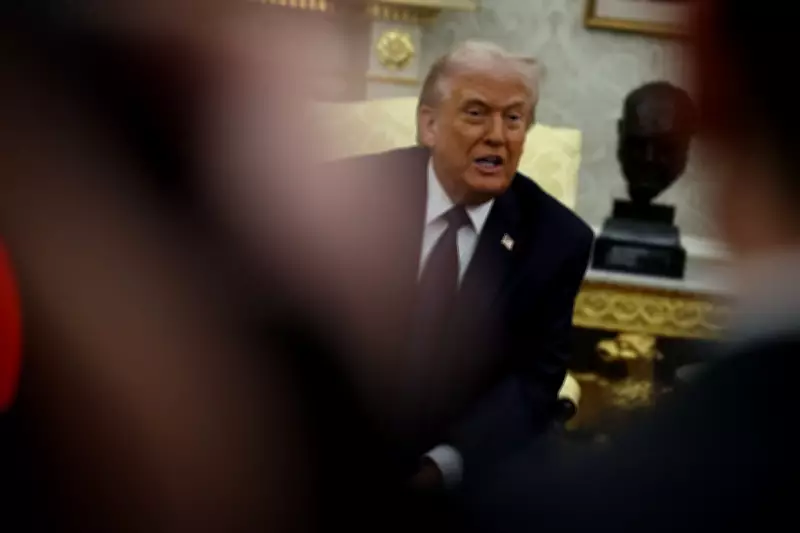
Donald Trump has firmly denied allegations that Israel forced the United States into launching strikes against Iran, as he attempts to counter a growing anti-Israeli backlash within Congress and among his Maga supporters. The US president made these statements on Tuesday, addressing suspicions that he was compelled to act due to Israeli decisions.
Trump's Defence and Rubio's Controversial Comments
When questioned by reporters about whether Israel had pushed him into military action, Trump responded, "No. I might have forced their hand." He elaborated, "We were having negotiations with these lunatics, and it was my opinion that they were going to attack first. They were going to attack. If we didn’t do it, they were going to attack first. I felt strongly about that."
This comes after Secretary of State Marco Rubio suggested that Saturday's strikes were pre-emptive, aimed at preventing Iranian retaliation against US interests following Israeli attacks. Rubio's remarks, made after a briefing with CIA director John Ratcliffe and General Dan Caine, have fueled bipartisan suspicions that Israel's interests, rather than those of the US, dictated the decision to engage in open warfare.

Democratic Outrage and Constitutional Concerns
Senate Democrats reacted with fury to Rubio's explanation. Mark Warner, the ranking Democrat on the Senate intelligence committee, argued, "There was no imminent threat to the United States of America by the Iranians. There was a threat to Israel. If we equate a threat to Israel as the equivalent of an imminent threat to the United States, then we are in uncharted territory."
Jeff Merkley, a Democrat from Oregon, echoed these concerns in a Senate speech, questioning, "Are we now such an enfeebled nation that Israel decides when we go to war?" Even Chuck Schumer, a staunch supporter of Israel, called the explanations "completely and totally insufficient," noting they raised more questions than answers.
Broader Implications and Public Perception
The controversy is altering perceptions of the US-Israel relationship, building on criticism from the Gaza war. Opinion polls show a sharp drop in American support following Israel's military offensive in Gaza, which has resulted in significant casualties. Trump's fluid reasoning for the strikes, including the killing of Iran's supreme leader Ayatollah Ali Khamenei, and mixed signals on deploying US forces, have further inflamed domestic criticism.
Prominent social media influencers and conservative voices have challenged the justification. Mike Cernovich described Rubio's comments as a "record scratch moment," while Matt Walsh of the Daily Wire posted, "So he’s flat out telling us that we’re in a war with Iran because Israel forced our hand. This is basically the worst possible thing he could have said." Steve Bannon questioned the lack of coordination, and Megyn Kelly suggested the US casualties may have died for foreign interests rather than American ones.
Israeli Prime Minister Benjamin Netanyahu's recent visits to Trump to advocate for action against Iran have compounded beliefs that the attack serves Israeli interests. Netanyahu stated, "This coalition of forces allows us to do what I have yearned to do for 40 years: smite the terror regime hip and thigh." This has led to ongoing debates about the alignment of US foreign policy with Trump's "America first" goals.