Keir Starmer is facing significant diplomatic pressure as the Special Relationship between the United Kingdom and the United States shows signs of strain amid open clashes over the Iran war. US President Donald Trump vented his frustration with the Prime Minister once again last night, publicly describing the UK's reluctance to get involved militarily in the Middle East as 'terrible'. This criticism comes at a sensitive time for international relations and defence coordination.
Contested Claims Over Aircraft Carriers
In a surprising assertion, President Trump claimed that Sir Keir had offered to send two Royal Navy aircraft carriers to the region following the conflict. However, Downing Street has firmly denied this account, stating no such offer was made. The reality of the UK's naval capabilities complicates the situation further. Currently, only one of Britain's two aircraft carriers is operational, and that vessel, HMS Prince of Wales, is scheduled for deployment to the Arctic region rather than the Middle East.
European Powers Reject Trump's Call
The verbal barbs from the US president coincided with European powers, including France and Germany, batting away Mr Trump's call to send warships to help reopen the crucial Strait of Hormuz. This strategic waterway typically handles around twenty percent of global oil supplies, but Iran has managed to keep it effectively shut through sustained missile and drone strikes. The collective European reluctance highlights a broader transatlantic divide on military engagement in the region.
Sir Keir insisted yesterday that the United Kingdom would not allow itself to be dragged into what he termed a 'wider war' following attacks launched by the US and Israel. This position aligns with France and Germany, who have also dismissed the idea of taking an active combat role while conflict continues to rage. The Prime Minister emphasised maintaining focus on Ukraine's campaign against the Russian invasion, a priority he will reinforce today when hosting Ukrainian President Volodymyr Zelensky at Downing Street.
Trump's Detailed Critique and Contradictions
Mr Trump's annoyance boiled over in detailed remarks last night, presenting Sir Keir with another major diplomatic headache. The president stated, 'I was very surprised with the United Kingdom. Two weeks ago I said, 'Why don't you send some ships over?' And he [Starmer] really didn't want to do it.' He added, 'You're our oldest ally, and we spend a lot of money on Nato and all these things to protect you. I mean, we're protecting them. I think it is terrible.'
Seemingly contradicting himself, Mr Trump later noted that he approached Britain, France, and other allies 'not because we need them, but because I want to find out how they react'. This statement suggests the request may have been as much a test of alliance solidarity as a practical military necessity.
Renewed Oval Office Criticism
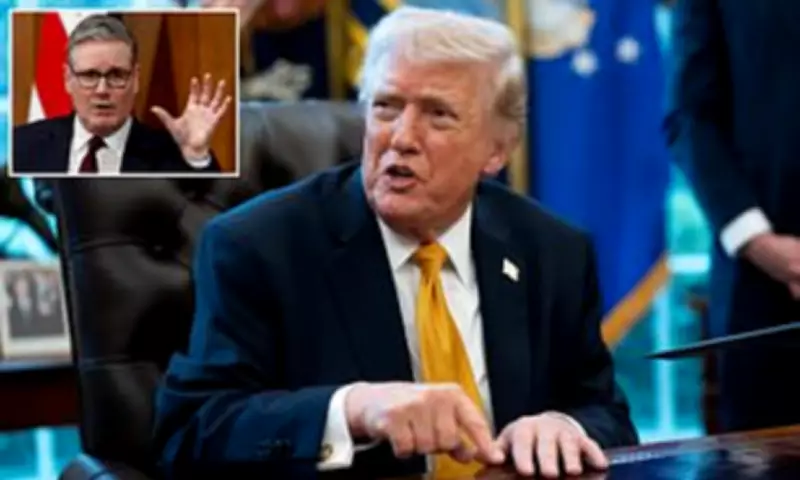
Last night in the Oval Office, Mr Trump renewed his criticism, saying, 'The UK was sort of considered the Rolls-Royce of allies, right? I said [to Sir Keir] it would be really helpful if you'd send over a couple of ships, and if you have some minesweepers.' He continued, 'The Prime Minister is a nice man. He says 'Well, I'd like to ask my team.' I said 'You're the Prime Minister, you can make a decision'.'
Even if Britain wanted to comply with such a request, practical constraints exist. The two Royal Navy destroyers that could potentially be deployed, HMS Dauntless and HMS Duncan, are currently being prepared for a crucial NATO exercise in the High North. There, they are expected to escort the aircraft carrier HMS Prince of Wales, underscoring the competing demands on limited UK naval resources. This situation leaves the Special Relationship under visible strain as geopolitical tensions persist.