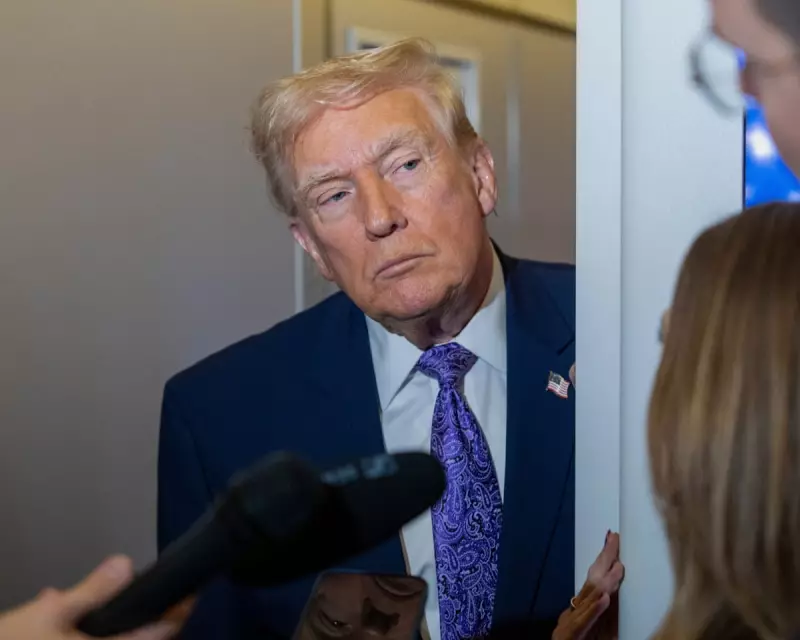
In a surprising revelation aboard Air Force One, President Donald Trump confirmed he recently held a telephone conversation with Venezuelan leader Nicolás Maduro, even as his administration intensifies military pressure on the South American nation.
A Conversation Shrouded in Mystery
When questioned by reporters during his Sunday flight, the US president acknowledged the discussion had taken place but remained deliberately vague about its content. "I don't want to comment on it. The answer is yes," Trump stated when directly asked if he had spoken with Maduro.
This confirmation follows an initial report by The New York Times, which revealed earlier this month that the two leaders had discussed a potential meeting in the United States. Characterising the exchange, Trump remarked, "I wouldn't say it went well or badly. It was a phone call," offering little insight into the dialogue's substance or outcomes.
Contradictory Signals and Military Buildup
The disclosure of diplomatic contact comes amidst increasingly aggressive rhetoric and actions from the Trump administration toward Venezuela. Just one day before confirming the call, Trump declared that airspace above and surrounding Venezuela should be considered "closed in its entirety," a statement that generated significant anxiety and confusion in Caracas.
When pressed on whether this announcement indicated imminent military strikes, Trump advised observers "Don't read anything into it," without providing clarification about the order's purpose or implementation.
This diplomatic paradox unfolds against a backdrop of substantial military escalation. According to Reuters reports, the United States is actively considering options including an attempt to overthrow Maduro, with US military forces positioned for a new operational phase following a massive Caribbean buildup and nearly three months of strikes targeting suspected drug vessels off Venezuela's coast.
International Concerns and Human Rights Questions
The Trump administration justifies its aggressive posture by alleging Maduro's involvement in supplying illegal drugs that have killed Americans, accusations the Venezuelan president vehemently denies. However, the military campaign has drawn sharp criticism from human rights organisations, which condemn the strikes as illegal extrajudicial killings of civilians.
Some US allies have expressed growing concerns that Washington may be violating international law through these operations. Defense Secretary Pete Hegseth has defended the strikes as lawful while acknowledging they are intended to be "lethal" in nature.
Trump further escalated tensions by telling military service members last week that the US would "very soon" begin land operations to combat suspected Venezuelan drug traffickers, signalling a potential expansion of military engagement.
Meanwhile, Venezuelan officials have maintained silence regarding the reported conversation between their president and Trump. When questioned about the call on Sunday, Jorge Rodríguez, head of Venezuela's national assembly, declined to address the matter directly, instead announcing a lawmaker investigation into US boat strikes in the Caribbean.
The situation presents a complex picture of a US administration simultaneously pursuing backchannel diplomacy while publicly maintaining a posture of military confrontation, leaving observers uncertain about Washington's ultimate objectives regarding Venezuela's political future.