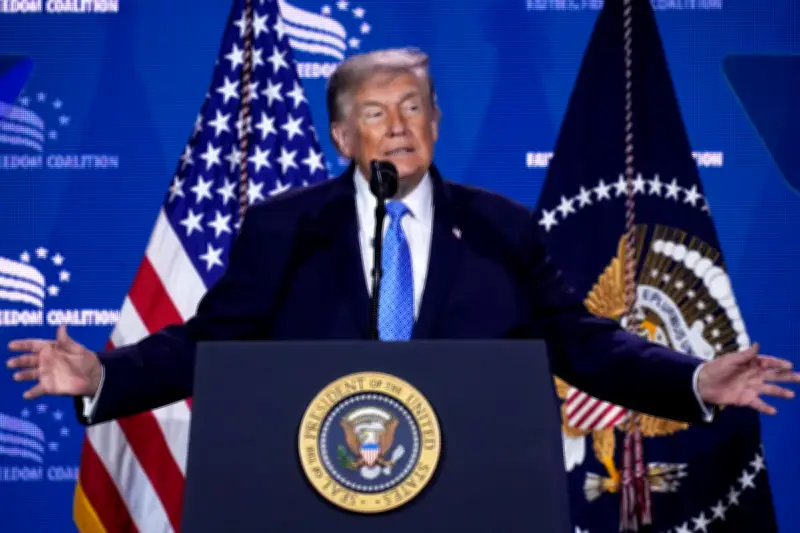
Donald Trump has abandoned his proposed 20% toll on shipping transiting the Strait of Hormuz, reversing course less than 24 hours after announcing the measure. The U-turn follows strong opposition from the British government, which had branded the levy as economic extortion.
UK opposition forces policy shift
Outgoing Prime Minister Sir Keir Starmer had called for unrestricted access through the strait, while Foreign Secretary Yvette Cooper told the Commons Foreign Affairs Committee: "We continue to oppose tolls and charges. ... We could not end up with tolls and with a system on the Strait of Hormuz that would undermine the freedom of navigation and the law of the sea." The Liberal Democrats were more strident, calling the proposed fee "state-backed highway robbery" and "a flagrant violation of international law."
New plan: trade deals instead of tolls
Writing on Truth Social, Trump said he had decided to replace the "United States Reimbursement Fee" with "Trade and Investment Deals that the various Gulf States will be making into the United States." He claimed these investments would be "massive" and create "additional millions of High Paying American Jobs." Speaking later at the White House, Trump said: "It was never fair to me that we would be guarding the strait when we basically don't need the oil at all, and it wasn't important for us, but it was important for allies." He revealed that after announcing the toll plan, he had been "called by different people, different countries" who offered to invest billions instead.
Strait remains open except to Iran
Trump confirmed the Gulf channel is open to all vessels except those from Iran, "because of their lying, violent, malicious leadership." The US is reintroducing a blockade of Iranian ports after renewed clashes, amid an escalating struggle over the strait. Iran claims it controls the waterway, a position disputed by the US and other countries citing international law on freedom of navigation.
International pressure mounts
Only last month, US Secretary of State Marco Rubio stressed the US was against Iran charging fees for ships using the international waterway. At the recent G7 summit in France, Trump joined other world leaders, including Starmer, to confirm that "the right of transit passage without restrictions or tolls is the bedrock of international trade." Cooper blamed Iran for escalating pressure by attacking commercial shipping in Omani waters, saying the move "totally undermines the law of the sea."
Background on the strait dispute
The vital sea route had been open before the US-Israel conflict launched on February 28. Ending Tehran's stranglehold on the route—which disrupted global oil and gas supplies and drove up fuel and food prices—had been a key demand in previous negotiations. An initial US-Iran deal provided for safe, toll-free passage for only 60 days, pending a final agreement on Tehran's nuclear plans. The pact left it to Iran and Oman, with other Gulf states, to "define the future administration and maritime services in the Strait of Hormuz." In the meantime, Iran has continued to exert leverage, demanding ships seek permission to transit and raising the prospect of future charges.