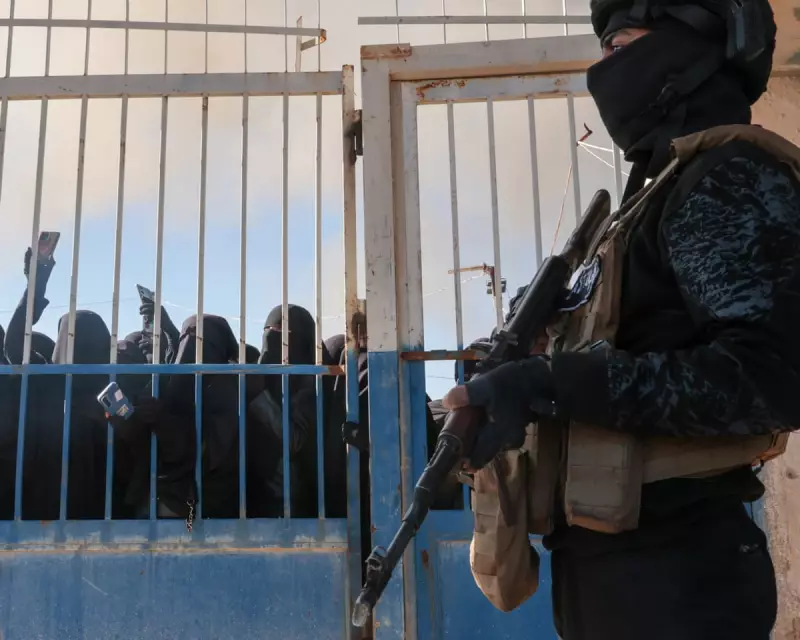
Syrian security forces have taken control of the notorious al-Hawl camp, which previously housed over 20,000 women, following the withdrawal of Kurdish forces earlier this week. This significant transition has sparked widespread alarm among international observers, who fear it could create a security vacuum exploitable by Islamic State militants seeking to regroup.
Western Concerns Over Potential ISIS Resurgence
Officials from Western nations have voiced serious apprehension regarding the rapidly evolving security landscape in north-eastern Syria. The sudden departure of Kurdish forces, who had long served as a primary bulwark against ISIS, has created what many describe as a dangerously unstable environment. There are genuine fears that this power shift could enable dormant extremist networks to reactivate and launch new operations.
Prisoner Transfers and Security Handovers
The United States military has confirmed the transfer of approximately 150 ISIS fighters from a frontline prison in Hasakah province to facilities across the border in Iraq. American authorities have indicated willingness to relocate up to 7,000 detainees to prevent what they warn could become a catastrophic security breach. The prison in question, known as Panorama, housed male militants from numerous countries, including a small number from the United Kingdom.

Syrian government forces achieved rapid advances in recent days, temporarily halted by a fragile ceasefire agreement on Tuesday. This offensive resulted in the chaotic transfer of multiple detention facilities holding former ISIS fighters, alongside the sprawling al-Hawl camp which accommodates over 23,000 women and children associated with the extremist group.
Camp Conditions and Humanitarian Worries
Humanitarian organizations providing essential services to al-Hawl camp report being unable to access the facility since Sunday, raising concerns about deteriorating conditions. The camp, situated in harsh desert terrain, requires continuous supplies of food, water, and heating materials. Aid workers worry that the security transition could further destabilize an already precarious situation for the detainees.
Conflicting reports have emerged regarding the movement of women held at al-Hawl, with some indications that at least a portion may have departed following the Kurdish withdrawal. Meanwhile, other high-profile female detainees, including Shamima Begum, are believed to remain in the Kurdish-controlled al-Roj camp in Syria's far north-east.
Prison Breaks and Escalating Instability
Security incidents have already occurred during this transitional period. An estimated 120 ISIS militants escaped from Shaddadi prison on Monday after Syrian government forces seized control from Kurdish fighters in violent clashes. Syrian authorities claim to have recaptured 81 escapees, but the incident underscores the fragility of the security situation.
According to human rights organization Reprieve, approximately 55 individuals with connections to the United Kingdom, either through nationality or claims to nationality, remain detained in north-east Syria. Many, like Begum, have had their British citizenship formally revoked by UK authorities.
Analyst Perspectives on the Evolving Threat
Nanar Hawach, a Syria expert and analyst with Crisis Group, warns that the current danger may not manifest as a reconstituted caliphate but rather as "a dispersed insurgency rebuilding in the cracks." Hawach notes that prison breaks "may have released experienced operatives into a contested security environment" between Syrian government and Kurdish forces.
The analyst further observes that while the new Syrian government under President Ahmed al-Sharaa "clearly wants to be seen as a counter-terrorism partner," effectively securing ISIS detention facilities, managing camps like al-Hawl, and suppressing sleeper cells "requires resources, discipline, and institutional capacity that the Syrian government is still building."

Geopolitical Shifts and American Policy Changes
The United States has signaled a significant policy shift, effectively abandoning its previous support for the Kurdish-led Syrian Democratic Forces (SDF). Tom Barrack, the US special envoy for Syria, stated that "the original purpose of the SDF as the primary anti-ISIS force on the ground has largely expired," indicating Washington now views the Damascus government as its primary partner in containing the extremist threat.
This represents a dramatic reversal, given that the SDF, with Kurdish fighters as its core component, served as ground troops during the territorial defeat of ISIS in 2019. Following this victory, thousands of male militants were imprisoned while women and children were relocated to camps, where many have remained for years with only gradual repatriation occurring.
Historical Context and Current Uncertainties
The SDF maintained control as the de facto government in north-eastern Syria during the final years of the al-Assad regime. However, when Assad was ousted in December 2024 by al-Sharaa's Hay'at Tahrir al-Sham (HTS) movement, it created profound uncertainty. The SDF has shown reluctance to fully integrate into the new Syrian political structure, contributing to the current tensions.
Though HTS originated as an offshoot of al-Qaeda, it severed formal ties with that organization in 2016 and has historically opposed ISIS. Before launching its offensive on Damascus, al-Sharaa emphasized that HTS had evolved beyond its extremist origins, though sectarian violence targeting Alawite, Druze, and Kurdish minorities has persisted.
Military Developments and Ceasefire Negotiations
A lightning offensive by Syrian government forces beginning over the weekend resulted in rapid territorial gains from the SDF. Government troops captured the symbolic city of Raqqa on Sunday, with the SDF agreeing to hand over control of Raqqa and Deir ez-Zor provinces as part of a ceasefire arrangement. This agreement collapsed almost immediately, enabling further government advances.
President al-Sharaa agreed to a fresh ceasefire on Tuesday, one day after speaking with former US President Donald Trump. Trump stated he had been "trying to protect the Kurds," though it remains unclear whether the SDF will accept al-Sharaa's demands for closer integration with Damascus or risk renewed hostilities.
SDF leader Mazloum Abdi has been given four days from Tuesday to consult Kurdish leadership regarding the Syrian government's integration demands, setting the stage for potentially decisive negotiations that will shape Syria's security landscape for years to come.