
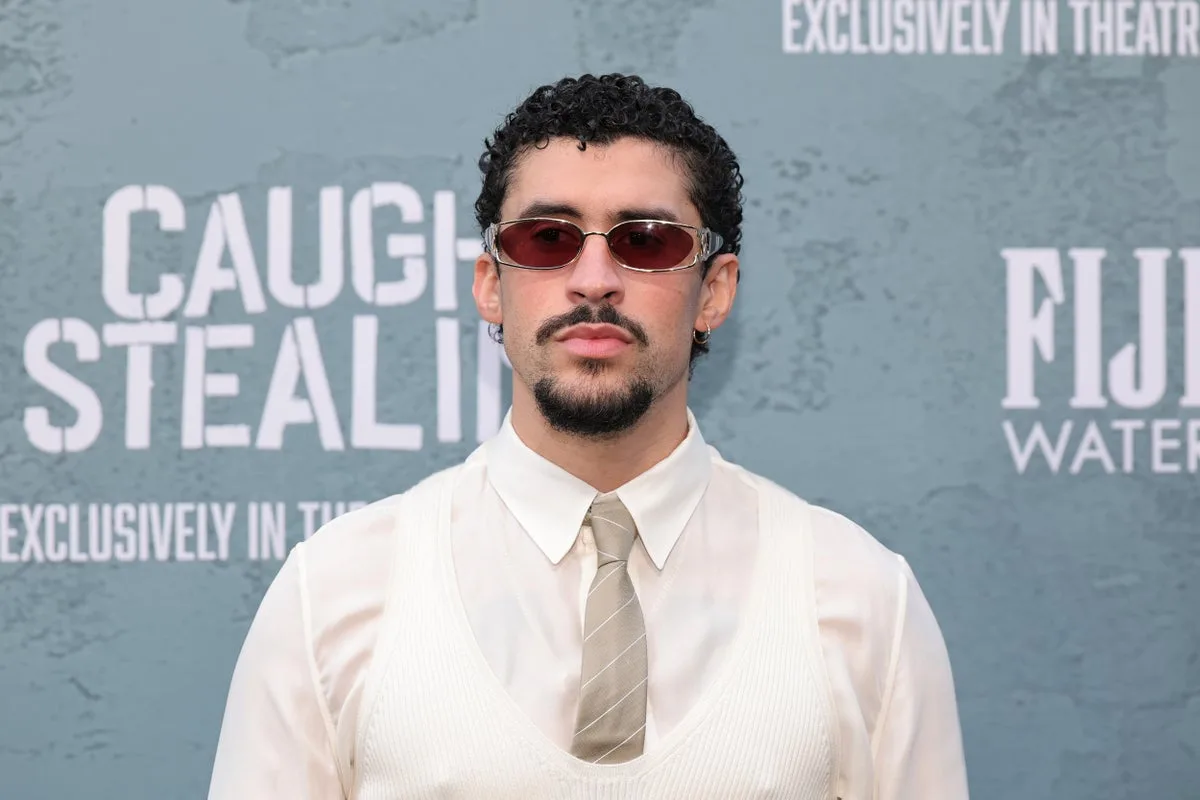
Super Bowl 60 is set to be far from a political escape, with the National Football League (NFL) facing mounting pressure over immigration enforcement and its choice of a politically outspoken halftime performer. As the Seattle Seahawks prepare to face the New England Patriots at Levi's Stadium in the San Francisco Bay Area, a petition signed by over 184,000 people is demanding the league denounce any potential presence of Immigration and Customs Enforcement (ICE) at the event. The progressive group MoveOn plans to deliver this petition to the NFL’s New York City headquarters on Tuesday.
Anticipation is also building around how Bad Bunny, the Spanish-speaking headliner for the halftime show, will address the current political climate. The artist has previously criticised President Donald Trump on various issues, from his hurricane response in Puerto Rico to his treatment of immigrants. He recently blasted ICE while accepting an award at the Grammys, and his latest tour notably bypassed the continental US due to concerns that his fans could be targeted by immigration agents. President Trump has indicated he will not attend this year’s game, unlike last year, and has dismissed Bad Bunny as a 'terrible choice'.
A Republican senator has dubbed it 'the woke bowl,' while a prominent conservative group is planning an alternative show in an attempt to divert attention from the main event. The Super Bowl remains one of the few cultural touchstones watched by millions globally, and its halftime show is no stranger to controversy, famously including Janet Jackson’s 2004 performance. However, this year’s event presents a unique blend of sports, entertainment, politics, and protest. It unfolds at a particularly tense moment for the US, just two weeks after the killing of Alex Pretti by federal agents in Minneapolis reignited a national debate over the Trump administration’s hard-line law enforcement tactics.
'The Super Bowl is supposed to be an escape, right? We’re supposed to go there to not have to talk about the serious things of this country,' said Tiki Barber, a former New York Giants player who participated in the Super Bowl in 2001 and has since attended as a commentator. 'I hope it doesn’t devolve, because if it does, then I think we’re really losing touch with what’s important in our society.'
Bad Bunny, born Benito Antonio Martínez Ocasio in Puerto Rico, has propelled Latino music into the mainstream and achieved global fame with songs predominantly in Spanish – a fact that often irks his conservative detractors. The 31-year-old has embraced the controversy, joking about the halftime show during his hosting stint on 'Saturday Night Live' in October, stating, 'everybody is happy about it — even Fox News.' He then delivered a segment in Spanish, expressing Latino pride, concluding in English: 'If you didn’t understand what I just said, you have four months to learn!' Those who follow him closely doubt he will temper his stance now. 'He has made it very clear what he stands for,' said Vanessa Díaz, a professor at Loyola Marymount University and co-author of 'P FKN R: How Bad Bunny Became the Global Voice of Puerto Rican Resistance.' 'So I can’t imagine that this would all go away with the Super Bowl.'
The halftime show is a collaboration between the NFL, Roc Nation, and Apple Music, with Roc Nation curating performers and Apple Music distributing the performance, while the NFL retains ultimate control over the stage, broadcast, and branding. The NFL, which is actively expanding its global appeal, including into Latin America, stated it never considered removing Bad Bunny despite criticism from President Trump and some of his supporters. NFL Commissioner Roger Goodell described the singer on Monday as 'one of the great artists in the world,' and someone who understands the power of the Super Bowl performance 'to unite people and to be able to bring people together.' He added: 'I think artists in the past have done that. I think Bad Bunny understands that. And I think you'll have a great performance.'
An October poll from Quinnipiac University indicated that about half of Americans approved of Bad Bunny as the halftime performer, though with significant partisan and racial divides: three-quarters of Democrats backed the choice compared to just 16 per cent of Republicans, and approximately 60 per cent of Black and Hispanic adults approved, versus 41 per cent of white adults.




