
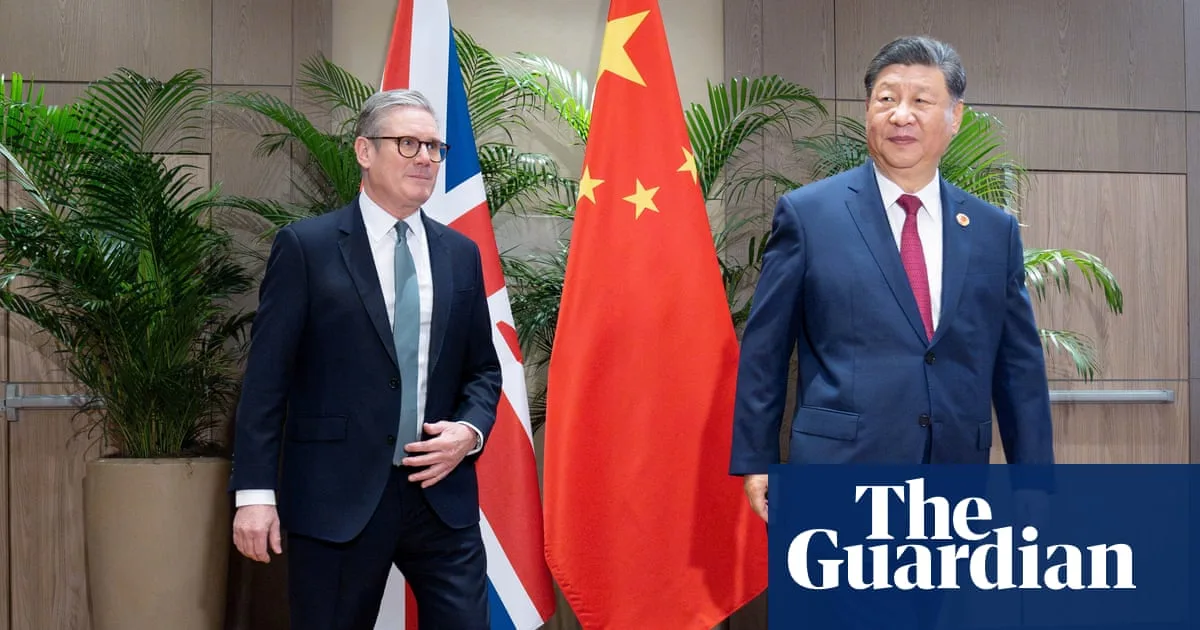
Keir Starmer has travelled to China vowing to bring “stability and clarity” to the UK’s approach to Beijing, marking the first visit by a British prime minister in eight years. But a series of contentious issues threatens to overshadow his bid to improve relations with the economic powerhouse.
Among the most sensitive is the case of Jimmy Lai, a British citizen jailed in Hong Kong on national security offences that the UK sees as politically motivated. Foreign Secretary Yvette Cooper has called for his release and summoned the Chinese ambassador after his conviction. Starmer is under pressure to secure Lai’s release and may also raise the fate of the Uyghurs, a persecuted Muslim minority subjected to forced labour programmes.
Taiwan also looms over the talks. President Xi Jinping has intensified military intimidation towards the self-governing island and has not ruled out the use of force to achieve unification. The UK does not recognise Taiwan as a state, and Starmer is likely to tread carefully to avoid provoking Beijing on the issue.
Ahead of the visit, the UK approved a controversial new Chinese mega-embassy near the Tower of London, a decision delayed for years. MPs had opposed it over espionage risks, but spy chiefs assured ministers these could be managed. The approval may give London leverage in seeking a reciprocal decision for its own crumbling embassy in Beijing.
Broader concerns about Chinese espionage and harassment of dissidents remain. MI5 recently issued an alert after an attempt to recruit parliamentarians via LinkedIn, and China has sanctioned several UK MPs and peers. Downing Street insists Starmer is “clear-eyed” about the threat and will not flinch from raising difficult issues, including Russia’s war in Ukraine, where China has supplied Moscow with support while claiming neutrality.




