
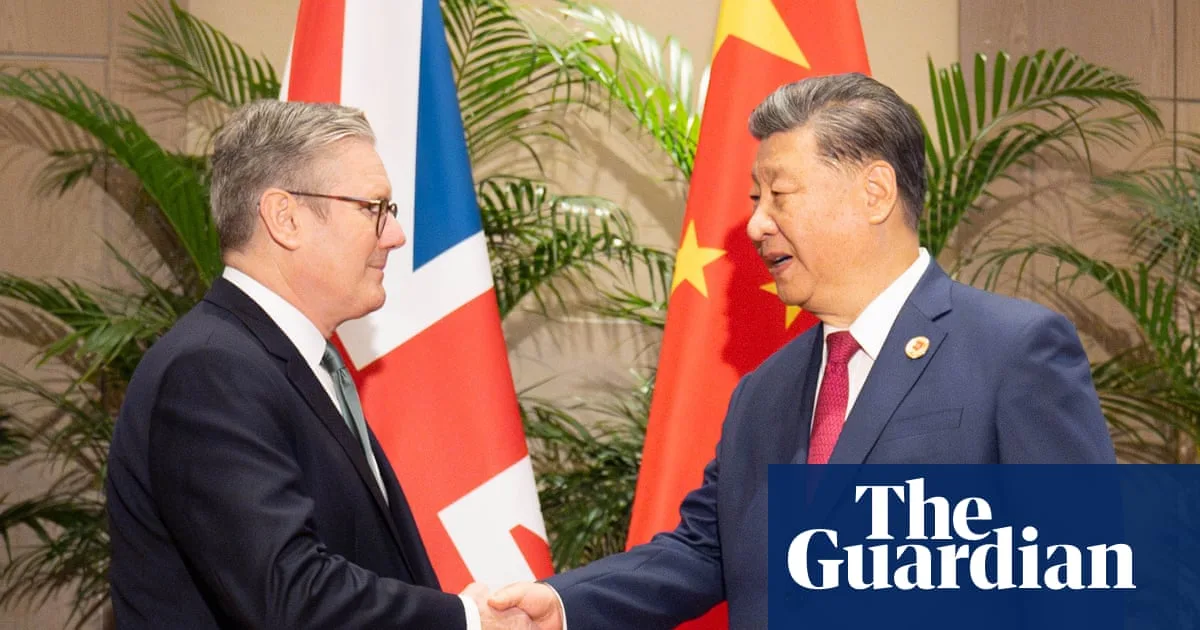
Prime Minister Sir Keir Starmer has insisted the UK will remain 'clear-eyed and realistic' about the national security threat posed by China as he embarks on a three-day visit to Beijing, the first by a British leader in eight years. Speaking before his departure, Starmer promised 'stability and clarity' in relations with the economic powerhouse, criticising what he described as years of 'inconsistency' under the previous Conservative government.
The trip comes amid tensions with the US over Donald Trump’s threats and his criticism of the Chagos Islands deal, but Downing Street said the prime minister would act in the UK's national interest. Starmer is scheduled to meet President Xi Jinping and Premier Li Qiang on Thursday for talks covering trade, security, and human rights. However, the visit has drawn sharp criticism from opposition politicians, who argue that China remains a serious security threat.
Shadow Foreign Secretary Priti Patel accused Starmer of lacking backbone, pointing to his decision to approve a new mega-embassy in London and the Chagos Islands agreement, which she claimed handed territory to a Chinese ally. 'Britain cannot afford for him to make any more concessions,' she said. Conservatives have questioned why Starmer would travel to Beijing while China is accused of recruiting informants in parliament, harassing Hong Kong activists in the UK, and engaging in cyber-attacks.
Downing Street defended the engagement, stating that 'sticking our heads in the sand and refusing to engage would be a staggering dereliction of duty.' A No 10 source noted that US President Donald Trump met Xi in October and planned to visit China in April, while French and German leaders have made multiple visits since 2018. Starmer argued that China, as the world's second-largest economy and the UK's third-largest trading partner, supports 370,000 British jobs and cannot be ignored.
During the visit to Beijing and Shanghai, Starmer will be accompanied by a delegation of around 60 businesses and cultural organisations, including HSBC, GSK, and Jaguar Land Rover. Business Secretary Peter Kyle said there had been 'a lack of serious engagement' for a decade and expressed hope for flourishing trade. The prime minister stressed that engagement does not mean turning a blind eye to challenges, and he will raise areas of disagreement, including human rights abuses.




