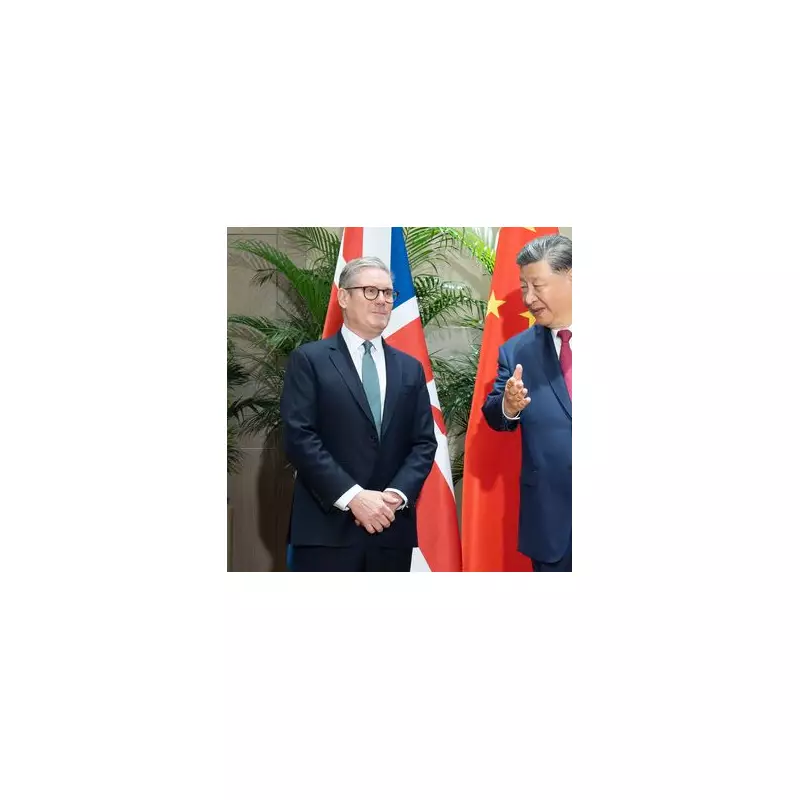
Starmer's Diplomatic Mission to China: A Delicate Balancing Act
Prime Minister Keir Starmer has embarked on a historic four-day visit to China, marking the first trip by a British leader in eight years as he prepares for crucial talks with President Xi Jinping in Beijing. The journey represents a significant diplomatic effort to mend relations that deteriorated under previous Conservative administrations, with Mr Starmer facing mounting pressure to address human rights concerns while simultaneously seeking to boost economic ties with the world's second-largest economy.
"Issues That Need to Be Raised"
Speaking to journalists upon arrival in Beijing, the Prime Minister adopted a cautious yet firm stance, stating he would raise "issues that need to be raised" during his meeting with the Chinese premier. While refusing to be drawn on specific topics beforehand, Mr Starmer emphasised that engagement with China allows for discussion of disagreements alongside progress on shared interests. "Part of the reason for engaging with China is so that issues where we disagree can be discussed, and the issues where we agree can be progressed," he explained, highlighting the delicate diplomatic tightrope he must walk.
The Prime Minister faces particular pressure regarding several sensitive cases, including that of Jimmy Lai, the British national and pro-democracy activist facing life imprisonment in Hong Kong. Additionally, campaigners are urging him to address the persecution of Uyghur Muslims and the network of so-called "re-education camps" in Xinjiang province. When questioned specifically about Mr Lai, Mr Starmer maintained his position of addressing concerns directly in meetings rather than through media speculation.

Human Rights Versus Economic Interests
Human rights organisations have issued stark warnings ahead of the visit, with Yasmine Ahmed, UK Director of Human Rights Watch, urging the Prime Minister not to "abandon principle in pursuit of profit." She argued that failing to address human rights concerns would not only weaken Britain's international standing but could leave the UK vulnerable to future economic pressure. "Having guardrails in place isn't only the right thing to do, it is in Britain's long term economic and security interests," Ms Ahmed stated, reflecting the complex interplay between diplomatic principles and practical economic considerations.
The visit comes at a critical juncture for UK-China relations, which have experienced significant strain in recent years. Mr Starmer's mission represents an attempt to reset this relationship while navigating the competing demands of security concerns, human rights advocacy, and the economic imperative of strengthening trade and investment links with a major global power.
Security Concerns and "Burner" Precautions
Security considerations have loomed large over the trip, with reports suggesting officials have switched to burner devices for communications during the visit. The Prime Minister directly addressed concerns about Chinese espionage, stating there was "no evidence" his phone had been hacked following reports that state-sponsored hackers targeted phones of close aides to three former Conservative prime ministers between 2021 and 2024.
"We've got robust schemes, security measures in place as you'd expect," Mr Starmer told journalists en route to China. The security precautions have attracted political commentary, with former Security Minister Tom Tugendhat joking on social media that the British delegation had taken a "burner plane" to China to protect against espionage threats. He suggested the government jet remained in the UK to avoid potential bugging, with a chartered aircraft used instead - a practice previously employed for large business delegations accompanying the Prime Minister on international visits.
This high-stakes diplomatic mission represents one of Mr Starmer's most significant foreign policy challenges since taking office, testing his ability to balance principle with pragmatism on the world stage. The outcome of his discussions with President Xi Jinping could shape UK-China relations for years to come, with implications for trade, security, and Britain's position on global human rights issues.