Keir Starmer's Cautious China Gamble: A Diplomatic Balancing Act in Beijing
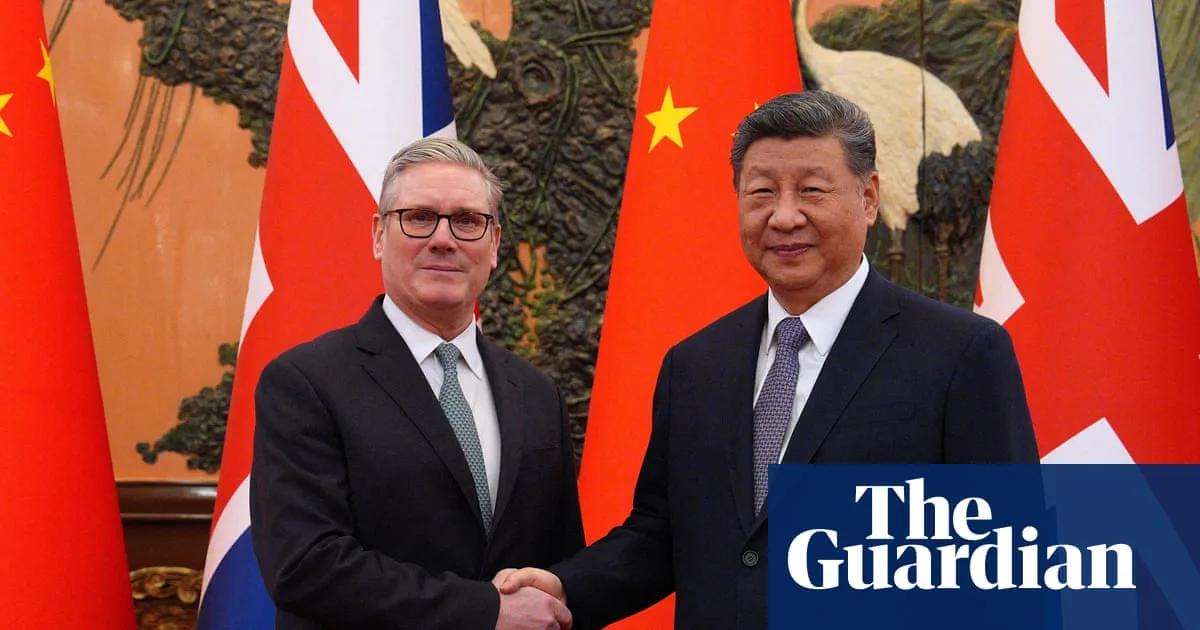
Keir Starmer has shaken hands with China's Xi Jinping ahead of a bilateral meeting in Beijing, marking a significant moment in UK foreign policy. This visit represents the first by a British prime minister to China since Theresa May's trip in 2018, highlighting a renewed focus on stabilising relations after years of uncertainty.
Aiming for Stability and Clarity in UK-China Ties
Starmer has vowed to bring "stability and clarity" to the UK's approach to Beijing, responding to Xi Jinping's remarks that the relationship has experienced "twists and turns" over the years. In his discussions, Starmer expressed a desire for a "more sophisticated" relationship between the two nations, acknowledging China's pivotal role in the global economy and green technology sectors.
Number 10 is acutely aware that China cannot be ignored. As the world's second-largest economy, a central player in future-shaping technologies, and a geopolitical power with clear ambitions, China's influence is undeniable. This visit underscores the UK's strategic need to engage with Beijing while navigating complex international dynamics.
Expert Insights: Modest Expectations and Strategic Confusion
To understand the opportunities and risks of Britain's China reset, insights from Laura Chappell, associate director for international policy at the Institute for Public Policy Research (IPPR), are invaluable. Chappell describes the UK's China policy as "confused", with a tendency to tread a middle ground without clear strategic action.
"It didn't feel like we knew where we were cooperating, where we were competing, where we were challenging," Chappell notes. She emphasises that while Labour articulates a framework of "cooperate, compete, challenge," similar to past Conservative and US approaches, the lack of implementation has left the relationship in a state of ambiguity.
Economic Imperatives and Security Concerns
China is Britain's third-largest trading partner, with total trade in goods and services reaching £98.4 billion in 2024. Chappell asserts that China is essential to the UK both geopolitically and economically, particularly in green technologies and artificial intelligence, where China holds dominant market shares.
However, the relationship is not without risks. China has been linked to cyber-attacks on UK parliamentarians, spying cases, and political controversies over embassy plans. Starmer must balance economic opportunities against these security concerns, a challenge that requires careful diplomacy.
Diplomatic Objectives: Growth Without Rupture
Chappell identifies three core objectives for the Labour government in this visit:
- Economic deliverables: Announcing investment deals and facilitating easier trade for British firms in China.
- Diplomatic balancing: Deepening ties with China without alienating the EU or the US.
- Focused attention: Ensuring Starmer engages deeply with China's risks and opportunities.
She is skeptical about major breakthroughs, viewing the trip as a "warming of relationships" rather than a transformative event. "I don't think what's going to come out of this visit is going to be a transformational change," Chappell adds, predicting a cautious, technocratic approach from Starmer.
China's Expectations: Signals Over Substance
China is not anticipating dramatic policy shifts from the UK. Instead, it seeks political signals that indicate a closer partnership, despite US pressure. Chappell explains that China looks for "discrete deliverables" such as visa-free travel for business visitors and opportunities for Chinese firms, but the UK must remain vigilant against potential future leverage in supply chains.
"One of the things Britain needs to be aware of is whether agreements today make us subject to pressure later," she warns, highlighting the delicate nature of economic security in this engagement.
Conclusion: A Step Towards Clarity
Starmer's visit to Beijing represents a cautious step towards thawing UK-China relations. By focusing on economic growth, diplomatic balance, and strategic clarity, he aims to navigate a complex global landscape. As Chappell summarises, "We should be trying to seize opportunities and manage risks," requiring a thorough mapping of both. For now, the emphasis is on careful engagement rather than radical recalibration, setting the stage for a more defined relationship in the future.






