Sir Keir Starmer's Diplomatic Mission to Beijing: Protocol and Politics
Sir Keir Starmer, the British Prime Minister, embarked on an official two-day visit to Beijing, engaging in high-level diplomatic discussions with Chinese leadership. The trip, marked by ceremonial events and substantive talks, aimed to strengthen bilateral relations between the United Kingdom and China.
Cultural Engagement at the Forbidden City
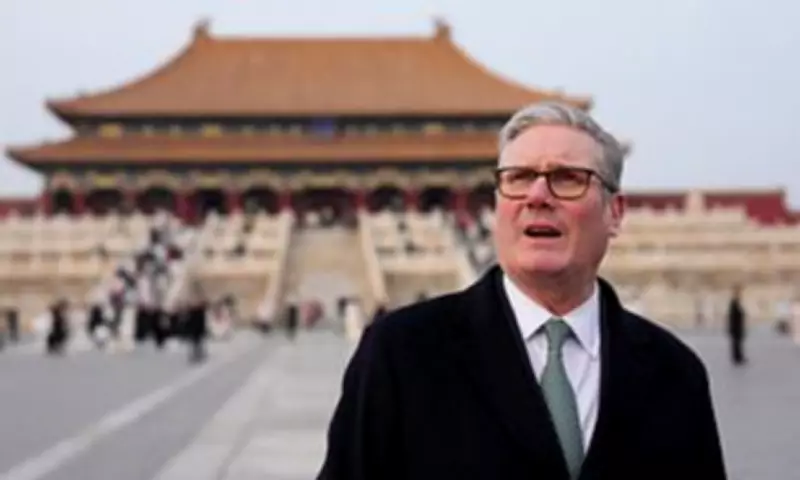
On the second day of his visit, Sir Keir toured the historic Forbidden City, a UNESCO World Heritage site that served as the imperial palace during the Ming and Qing dynasties. The Prime Minister was photographed in front of the Hall of Supreme Harmony, a magnificent 15th-century structure within the vast imperial compound. Security personnel and a military band accompanied the British delegation throughout the visit, with the motorcade efficiently navigating Beijing's thoroughfares.
The British delegation arrived in China on Wednesday, where Sir Keir was presented with a traditional bouquet of campanula and lilies upon disembarking from his British Airways flight. This floral welcome, customary in Chinese diplomatic protocol, set the tone for the formal engagements that followed.

High-Level Meetings at the Great Hall of the People
The centerpiece of the visit was the meeting between Sir Keir Starmer and Chinese President Xi Jinping at the Great Hall of the People. The arrangement featured two long tables separated by an impressive display of rhododendron plants and greenery spanning approximately twenty-five yards. This distinctive setup created both a visual spectacle and a physical distance between the delegations during discussions.
Sir Keir was accompanied by key members of his government, including Trade Secretary Peter Kyle and National Security Adviser Jonathan Powell, whose relaxed posture contrasted with the formal demeanor of other attendees. Across from the British delegation sat senior members of the Chinese Politburo, including Foreign Minister Wang Yi, known for his fluency in English and formidable diplomatic reputation.
Diplomatic Exchanges and Gift-Giving Ceremonies
During their discussions, President Xi Jinping acknowledged the historical contributions of previous Labour governments to Sino-British relations, describing them as "important contributions" to bilateral ties. In response, Sir Keir expressed his desire for a "sophisticated" relationship with China, emphasizing nuanced diplomatic engagement.
The diplomatic protocol included a ceremonial exchange of gifts. Sir Keir presented President Xi with a football recently used in a Manchester United match, acknowledging the Chinese leader's reported interest in the football club. In return, President Xi gifted the Prime Minister a copper statue of a horse. Additionally, Premier Li Qian presented Sir Keir, a known flautist, with three traditional Chinese flutes.
Historical Context and Contemporary Significance
This diplomatic encounter recalls historical precedents in UK-China relations, notably the 1792 Macartney Embassy to Emperor Qianlong. That earlier mission, bearing scientific instruments and manufactured goods from Britain, similarly sought to establish trade relations but faced diplomatic challenges due to differing expectations and protocols.
Sir Keir's visit represents the latest chapter in this complex bilateral relationship, occurring against the backdrop of evolving global geopolitics. The Prime Minister's engagement with Mandarin phrases during the visit, while requiring interpreter assistance, demonstrated an effort to bridge cultural and linguistic divides.
The trip's outcomes focused on diplomatic rapport rather than immediate trade agreements, with both sides emphasizing the importance of continued dialogue and mutual understanding in navigating the complexities of international relations in the twenty-first century.