Prime Minister Sir Keir Starmer has faced significant parliamentary criticism for his failure to secure any assurance regarding the release of detained British citizen Jimmy Lai during his recent diplomatic visit to China. The controversy centres on the timing of the trip, which occurred shortly after the UK government approved Beijing's proposed new super-embassy in London despite existing security concerns.
Parliamentary Condemnation Over Diplomatic Approach
Lord Alton of Liverpool, who has previously been sanctioned by the Chinese communist regime, delivered a stark warning in the House of Lords on Monday. He stated that Mr Lai, who has been imprisoned for more than five years in Hong Kong, is "likely to die" in prison unless he receives immediate release. The crossbench peer expressed particular concern about the diplomatic strategy employed during the Prime Minister's visit.
"I am not opposed to us visiting China," Lord Alton told Parliament, "but why did we go with the title deeds to a mega-embassy in the back pocket without first extracting an assurance that there would be some reciprocity with the release of Jimmy Lai?"

Government's Defence of Engagement Strategy
In response, Foreign Minister Baroness Chapman of Darlington acknowledged that Mr Lai should be released immediately and confirmed that the UK government condemns "in the strongest terms the politically motivated prosecution" of the British national. However, she defended the government's approach to China relations, suggesting that substantive diplomatic progress requires sustained engagement rather than immediate results from a single visit.
"After such a long time of the UK not having engaged in this way, this is not the sort of situation where we get everything we want with one visit," Baroness Chapman explained. "The relationship will improve. It is good that we are engaging and that we are clear on what we expect and want to happen for Jimmy Lai."
The Jimmy Lai Case Background
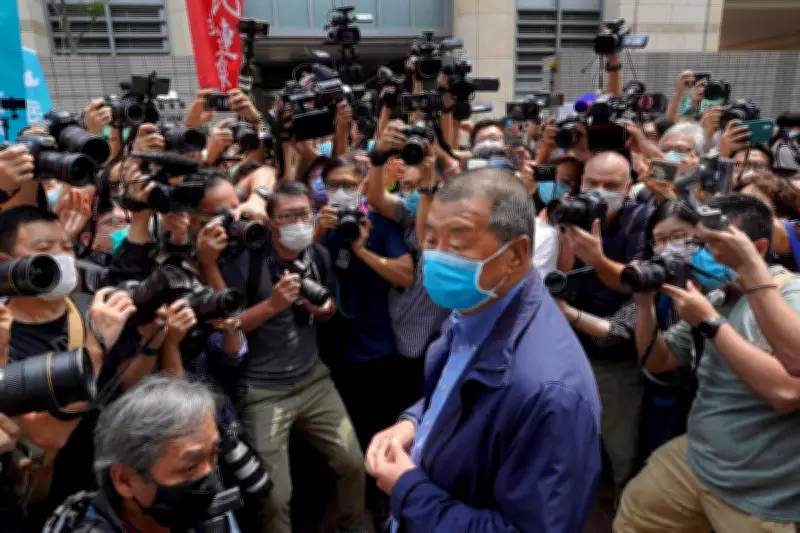
Jimmy Lai, the 78-year-old founder of the now-defunct Hong Kong newspaper Apple Daily, has been a prominent figure in the territory's pro-democracy movement for decades. His detention represents one of the most high-profile cases in the ongoing tensions between Hong Kong's judicial system and democratic activists.
The British citizen's legal troubles began in 2020 when he was arrested during a widespread crackdown on protests in Hong Kong. Since that time, he has spent much of his imprisonment in solitary confinement conditions. In December, a Hong Kong court found Mr Lai guilty of conspiracy and sedition charges, a verdict that sparked international condemnation from human rights organisations and Western governments.
Diplomatic Efforts and Public Campaigns
During his China visit, Prime Minister Starmer did raise Mr Lai's case directly with Chinese President Xi Jinping, calling on Hong Kong authorities to release him on humanitarian grounds. This diplomatic intervention followed earlier actions by the UK government, including summoning the Chinese ambassador after Mr Lai's verdict was announced.
The case has generated significant public attention in Britain, with "Free Jimmy Lai" messages recently projected onto prominent London landmarks including the Houses of Parliament and Tower Bridge. These visual protests underscore the growing public concern about the British government's ability to protect its citizens detained abroad, particularly in jurisdictions with different legal systems and human rights standards.
Baroness Chapman emphasised the government's ongoing commitment to the case, stating: "We raise his case at every opportunity. Engagement and challenge are not mutually exclusive, they go hand in hand." However, critics argue that the approval of Beijing's new London embassy complex without securing concrete commitments regarding Mr Lai's release represents a significant diplomatic misstep that prioritises bilateral relations over individual liberty.