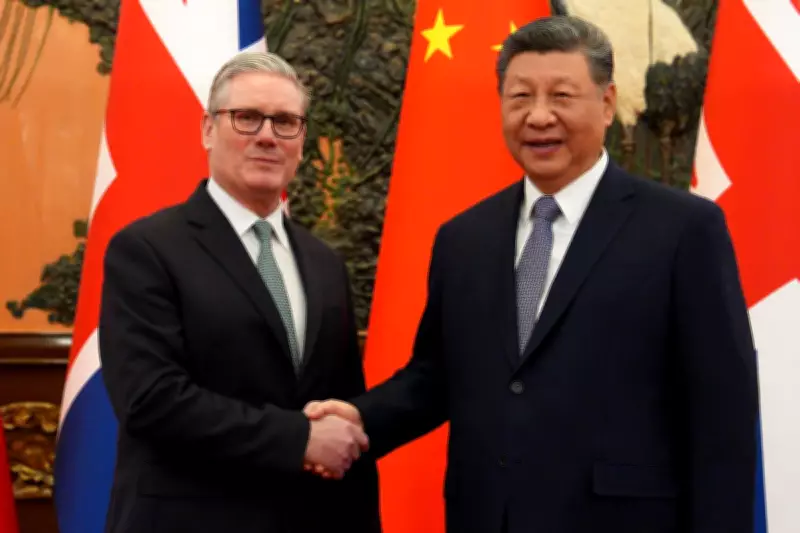
Prime Minister Sir Keir Starmer has declared that "good progress" was made during crucial discussions on tariffs and visa-free travel in his high-level meeting with Chinese President Xi Jinping. The talks, held at the Great Hall of the People in Beijing, mark a significant step in resetting UK-China relations.
Constructive Dialogue Yields Practical Outcomes
Sir Keir emphasised that the meeting produced "real outcomes" that align with British national interests. He specifically highlighted advancements in several key areas that could benefit both nations economically and diplomatically.
Key Areas of Agreement
The Prime Minister outlined several concrete achievements from the discussions:

- Progress on reducing tariffs for British whisky exports to China
- Advancements toward potential visa-free travel arrangements for UK citizens visiting China
- Enhanced information exchange and cooperation on irregular migration, with particular focus on small boats and engine parts
China responded positively to these discussions, with Beijing's official readout indicating willingness to "actively consider" implementing unilateral visa-free entry for British citizens.
Balancing Opportunities with Frank Dialogue
Sir Keir told President Xi that he sought a "more sophisticated" relationship between the two countries, acknowledging both the "huge opportunities" available in China and the need for honest discussion about areas of disagreement.
The Prime Minister's approach reflects his belief that engagement with Chinese leadership is crucial for Britain's practical interests. He arrived in China accompanied by 54 representatives from British businesses and cultural institutions seeking to deepen ties with the Asian superpower.
Addressing Sensitive Issues
During what Sir Keir described as a "respectful discussion," the Prime Minister raised several concerns important to the United Kingdom:
- The imprisonment of Hong Kong pro-democracy campaigner Jimmy Lai
- The treatment of the Uighur minority in China
- The UK's ongoing commitment to its Taiwan policy
"Part of the rationale for engagement is to make sure that we can both seize the opportunities that are available, which is what we've done, but also have a mature discussion about issues that we disagree on," Sir Keir explained.
Strategic Partnership Framework
Beijing's official statement emphasised both countries' commitment to developing a "long-term, stable and comprehensive strategic partnership." The Chinese readout stressed several important points:
- China will not "pose a threat" to other countries
- The UK's policy on Taiwan "remains unchanged and will not change"
- Hong Kong's prosperity and stability serve as a "unique and important bridge" between the two nations
Downing Street's own account of the meeting noted that both leaders "agreed they would continue to enhance co-operation on areas of mutual interest, while maintaining frank and open dialogue on areas of disagreement."
Ceremonial Aspects of the Visit
The meeting represented the culmination of months of preparation for Sir Keir's visit, which is the first by a UK prime minister to China since 2018. Following the discussions, the Prime Minister participated in several ceremonial events that underscored the diplomatic significance of the occasion.
Sir Keir toured the historic Forbidden City before receiving a formal ceremonial welcome at Beijing's Great Hall of the People. The occasion featured a military band performing both "God Save the King" and the Chinese national anthem, "March of the Volunteers," followed by an inspection of an honour guard comprising approximately 140 troops from China's army, navy, and air force.
This carefully choreographed diplomacy reflects the importance both nations place on rebuilding their relationship after what President Xi described as recent "twists and turns" in bilateral relations.