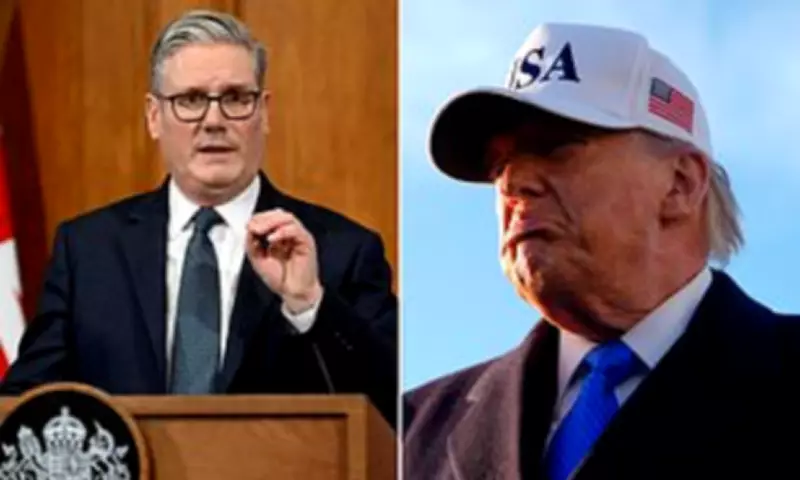
In a pivotal phone call on Sunday night, Prime Minister Keir Starmer informed US President Donald Trump that Britain is not prepared to immediately accede to American demands to deploy warships to the Gulf. The request was aimed at safeguarding oil tankers from Iranian attacks and reopening the critically important Strait of Hormuz.
Diplomatic Discussions Amid Rising Tensions
Downing Street confirmed that the two leaders engaged in discussions regarding the urgent necessity of reopening the strait to halt the severe disruption to global shipping. This disruption has been a primary driver behind escalating costs worldwide, with oil prices surging by approximately $100 per barrel due to the closure. Approximately twenty percent of the world's oil traverses this narrow waterway, making its security a matter of global economic stability.
Britain's Proposed Contribution
Instead of committing scarce Royal Navy warships, the British government is proposing to contribute autonomous underwater vehicles, based in Bahrain, and missile interceptors as part of a broader international coalition. These mine-hunting drones, however, remain untested in active conflict scenarios. Notably, the Royal Navy currently lacks a single minesweeper in the region following the withdrawal of HMS Middleton last year for routine maintenance.
Government sources have emphasised that no final decisions have been made regarding the response to President Trump's request. Ministers are actively discussing a spectrum of options with allies and partners to ensure maritime security in the region.
Trump's Appeal and International Context
On Saturday, President Trump publicly called upon Britain, France, and China to dispatch ships to the area, asserting that such a move would prevent the strait from being threatened by what he described as a "totally decapitated" nation. This demand was reiterated by Mike Waltz, the US ambassador to the United Nations, who referenced past instances where French and UK forces escorted tankers during previous Iranian threats to global energy supplies.
Strategic Priorities and Concerns
British ministers are resisting pressure to divert warships to the Gulf, prioritising instead naval support for a NATO mission in the High North. This mission is viewed as essential for deterring Russian aggression. There are also significant concerns about being drawn deeper into an unpopular conflict and fears that Iran could intensify its attacks in retaliation.
Admiral Lord West, the former head of the Royal Navy, supported the Prime Minister's cautious stance, highlighting the UK's strategic priority in the High North. He warned that compromising NATO exercises would benefit Vladimir Putin. Lord West also lamented the absence of minesweeping capability in the region, noting that autonomous assets may not yet be fully mature for such operations.
Iran's Stern Warning
Iran issued a stark warning on Sunday, signalling it would escalate reprisals against the UK if it played any role in reopening the strait. Foreign ministry spokesman Esmail Baghaei stated that while Iran is "not at war with the UK" at present, British involvement would constitute "complicity in the crime of aggression" and would be met with a definitive response from Iran.
Broader International Efforts
The European Union is reportedly considering expanding its Aspides mission, which currently protects shipping in the Red Sea from Houthi militia attacks, to address the Gulf situation. However, German Foreign Minister Johann Wadephul expressed scepticism about this proposal.
Evacuation Operations in Lebanon
Concurrently, efforts to rescue thousands of Britons stranded in Lebanon advanced as the Royal Fleet Auxiliary ship Lyme Bay set sail from Gibraltar towards Cyprus. This vessel could lead a Non-Combatant Evacuation Operation, a move that coincides with Israeli tanks pushing deeper into Lebanese territory.
The situation remains fluid, with the British government balancing international obligations, strategic military priorities, and the volatile geopolitical landscape in the Middle East.