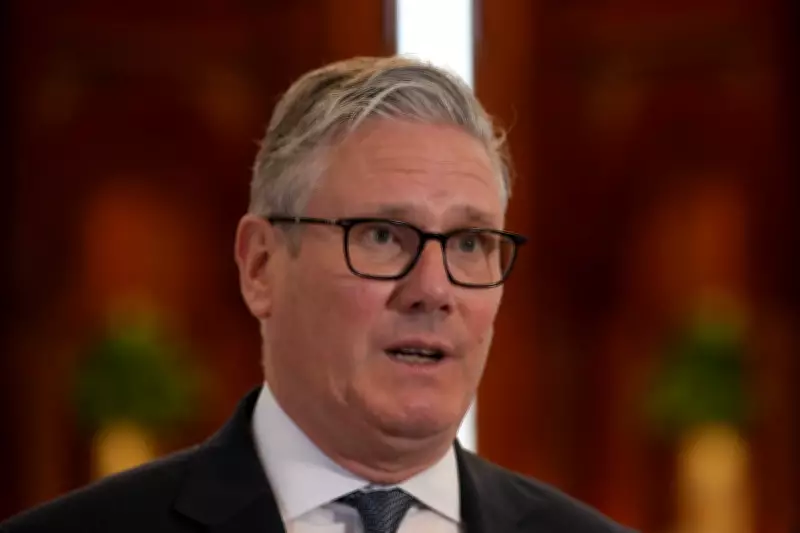
Prime Minister Sir Keir Starmer has emphasised that the NATO alliance fundamentally serves American interests, while simultaneously urging European member states to significantly bolster their commitments. This statement comes in the wake of heightened threats from former US President Donald Trump regarding a potential withdrawal from the military bloc.
NATO's Defensive Role and European Responsibility
Speaking during a diplomatic tour of Gulf allies focused on supporting a fragile Middle East ceasefire, Sir Keir praised NATO's historical role. He stated the alliance has maintained security, keeping member nations "much safer than we would otherwise have been." However, he stressed a pressing need for European partners to assume greater responsibility within the collective defence framework.
Trump's Threats and the Strait of Hormuz Crisis
The Prime Minister's comments follow a direct conversation with President Trump concerning the urgent need for a "practical plan" to restore shipping through the critical Strait of Hormuz. Reports indicate Iran may seek to impose tolls on vessels, a move both leaders have condemned. Mr Trump has repeatedly criticised NATO allies who resisted his initial demands for assistance in reopening this vital transit route, even flirting with the idea of a complete US exit from the alliance.

Sir Keir expressed broader frustrations linking global instability to domestic economic pressures. "I'm fed up with the fact that families across the country see their bills go up and down on energy, businesses' bills go up and down on energy because of the actions of Putin or Trump," he told ITV's Talking Politics Podcast, drawing a parallel between the Russian leader and the US president.
A Call for a Stronger European Pillar
When questioned about President Trump's threats to quit NATO, Sir Keir reaffirmed the UK's steadfast support. "We're very strong supporters of NATO and I've been making the argument for some considerable time that we need to do more," he told broadcasters. He elaborated that this argument, made to European partners for nearly two years, centres on building a more robust European element within NATO.
"It is in America's interests, it's in European interests," Sir Keir asserted. "Nato is a defensive alliance, which for decades has kept us much safer than we would otherwise have been. Do I think this will be a stronger European element to Nato? Yes, and I think we should step into that space."
Regional Diplomacy and a Defining Conflict
The Prime Minister's Gulf tour aimed to coordinate strategic responses with regional partners. He warned that the ongoing Middle East conflict would "define us for a generation," highlighting a shared desire among allies to collaborate on defence and economic resilience. Discussions with United Arab Emirates President Sheikh Mohamed bin Zayed Al Nahyan focused on restoring global supply chains, while talks in Bahrain reiterated the imperative of upholding the ceasefire for lasting peace.
However, the recently brokered two-week truce, which conditioned the Strait of Hormuz's reopening, faces immediate strain. Israel's bombardment of Beirut prompted Iran to re-close the shipping lane, amid disputes over Lebanon's inclusion in the agreement. In a potential de-escalation, Israeli Prime Minister Benjamin Netanyahu has since authorised direct talks with Lebanon aimed at disarming Hezbollah militants.
Sir Keir concluded his regional visit by framing the situation as both a challenge and an opportunity for the United Kingdom, emphasising a collective need to respond with strength to a generational defining crisis.