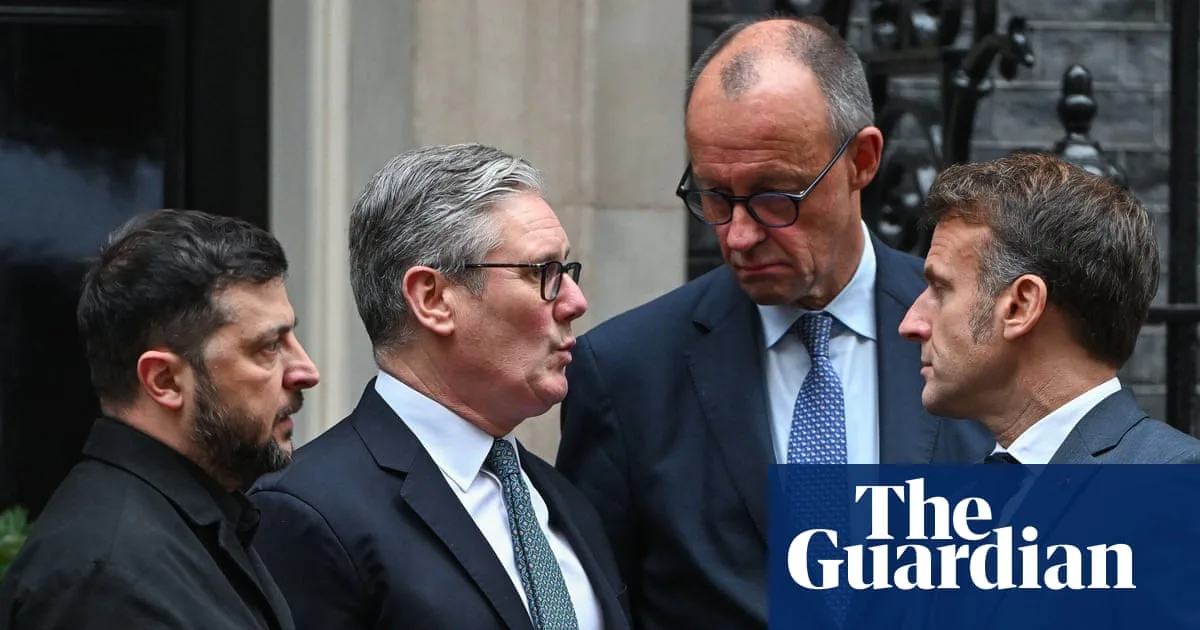
Keir Starmer Hosts Volodymyr Zelensky in Downing Street Amid Global Tensions
Prime Minister Keir Starmer is set to host Ukrainian President Volodymyr Zelensky at Downing Street today, in a critical meeting aimed at preventing Middle East chaos from inadvertently strengthening Russia's military position. The visit comes as escalating US-Israeli clashes with Iran have triggered a spike in global oil and gas prices, with the vital Strait of Hormuz currently closed off.
Energy Crisis and Sanctions Pressure
Sir Keir has previously warned that soaring energy bills must not provide a windfall for Vladimir Putin's war machine in Ukraine. The West has been striving to maintain stringent sanctions to starve Moscow of funding, but America temporarily eased restrictions on Russia last week in an effort to bolster energy supplies. This move has heightened concerns about the effectiveness of international pressure on the Kremlin.
Former US President Donald Trump has further complicated the situation by linking American support for Ukraine to whether NATO powers deploy forces to help reopen the Strait of Hormuz—a proposition most allies are reluctant to undertake. The geopolitical landscape is increasingly fraught, with Iranian reprisals for US-Israel actions causing widespread disruption across the Middle East.
New UK-Ukraine Defence Partnership
In response to these challenges, Downing Street has announced a significant new partnership with Kyiv. This initiative aims to merge Ukrainian expertise with the UK's industrial base to manufacture and supply drones and other advanced military capabilities. As part of the agreement, the UK will contribute £500,000 towards establishing a new AI centre of excellence in Kyiv.
This centre will bring together experts to explore how artificial intelligence can be leveraged for battlefield advantage. The partnership also seeks to foster closer cooperation in defence industries with third countries, enhancing international security efforts. Sir Keir emphasised the importance of this collaboration, stating that drones, electronic warfare, and rapid innovation are now central to national and economic security.
Strategic Implications and Future Goals
The new declaration builds upon a 100-year partnership signed last year by the two leaders, outlining a path for continued solidarity with war-torn Ukraine, including ongoing financial support. Number 10 has stated that this pact will not only help Ukraine's armed forces defend against Russian aggression but also enable allies to apply lessons learned to outmanoeuvre Russia and its allies in contested regions worldwide.
Defence Secretary John Healey has reiterated warnings about an axis of aggression between Russia and Iran, underscoring the urgency of leveraging Ukrainian innovation supported by British industry. He praised the courage and ingenuity of the Ukrainian people and expressed determination to make 2026 the year the war concludes.
Broader Diplomatic Efforts
During President Zelensky's visit, NATO Secretary General Mark Rutte is also expected to meet with Prime Minister Starmer for a trilateral discussion focused on the Ukraine war. These talks will address the critical need to maintain sanctions pressure on Russia, ensuring that the conflict remains a top priority amid global distractions.
There is cautious optimism that Mr Zelensky might find a silver lining in the current crisis by leveraging Ukraine's hard-won expertise in countering Iranian drones, potentially offering valuable insights to Western allies. As the world navigates these complex geopolitical waters, the UK-Ukraine partnership represents a proactive step towards bolstering defence capabilities and securing stability in an increasingly volatile international arena.




