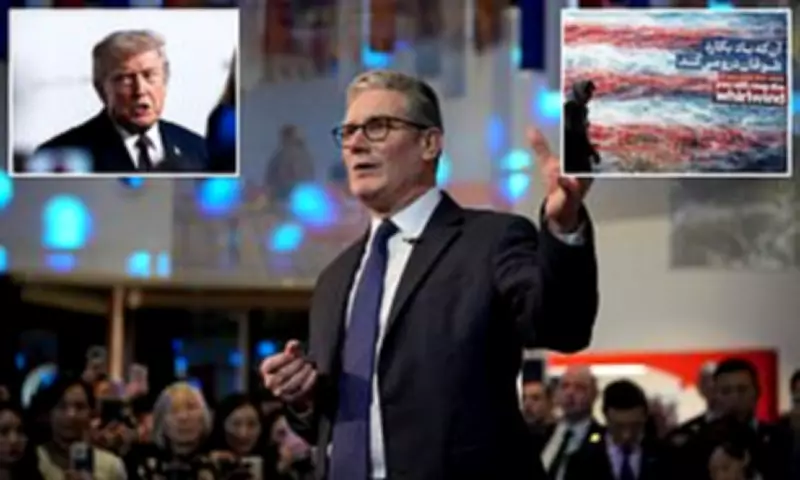
Prime Minister Keir Starmer has publicly affirmed his support for the crucial objective of preventing Iran from developing nuclear weapons, while simultaneously condemning the regime's brutal suppression of domestic protests. This declaration comes amid heightened tensions as former US President Donald Trump intensifies threats of potential military strikes against Tehran.
Western Unity on Iran's Nuclear Ambitions
During discussions with international allies, Sir Keir emphasised the paramount importance of halting Iran's nuclear weapons programme. He stated unequivocally that the fundamental goal must be to ensure Tehran cannot acquire such destructive capabilities. The Prime Minister's comments align with a broader Western consensus that views a nuclear-armed Iran as an unacceptable threat to regional and global stability.
Condemnation of Protest Crackdown
Alongside the nuclear issue, Starmer delivered a forceful condemnation of the Iranian government's violent response to widespread civil unrest. He described the repression and killing of demonstrators as "grotesque," asserting that this humanitarian crisis demands immediate international attention and action. The Prime Minister confirmed that the United Kingdom is actively collaborating with allied nations to address both the nuclear proliferation concerns and the severe human rights violations occurring within Iran.

Trump's Military Posturing
Concurrently, Donald Trump has significantly ramped up rhetorical and military pressure on the Iranian regime. The former US President has overseen the deployment of a substantial naval force to the Middle East, spearheaded by the aircraft carrier USS Abraham Lincoln. Trump issued a stark ultimatum, warning Tehran that it must agree to abandon its nuclear ambitions and cease the "senseless killing" of political opponents, or face potentially devastating consequences.
Domestic Repression and International Response
Inside Iran, authorities have responded to nationwide protests with extreme brutality. Estimates from human rights organisations, though hampered by government-imposed internet blackouts, suggest thousands have been killed, with the vast majority being civilian protesters. In reaction to this crackdown, the European Union has moved to designate the Iranian Revolutionary Guard Corps as a terrorist organisation, increasing pressure on the UK government to consider similar measures.
UK Legislative Considerations
The British government has acknowledged the need for potential new legal powers to proscribe state-backed groups deemed threatening to national security. While Downing Street maintains its policy of not commenting on specific proscription cases, officials have indicated readiness to implement further sanctions if Iran's repression continues. The government asserts it remains in close coordination with international partners to counter the multifaceted threats posed by the Iranian regime.
Political Pressure and Calls for Action
Shadow Foreign Secretary Priti Patel has vocally criticised the government's perceived inaction regarding the IRGC, labelling the regime's brutality "an affront to humanity." She has urged ministers to demonstrate stronger resolve in supporting the Iranian people and confronting Tehran's destabilising activities. The ongoing situation presents a complex foreign policy challenge, balancing non-proliferation objectives with urgent humanitarian concerns and regional security dynamics.