Starmer's Diplomatic Shift: UK Prime Minister Adopts Tough Stance Against Trump's Contempt
In a remarkable departure from months of diplomatic caution, Prime Minister Sir Keir Starmer has dramatically hardened his approach towards the United States under President Donald Trump. The shift follows a series of increasingly hostile remarks from the American leader that have transformed the transatlantic relationship from cautious cooperation to open confrontation.
The Turning Point at Prime Minister's Questions
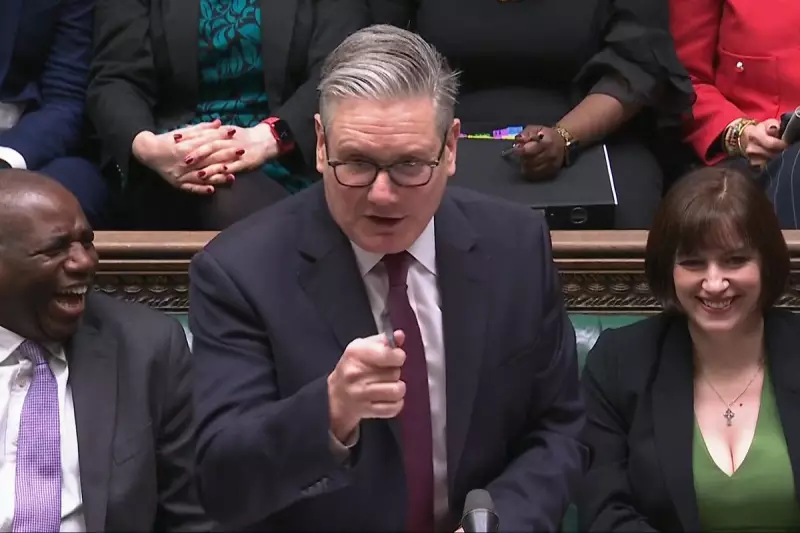
Today's Prime Minister's Questions revealed a fundamentally changed Sir Keir Starmer. Gone was the measured statesman who had previously sought to navigate the complexities of dealing with Washington's unpredictable leadership. In his place stood a prime minister willing to directly challenge presidential pressure with unprecedented bluntness.
The pivotal moment came when Starmer declared he "will not yield" on the Greenland issue despite Trump's threat of tariffs. This represented more than just policy disagreement—it signalled a complete rejection of the diplomatic approach that had characterised Starmer's earlier dealings with the White House.

Accusations of Bullying and Dishonesty
Starmer went significantly further than mere policy defence during the parliamentary session. He directly accused President Trump of employing dishonest tactics, specifically highlighting what he described as the president's contradictory statements regarding the Chagos Islands.
"President Trump deployed words on Chagos yesterday that were different to his previous words of welcome and support when I met him in the White House," Starmer told the Commons. "He deployed those words yesterday for the express purpose of putting pressure on me and Britain in relation to my values and principles on the future of Greenland."
This accusation echoed French President Emmanuel Macron's characterisation of Trump as a bully who seeks to dominate allies through intimidation rather than cooperation. The prime minister's repetition of his refusal to yield underscored a new determination to resist what he perceives as presidential coercion.
The Catalysts for Change
Several factors have contributed to this diplomatic transformation:
- Escalating Presidential Rhetoric: Trump's recent description of the UK-Mauritius Chagos agreement as "stupid" and his suggestion that Starmer needs to "fix his country" represented a significant escalation
- Public Criticism of UK Policy: The president's Davos press conference saw him deride Britain's energy strategy as "catastrophic" while mocking renewable energy initiatives
- Abandonment of Diplomatic Protocol: What began as private disagreements has evolved into public contempt, with Trump discarding traditional diplomatic restraint
This represents a complete breakdown of the entente cordiale established during Starmer's 2023 private dinner with Trump at Trump Tower in New York. That carefully cultivated relationship, built on personal diplomacy and mutual understanding, has evaporated under the heat of presidential criticism.
Strategic Consequences and Future Challenges
While Starmer's new toughness has pleased Labour backbenchers who have long demanded stronger leadership, it carries significant strategic implications for British foreign policy.
The prime minister's central diplomatic strategy—positioning Britain as a bridge between the United States and Europe—now appears fundamentally compromised. Without cooperative relations with Washington, this mediating role becomes increasingly untenable, potentially diminishing both Britain's global influence and Starmer's personal diplomatic standing.
Complicating matters further is the suggestion that President Trump may be looking to alternative British political figures to fulfil this bridging function. Speculation has emerged that the American president might prefer to work with political ally Nigel Farage, whose ideological alignment with Trump could offer a more sympathetic channel for US-UK relations.
This development raises profound questions about Britain's future international positioning and the sustainability of Starmer's foreign policy approach in an increasingly polarised global landscape.