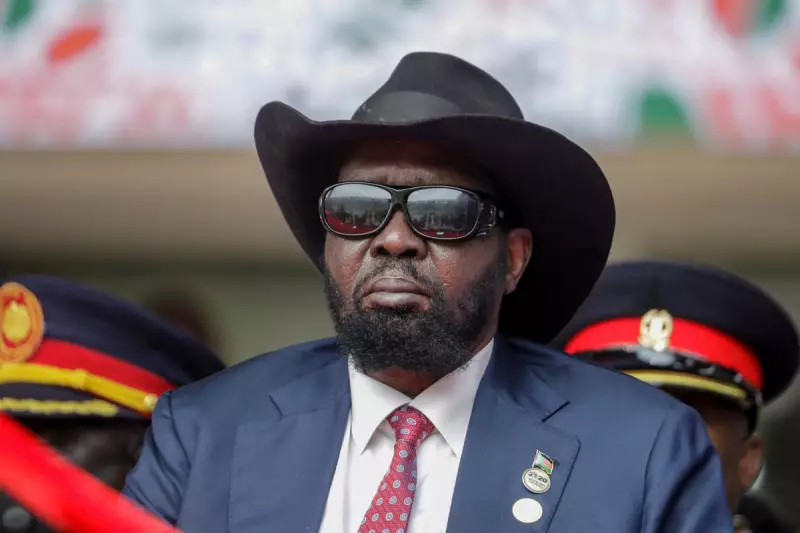
South Sudan's Army Initiates Major Military Operation Following Territorial Setbacks
South Sudan's armed forces have launched a substantial military campaign against opposition groups after suffering significant territorial losses in recent weeks. The announcement of Operation Enduring Peace has sparked immediate fears for civilian welfare and raised alarms about potential human rights violations.
Operation Enduring Peace Commences with Civilian Evacuation Orders
In an official statement released on Sunday, army spokesman Lul Ruai Koang declared the commencement of Operation Enduring Peace and issued immediate evacuation orders for civilians in three counties within Jonglei state. Koang further directed humanitarian aid organisations to depart the affected areas within a strict 48-hour timeframe.
Speaking to The Associated Press on Monday, Koang clarified that the military operation's primary objectives involve recapturing towns recently seized by opposition forces and "reestablishing law and order" in contested regions. This announcement followed disturbing footage that emerged just one day earlier, showing a senior army commander urging troops to kill civilians and destroy property during the Jonglei offensive.

International Concerns Mount as Conflict Escalates
The United Nations and various international observers have expressed profound concern about the deteriorating situation. Alan Boswell of the International Crisis Group stated unequivocally: "It is now indisputable: South Sudan has returned to war. It is incredibly tragic for a country that only grows weaker and poorer."
This latest escalation represents a significant setback for the 2018 peace agreement that temporarily halted fighting between forces loyal to President Salva Kiir and those aligned with opposition leader Riek Machar. That previous five-year civil war, fought largely along ethnic lines between the Dinka and Nuer communities, resulted in an estimated 400,000 fatalities.
Background to the Current Conflict
Beginning in December, a coalition of opposition forces captured a series of government outposts in central Jonglei, a region that serves as both the homeland of the Nuer ethnic group and a traditional opposition stronghold. These forces include elements loyal to Riek Machar alongside fighters from the ethnic Nuer militia known as the White Army, who have historically allied with Machar while maintaining their distinct identity.
The political landscape has grown increasingly complex since Machar's suspension last year as South Sudan's second-in-command, following White Army fighters overrunning a military garrison in Nasir. Machar now faces treason and other charges related to that attack, which authorities allege he helped orchestrate, though his supporters and some international observers contend these charges are politically motivated.
Disturbing Rhetoric and Civilian Safety Fears
The situation took an especially alarming turn when senior military commander General Johnson Olony was filmed urging his forces to "spare no lives" during operations in Jonglei. In the video, shared widely on social media, Olony explicitly instructed troops: "When we arrive there, don't spare an elderly, don't spare a chicken, don't spare a house or anything."
Prominent civic leader Edmund Yakani expressed profound concern about these statements, suggesting they indicated government troops were being "empowered to commit atrocities, to commit crimes against humanity, and, potentially, even to commit a genocide." The U.N. Commission on Human Rights in South Sudan has voiced "grave alarm" at developments that significantly heighten risks of mass violence against civilians.
Complex Ethnic Dynamics and Military Strategy
General Olony's deployment to Nuer communities proves particularly contentious given his leadership of the Agwelek militia from the Shilluk tribe and the historical rivalry between Shilluk and Nuer communities. Independent analyst Joshua Craze noted that deploying Olony to Jonglei is "incendiary" and represents "a propaganda gift to the opposition in its mobilization efforts."

Government spokesman Ateny Wek Ateny described Olony's comments as "uncalled for" and "a slip of the tongue," while suggesting the commander might have been attempting to boost troop morale. Ateny emphasised that these remarks do not reflect official government policy.
Military Developments and Regional Implications
Following opposition forces' capture of the government outpost at Pajut in Jonglei on January 16th, and their subsequent threats to advance toward the capital Juba, the government has responded by amassing fighters in nearby Poktap. Several thousand Ugandan soldiers currently defend Juba, while army chief Paul Nang has given troops one week to "crush the rebellion" in Jonglei.
Forces loyal to Machar have declared the 2018 peace agreement effectively dead and have intensified pressure on the army through seizing armories and launching hit-and-run attacks on government positions. The government has relied heavily on aerial bombardments to counter a rebellion that analysts confirm is gaining momentum across multiple states.