Sheinbaum Adopts Firmer Stance Against Trump Over Migrant Deaths and Cuba Policy
Mexican President Claudia Sheinbaum has recently escalated her diplomatic rhetoric, adopting a notably harder line against the United States administration led by Donald Trump. This shift comes in direct response to the mounting deaths of Mexican citizens while in the custody of US Immigration and Customs Enforcement (ICE) officials. Sheinbaum's government has labelled these incidents as "unacceptable" and declared that the conditions within ICE detention centres are "incompatible with human rights standards and the protection of life."
A Measured Approach Gives Way to Stronger Action
For over a year, President Sheinbaum has navigated a delicate diplomatic tightrope, responding to provocations from the Trump administration with a measured and cautious tone. Her administration has actively cooperated with US requests to intensify crackdowns on drug cartels, surpassing the efforts of her predecessors. This cooperation was strategically designed to mitigate threats of punitive tariffs and potential US military interventions targeting criminal gangs operating within Mexico.
However, the recent surge in fatalities among detained Mexican migrants, coupled with America's contentious energy blockade against Cuba—a key Mexican ally—has prompted a significant recalibration in Sheinbaum's foreign policy posture. The death of 49-year-old Alejandro Cabrera Clemente in a Louisiana ICE facility this week marked the fifteenth such fatality involving a Mexican national in just over a year, catalysing this firmer stance.

"We Are Going to Defend Mexicans at Every Level"
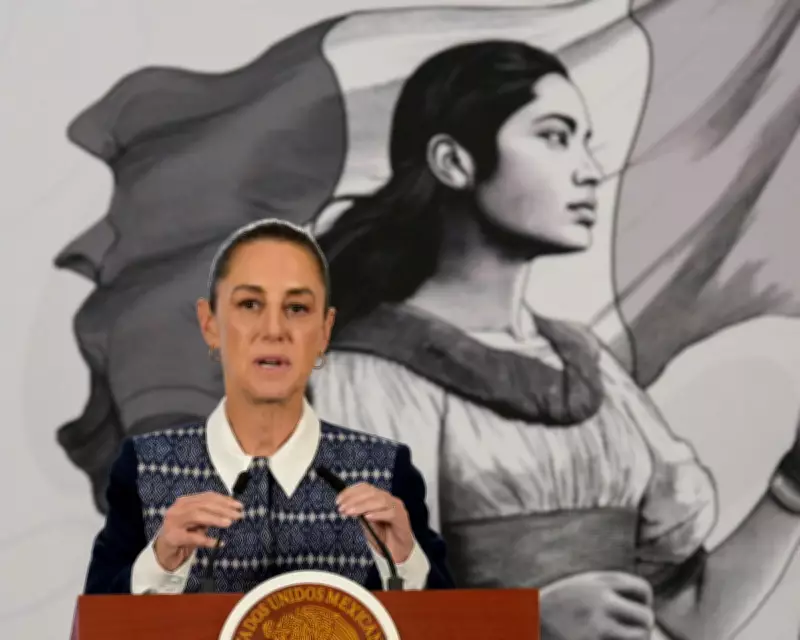
In a forceful statement delivered on Tuesday, President Sheinbaum outlined her government's response to the crisis. She confirmed that she has formally requested thorough investigations into all fifteen migrant deaths and has issued directives for Mexican consular officials to conduct daily visits to US detention centres. Furthermore, her administration plans to escalate the matter by raising it with the Inter-American Commission on Human Rights and is actively considering an appeal to the United Nations.
"We are going to defend Mexicans at every level," Sheinbaum declared, emphasising that "there are many Mexicans whose only crime is not having papers." The White House has thus far declined to comment on Sheinbaum's strengthened rhetoric or the escalating death toll in ICE custody.
Balancing Sovereignty with Strategic Diplomacy
Analysts note that Sheinbaum has consistently described her approach to Trump's provocations as maintaining a "cool head." The Trump administration has exerted unprecedented pressure across Latin America, including deposing Venezuela's president, imposing an oil blockade on Cuba, and threatening military action against Mexican cartels. Sheinbaum's challenge has been to preserve a functional working relationship with Washington while simultaneously asserting Mexico's national sovereignty to satisfy her domestic political base.
Her government has indeed taken more aggressive action against cartels than previous administrations and has worked to bolster trade relations, particularly in anticipation of the renegotiation of the United States-Mexico-Canada Agreement (USMCA). Despite Trump's occasional public criticisms—once suggesting cartels wield more control in Mexico than her government—he has also frequently acknowledged their cordial personal rapport, recently stating, "She is really a nice person, I like her a lot."
The Cuba Dispute: A Core Point of Contention
The most significant friction point between Mexico and the US currently revolves around Cuba. Solidarity with Cuba has been a foundational element of Mexican foreign policy since the Cuban revolution. This relationship was severely tested in late January when President Trump announced tariffs on any nation exporting oil to Cuba, a policy directly impacting Mexico, a longstanding supplier of fuel to the island nation.

While Sheinbaum's administration reluctantly suspended oil shipments to comply, she has continued to vocally oppose the US strategy. "Mexico has every right to send fuel, whether for humanitarian or commercial reasons," she asserted this week, condemning Trump's energy blockade as "unjust" and accusing the US government of "suffocating" the Cuban people with sanctions.
A Calculated Shift in Diplomatic Strategy
According to Carin Zissis, Vice-President of Content Strategy for the Council of the Americas, Sheinbaum's newly assertive tone reflects a strategic calculation. Her administration appears confident that it can push back on politically sensitive issues like migrant rights and Cuba, provided it continues to demonstrate progress on shared US priorities such as trade security and migration control.
Simultaneously, analysts suggest that surging global energy prices, partly driven by conflict in Iran, have increased US reliance on allies like Mexico. This economic interdependence may be discouraging Washington from taking drastic punitive actions against Mexico regarding cartel policy or the Cuba blockade, at least in the immediate future. This complex interplay of human rights, energy politics, and strategic diplomacy defines the current chapter in Mexico-US relations under Sheinbaum and Trump.