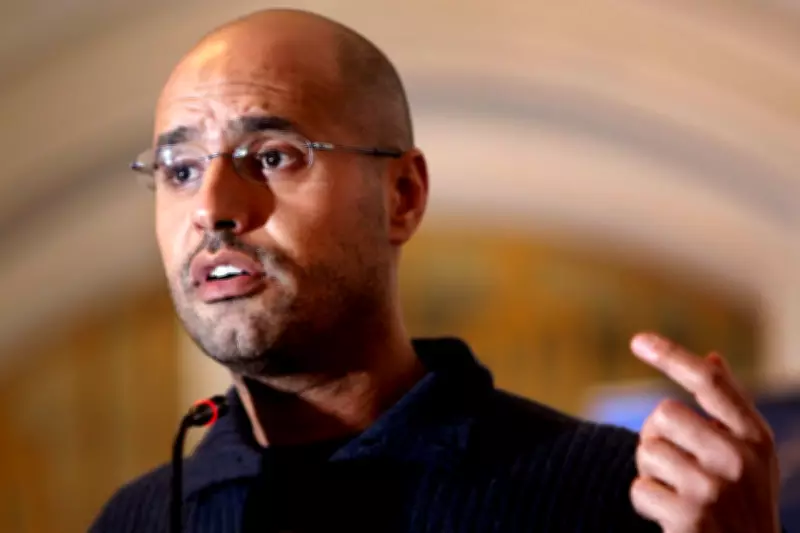
Seif al-Islam Gaddafi, the son and one-time heir apparent of Libya's late dictator Moammar Gaddafi, has been killed in the north African country, according to Libyan officials. The 53-year-old was reportedly assassinated in the town of Zintan, located approximately 136 kilometres southwest of the capital, Tripoli.
Details of the Assassination
Two Libyan security officials from western Libya, speaking on condition of anonymity as they were not authorised to brief media, confirmed the death on Tuesday. The killing occurred in Zintan, where Seif al-Islam had been residing since his release from captivity in 2017.
Khaled al-Zaidi, a lawyer representing Seif al-Islam, confirmed his client's death via a Facebook post, though he did not provide specific details about the circumstances. Similarly, Abdullah Othman Abdurrahim, who led Seif al-Islam's political team and represented him in UN-brokered political dialogues, announced the death on the social media platform.

Political Team Statement
Seif al-Islam's political team later released a formal statement providing more graphic details of the incident. According to their account, "four masked men" stormed his residence and killed him in what they described as a "cowardly and treacherous assassination." The statement claimed that Seif al-Islam clashed with his assailants before being killed.
The political team further alleged that the attackers closed CCTV cameras at the property in what they called a desperate attempt to conceal evidence of their crimes. Libyan news outlet Fawasel Media cited Abdurrahim as stating that armed men killed Seif al-Islam in his own home, adding that prosecutors had already launched an investigation into the killing.
Background and Controversial Legacy
Born in Tripoli in June 1972, Seif al-Islam was the second-born son of the longtime dictator who ruled Libya for over four decades. He studied for a PhD at the London School of Economics and was often viewed as the reformist face of the Gaddafi regime during his father's rule.
Following the NATO-backed popular uprising in 2011 that toppled Moammar Gaddafi after more than 40 years in power, Libya descended into chaos and civil war. The elder Gaddafi was killed in October 2011 amid the ensuing conflict, leaving the country divided between rival armed groups and militias.
Capture and Legal Troubles
Seif al-Islam's own journey through Libya's turbulent post-revolution landscape was marked by controversy and legal challenges. He was captured by fighters in Zintan in late 2011 while attempting to flee to neighbouring Niger. These fighters eventually released him in June 2017 after one of Libya's rival governments granted him amnesty.
His legal troubles were substantial. A Libyan court convicted him in absentia in 2015 on charges of inciting violence and murdering protesters, sentencing him to death. Additionally, the International Criminal Court had sought his arrest on charges of crimes against humanity related to the 2011 uprising.
Political Ambitions Thwarted
In a controversial move that sparked outcry from anti-Gaddafi political forces across both western and eastern Libya, Seif al-Islam announced his candidacy in the country's presidential election in November 2021. The country's High National Elections Committee ultimately disqualified him from running.
The presidential election itself was never held due to ongoing disputes between rival administrations and armed groups that have governed Libya since the bloody ouster of Moammar Gaddafi. This political stalemate has continued to characterise Libya's fragmented governance structure.
The assassination of Seif al-Islam represents another violent chapter in Libya's ongoing conflict, removing a controversial figure who remained a symbol of the former regime while attempting to navigate the country's complex political landscape. His death raises questions about stability and security in a nation that continues to struggle with division and violence more than a decade after the revolution that overthrew his father's rule.