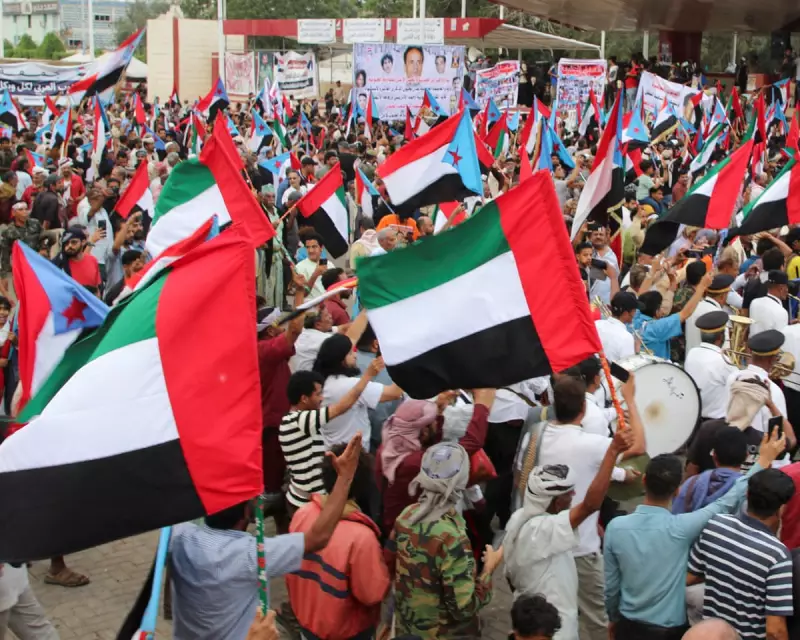
A dangerous diplomatic rift between Saudi Arabia and the United Arab Emirates over the future of Yemen has escalated dramatically, with Riyadh accusing its Gulf ally of threatening its national security. The dispute centres on the UAE-backed separatist Southern Transitional Council (STC) and its push for an independent southern Yemeni state, a move that risks triggering a fresh civil war within the region.
The Sudden Seizure of Southern Yemen
The immediate catalyst for the crisis was a series of swift military manoeuvres by the STC last month. The separatist group's forces moved into Hadramaut, Yemen's largest governorate, giving them control of nearly all the territory of the former South Yemen state, including its most productive oilfields. They subsequently took al Mahra, the most easterly governorate. This eastward expansion represented a severe shock to Saudi Arabia, which views Yemen as within its sphere of influence.
In a pointed retaliation, Saudi Arabia bombed vehicles docking at the Yemeni port of Mukalla. Riyadh explicitly stated the vehicles were destined for STC use and had originated from an Emirati port. The Saudi government issued a stark warning: "The Kingdom stresses that any threat to its national security is a red line, and the Kingdom will not hesitate to take all necessary steps and measures to confront and neutralise any such threat."

A Proxy Struggle with Regional Repercussions
Analysts warn the conflict has moved beyond indirect competition. Farea al-Muslimi, a research fellow at Chatham House, stated: "After years of indirect competition through local proxies, the dispute now appears to be moving toward a more direct confrontation." The tensions reflect a fundamental disagreement over Yemen's political future, with the UAE pursuing a more interventionist approach despite its greater geographic distance.
The fallout could extend far beyond Yemen's borders. The dispute has the potential to spill over into other regional flashpoints, including Sudan and the Horn of Africa, where the two wealthy Gulf states frequently back opposing sides. Furthermore, the Iran-backed Houthi rebels in northern Yemen are likely to view the schism between their principal adversaries as a significant advantage.
Diplomatic Standoff and the Stance of the West
Saudi Arabia has applied intense diplomatic pressure on Abu Dhabi, demanding the STC's withdrawal from the newly seized territories. Riyadh has sought to isolate the UAE and the STC, arguing that an independent south would remain an unrecognised micro-state. However, the UAE shows little sign of buckling. Emirati political scientist Abdulkhaleq Abdulla framed the support for the STC as a test of character, writing on X that the UAE does not abandon its allies.
Western governments, taking their lead from Washington, have shown a preference for a unified Yemeni state and are broadly sympathetic to the Saudi position. However, they have been reluctant to publicly criticise the UAE, a pattern also seen in the context of the Sudan conflict. The situation evokes troubling parallels with the 2017 Gulf crisis involving Qatar, which destabilised regional relations for years.
The immediate trigger for the current tensions was a rally in Aden on 30 December, where supporters of the STC waved flags of both the separatist movement and the United Arab Emirates, visually underscoring the alliance that now threatens to fracture the Saudi-led coalition in Yemen.