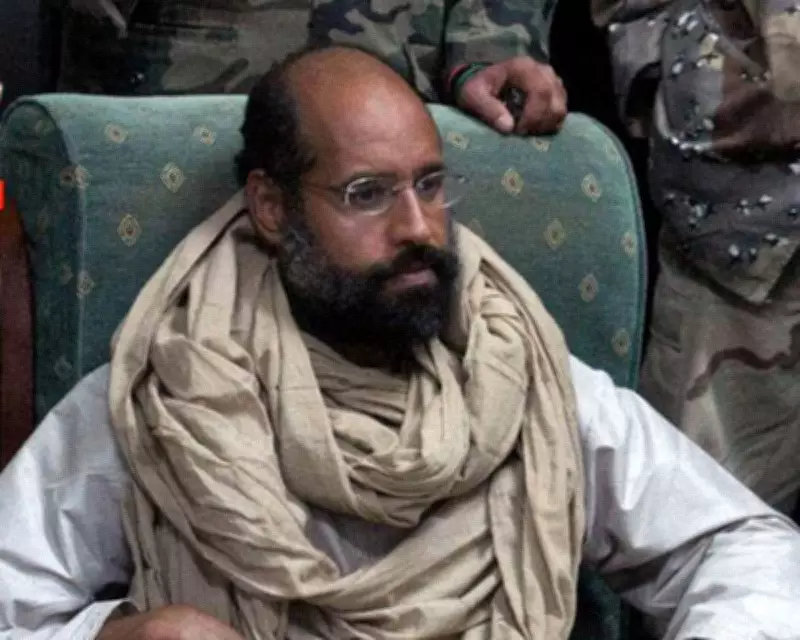
The violent death of Saif al-Islam Gaddafi, son of the former Libyan leader Muammar Gaddafi, has starkly highlighted the country's ongoing turmoil and the perceived threat he posed to its entrenched political elites. Shot dead by unidentified gunmen at his residence in Zintan on Tuesday, this assassination serves as a grim reminder that Libya remains a fractured and dangerous state, more than fifteen years after the downfall of his father's regime.
A Potent Symbol of a Divided Nation
Saif Gaddafi, aged 53, had evolved into a significant political figure, appealing to a sense of nostalgia among some Libyans for a past remembered as more secure and stable. His green movement continued to attract supporters who yearned for the era symbolised by his father, despite its authoritarian nature. This base of support made him a unique and disruptive force in Libya's bifurcated political landscape.
The Challenge to Libya's Dual Power Structure
Libya is currently split between an authoritarian eastern region, controlled by warlord Khalifa Haftar's family, and a UN-recognised western administration based in Tripoli, led by Prime Minister Abdul Hamid Dbeibeh. Dbeibeh clings to power despite being intended only as an interim leader under a UN process in 2021, with promised elections failing to materialise. Saif Gaddafi's difficulty was that he did not align neatly with either of these camps, positioning himself as a third force and thus representing a direct challenge to both.

As one Libyan observer noted, "There is a large constituency inside Libya that has come to support what he symbolises, and if there were elections it was likely that he would do better than Dbeibeh and Haftar." This sentiment was bolstered by the fact that many younger voters have no personal memory of Muammar Gaddafi's rule, allowing Saif to capitalise on a romanticised view of the past.
International Justice and Political Intrigue
The circumstances surrounding Saif Gaddafi's death are shrouded in mystery and conspiracy theories, particularly given recent reports of meetings between rival factions in Paris to discuss electoral strategies. These talks, facilitated by Donald Trump's former adviser on Arab and African affairs, Massad Boulos, suggest that any potential unity deal would have faced the obstacle of Gaddafi's independent candidacy.
His assassination also marks a significant setback for international justice. Elham Saudi, director of the London-based group Libyan Lawyers for Justice, emphasised this point, stating, "Saif Gaddafi is the last person who had an outstanding arrest warrant at the international criminal court for violations in 2011... It would be a sad day for victims if that file is now closed with his death." This closure coincides with the fifteenth anniversary of the Libyan uprising, adding a layer of poignancy to the loss of accountability.
From Western Darling to Populist Figure
Saif al-Islam Gaddafi's political journey was complex and multifaceted. Educated in the West and more sophisticated than his father, he once served as a slick interlocutor with Western powers, negotiating Libya's abandonment of weapons of mass destruction and compensation for victims of the 1988 Lockerbie bombing. His modern image even charmed institutions like the London School of Economics, which awarded him a PhD in 2008 following a substantial funding pledge from Libya.
However, the outbreak of civil war in 2011 saw him firmly aligned with his father's brutal regime. Captured by Islamist forces while attempting to flee to Niger, he was held by a militia that ignored an ICC warrant for six years before his release in a general amnesty in 2017. This marked the beginning of his third political phase, where he reinvented himself as a populist alternative to the corrupt elites in both eastern and western Libya.
Electoral Ambitions and Mysterious Allure
In 2021, Saif Gaddafi attempted to run for president, appearing in tribal dress in Sabha to submit his nomination papers. His campaign message resonated with many Libyans frustrated by the country's dire conditions. In a rare interview with the New York Times, he lamented, "There's no money, no security. There's no life here... It's more than a failure. It's a fiasco."

Although his candidacy was blocked and the election process stalled amid disputes over eligibility, he paradoxically benefited from being sidelined. Untainted by participation in a government plagued by corruption, he retained a mysterious allure. In recent smuggled recordings, he criticised the influence of foreign powers, questioning why Libyans were ruled by "foreign ambassadors from Turkey, Britain, the US and France" or UN envoys.
The Unanswered Questions and Libya's Future
With Saif Gaddafi's death, the world will never know whether he could have won a presidential election. However, the investigation into his assassination, the identification of those responsible, and how his legacy is memorialised will undoubtedly influence Libya's future trajectory. His killing underscores that the shadow of Muammar Gaddafi still looms large over the nation, perpetuating cycles of violence and political instability.
As Libya grapples with this latest tragedy, the enduring divisions and elite fears that Saif Gaddafi both represented and threatened remain central to understanding the country's protracted crisis. The path forward remains uncertain, but his story continues to shape the narrative of a nation struggling to find peace and unity.