NATO Secretary General Mark Rutte has issued a stark reality check to former US President Donald Trump, directly countering his recent expressions of doubt about the Western military alliance's solidarity. The diplomatic rebuttal came after Trump questioned whether European NATO members would defend the United States if called upon.
Trump's Davos Remarks Spark Alliance Tensions
Speaking yesterday at the World Economic Forum in Davos, Switzerland, Trump made controversial comments that have reignited debates about transatlantic security commitments. 'I'm not sure that they'd be there for us if we gave them the call,' the former president stated, while attempting to generate support for his previously abandoned plan to acquire Greenland from Denmark.
Trump elaborated further on his scepticism, telling the international audience: 'I know them all very well. I'm not sure that they'd be there. I know we'd be there for them. I don't know that they would be there for us.' These remarks have been interpreted as casting significant doubt on the fundamental principle of collective defence that underpins the NATO alliance.

Historical Sacrifices Overlooked in Presidential Critique
Rutte's response highlighted how Trump's assertions appear to disregard the substantial sacrifices made by NATO allies during the Afghanistan conflict. The war, initiated following the September 11 attacks on the World Trade Centre in New York, resulted in hundreds of casualties among NATO member nations beyond the United States.
The human cost to European allies was substantial:
- Britain suffered 457 military fatalities
- France, Germany, Italy and Denmark all recorded significant troop losses
- Collective NATO casualties represented a major commitment to the shared mission
Rutte's Direct Rebuttal to Presidential Doubts
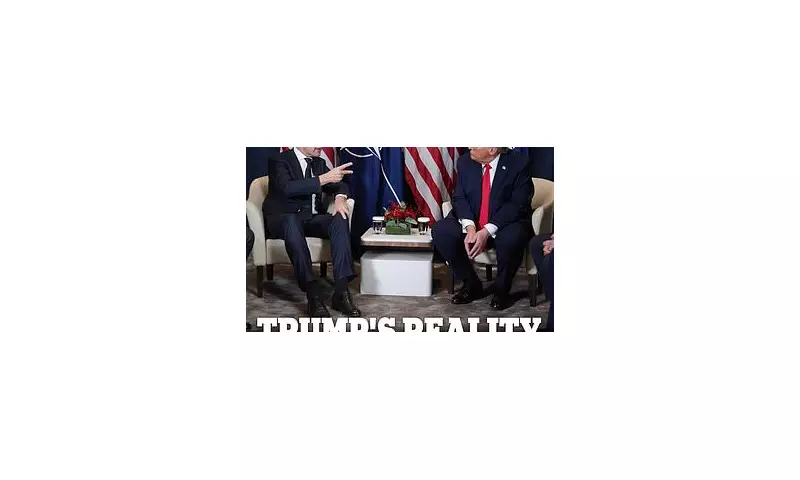
Addressing Trump's comments directly, the NATO Secretary General stated: 'There's one thing I heard you say yesterday and today. You were not absolutely sure Europeans would come to the rescue of the US if you will be attacked. Let me tell you, they will and they did in Afghanistan.'
Rutte provided specific context to reinforce his argument, revealing that for every two American soldiers who lost their lives in Afghanistan, one NATO soldier from allied nations made the ultimate sacrifice. This statistical reality directly challenges the narrative that European members have not demonstrated their commitment to collective defence through tangible action.
Broader Implications for Transatlantic Relations
The exchange between the NATO chief and former US president occurs at a sensitive moment for the Western alliance, with ongoing conflicts in Ukraine and the Middle East testing international cooperation. Rutte's decision to publicly correct the record reflects concerns within diplomatic circles about maintaining alliance cohesion amid political rhetoric that questions fundamental commitments.
This public clarification serves multiple purposes within international diplomacy:
- It reaffirms the historical record of allied sacrifice
- It reinforces the principle of collective defence enshrined in Article 5 of the NATO treaty
- It addresses potential concerns among member states about American commitment
- It provides factual counterpoints to political narratives that could undermine alliance unity
The Davos exchange highlights how historical military cooperation continues to inform contemporary diplomatic discussions about security commitments. As NATO prepares for future challenges, this public reaffirmation of past sacrifices serves as a reminder of the alliance's operational history and the tangible costs borne by all member nations in pursuit of shared security objectives.