Russia Commits to New START Nuclear Limits, Provided US Follows Suit
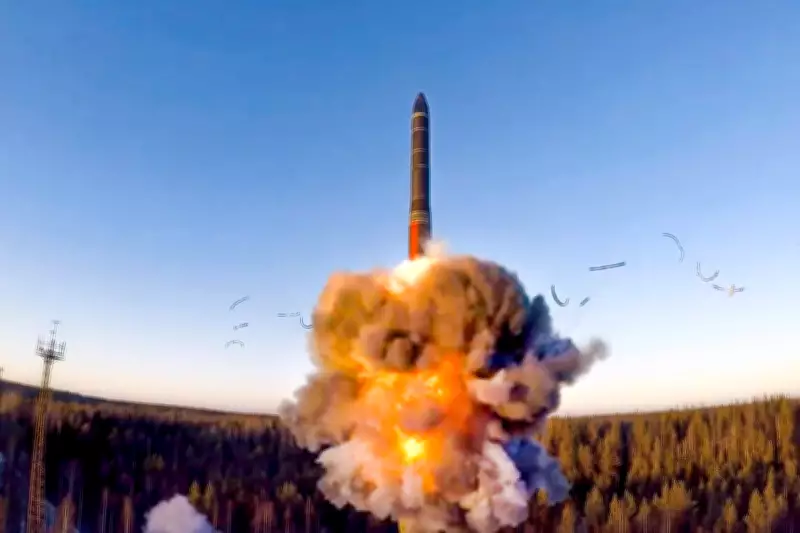
Russia has declared its intention to adhere to the limits set by the New START nuclear arms treaty, which expired last week, on the condition that the United States does likewise. This announcement was made by Russian Foreign Minister Sergey Lavrov during a speech to lawmakers on Wednesday, 11 February 2026.
Lavrov's Statement on Treaty Compliance
Speaking to the State Duma, Russia's lower house of parliament, Lavrov emphasized that Moscow will respect the caps on nuclear warheads and delivery systems as long as it observes Washington doing the same. "The moratorium declared by the president will remain as long as the U.S. doesn't exceed these limits," he stated. Lavrov added that Russia will act responsibly based on an analysis of U.S. military policies and expressed confidence that the United States is not rushing to abandon these restrictions in the foreseeable future.
Background of the New START Treaty
The New START treaty, signed in 2010 by then-U.S. President Barack Obama and Russian President Dmitry Medvedev, was the last remaining pact limiting the nuclear arsenals of the two superpowers. Key provisions included:

- Restricting each side to no more than 1,550 deployed nuclear warheads.
- Limiting deployed missiles and bombers to 700.
- Originally set to expire in 2021, it was extended for five years until February 2026.
However, on-site inspections were halted in 2020 due to the COVID-19 pandemic and never resumed. In February 2023, Russian President Vladimir Putin suspended Moscow's participation, citing U.S. and NATO actions in Ukraine, though Russia pledged to continue respecting the treaty's caps.
Recent Diplomatic Developments
Lavrov's remarks follow reports of discussions between Russian and U.S. negotiators in Abu Dhabi last week, where they allegedly explored an informal deal to observe the treaty's limits for at least six months. Kremlin spokesman Dmitry Peskov commented on Friday that any extension must be formal, dismissing the possibility of informal arrangements in this critical area.
Peskov confirmed that nuclear arms control was discussed during the Abu Dhabi talks, which also involved delegations from Ukraine and focused on peace settlement efforts. "There is an understanding that both parties will take responsible positions and realize the need to start talks on the issue as soon as possible," he said.
Broader Implications and Fears
The expiration of New START on 5 February 2026 has left no restrictions on the world's two largest nuclear arsenals for the first time in over half a century, raising concerns about a potential unconstrained arms race. Putin had previously offered in September 2025 to maintain the treaty's limits for another year to facilitate negotiations on a successor agreement, but the U.S., under President Donald Trump, has insisted on including China in any new pact—a demand Beijing has rejected.
Despite the treaty's lapse, the U.S. and Russia agreed on 5 February to reestablish high-level military dialogue, a link that had been suspended since 2021 amid escalating tensions prior to Russia's invasion of Ukraine in 2022.
Lavrov concluded by stating that Russia will closely monitor U.S. actions and is prepared to work actively on a new agreement if Washington demonstrates a genuine commitment to cooperation on strategic stability.