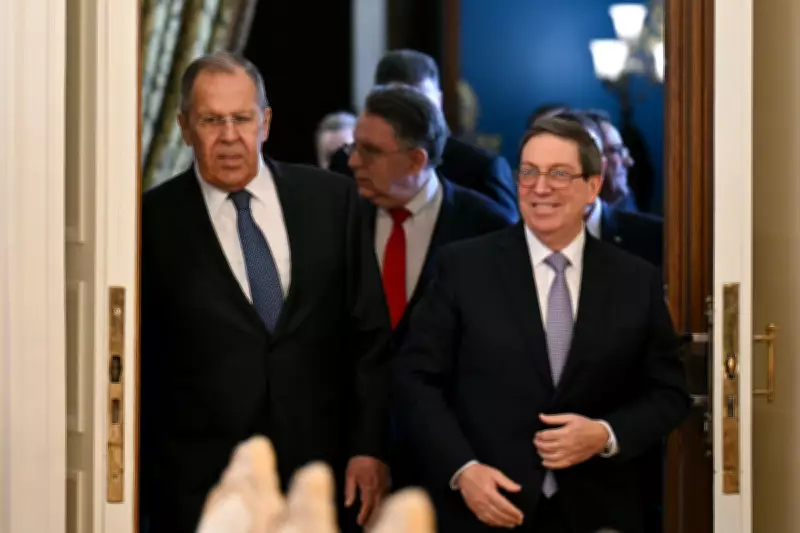
Cuban Foreign Minister Bruno Rodriguez made a significant visit to Moscow on Wednesday, arriving as his nation grapples with severe blackouts and critical fuel shortages, largely attributed to a stringent U.S. oil embargo. The diplomatic engagement underscores Russia's vocal opposition to American policies while highlighting Cuba's deepening reliance on international allies during this economic crisis.
High-Level Talks and Strong Statements
During the meetings, Rodriguez held extensive discussions with Russian Foreign Minister Sergey Lavrov, with plans to confer later with President Vladimir Putin. Lavrov used the platform to issue a direct appeal to the United States, urging it to abandon plans for a sea blockade against Cuba. He emphasized that Russia, alongside a majority of the global community, is calling for common sense and a responsible approach from Washington.
Lavrov stated, "Together with most members of the global community, we are calling on the U.S. to show common sense, take a responsible approach and refrain from its plans of sea blockade." He further assured that Moscow would "continue supporting Cuba and its people in protecting the country's sovereignty and security."

Kremlin's Firm Stance on Relations
Kremlin spokesman Dmitry Peskov reinforced this position, noting that Russia has consistently opposed the blockade of Cuba. "We have our relations with Cuba, and we value these relations very much," Peskov told reporters. "And we intend to further develop them — of course, during difficult times, by providing appropriate assistance to our friends."
When questioned about potential impacts on U.S.-Russia relations, particularly regarding a recent warming of ties, Peskov dismissed concerns, asserting that these issues are not linked. This comes amid broader diplomatic efforts, including Putin's praise for Trump's mediation in Ukraine and ongoing discussions to revive economic cooperation between Moscow and Washington.
Fuel Crisis and International Ramifications
The urgency of Cuba's situation is stark, with fuel shortages forcing Russian tourist companies to suspend package tours to the island. This move followed the Cuban government's announcement that it would not provide fuel to incoming aircraft, exacerbating travel disruptions. The crisis stems from a collapse in oil supplies after the U.S. captured former Venezuelan President Nicolás Maduro in January, halting crude shipments from one of Cuba's main suppliers.
Additionally, Mexico ceased oil exports to Cuba in response to Trump's tariff threats against nations trading with the island. In response, Russia is reportedly preparing humanitarian fuel shipments to Havana, as indicated by the Russian embassy in Havana and Ambassador Viktor Koronelli, though specific details remain undisclosed.
Broader Implications and Future Outlook
This diplomatic episode highlights the complex interplay of global politics, energy security, and humanitarian aid. As Cuba navigates its worst fuel crisis in years, Russia's support not only bolsters bilateral ties but also challenges U.S. foreign policy in the region. The situation underscores the ongoing tensions between major powers and their impact on smaller nations struggling under economic pressures.
With no immediate resolution in sight, the world watches as Cuba seeks to stabilize its energy sector while Russia positions itself as a key ally, potentially reshaping geopolitical dynamics in the Western Hemisphere.