Rubio's Munich Speech: A 'Reassuring' Trap for Europe Amid US Imperial Vision
Rubio's Munich Speech: A 'Reassuring' Trap for Europe

Rubio's Munich Address: A Soothing Facade Over a Dangerous US Agenda

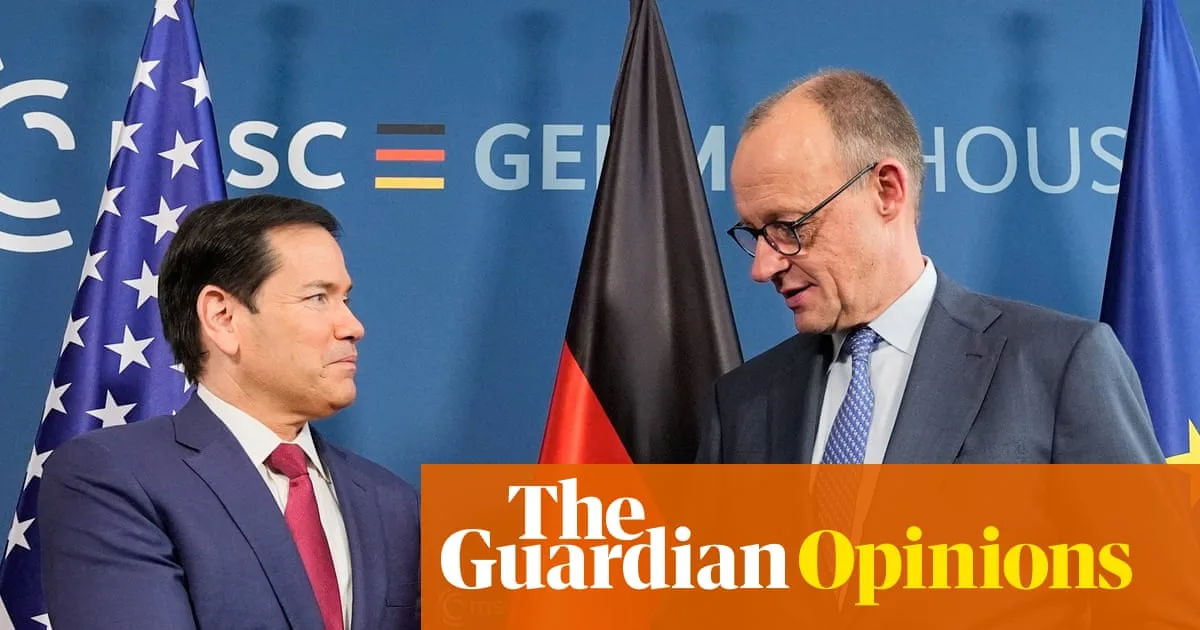
At the Munich Security Conference on 13 February 2026, US Secretary of State Marco Rubio and German Chancellor Friedrich Merz shared the stage, but their messages diverged sharply. Following last year's shocking attack by JD Vance on Europe's liberal democracies, Rubio's seemingly conciliatory tone was hailed as "reassuring" by many, including veteran German diplomat Wolfgang Ischinger, the conference chair. Rubio even received a standing ovation, though it likely reflected relief more than genuine admiration. However, beneath the surface, his speech represented a sophisticated but perilous trap for Europe, echoing the same ethno-political values as Vance's crude assault.

The Contrast: Vance's Outrage vs. Rubio's Subtlety

In 2025, Vance stunned Munich by accusing Europe of succumbing to woke liberal tyranny and losing sight of Atlantic cultural bonds, endorsing far-right nationalists like Germany's AfD. This year, Chancellor Merz responded with a blunt warning against American unilateralist values, declaring that "the culture war of the Maga movement is not ours." Rubio, in contrast, offered warm words celebrating shared Western heritage, Christianity, and a commitment to spearhead a civilisational renaissance rather than manage decline. Yet, both speeches ultimately promoted a vision where Europe and the US are defined by culture, tradition, and religion, ignoring the dark legacies of nationalism, racism, and colonialism.

The Imperial Vision: Power Over Rules

Rubio's message, while more coherent than Vance's, outlined a fundamentally imperial framework. He envisioned the Americas and Europe as spiritually connected through ancestry and religion, urging proud nationalist forces to battle globalism, cancel culture, and the "civilisational erasure" from mass migration. In this "western century," raw power would prevail, with the US dominating smaller European and allied nations within an empire-like structure. Institutions like NATO would exist, but the US would unequivocally "call the shots," demanding financial contributions while retaining control. This vision allows for competition or even collusion with other empires like Russia and China, often at the expense of European interests.

Wide Pickt banner — collaborative shopping lists app for Telegram, phone mockup with grocery list

European Response: Awakening or Snoozing?

Despite the soothing tone, European leaders showed signs of resistance. Merz, along with Emmanuel Macron, Keir Starmer, Pedro Sánchez, and European Commission chief Ursula von der Leyen, emphasised the need for European independence, invoking EU treaty article 42.7 for mutual defence and advocating a Europeanised NATO. Von der Leyen noted that crossed lines cannot be uncrossed, with Russia's war on Ukraine adding urgency. Danish Prime Minister Mette Frederiksen reminded attendees that US threats to Greenland persist. However, as French Europe Minister Benjamin Haddad observed, there's a risk Europe might press the "snooze button" again, lulled by false reassurance.

The Path Forward: European Security in a Shifting Landscape

European resolve is likely to focus on strengthening transatlantic frameworks, particularly NATO, with the UK and Italy taking over commands to build a European "pillar." Diplomats project that the US share of NATO's military capacity could drop to a fifth or less, from nearly half today. Yet, if the US pursues an imperial trajectory, diverging from European strategic interests—such as no longer viewing Vladimir Putin's Russia as a threat—relying solely on a Europeanised NATO may be insufficient. While more achievable than transforming the EU into a military alliance, it cannot guarantee security if the US abandons its commitment to a rules-based order.

In conclusion, Rubio's speech at Munich was a strategic manoeuvre, lowering transatlantic tensions while advancing a Maga-driven agenda that could undermine European autonomy. As Europe navigates this complex landscape, the challenge lies in balancing cooperation with vigilance, ensuring that reassurances do not become traps in a new era of imperial politics.

Pickt after-article banner — collaborative shopping lists app with family illustration




