Republican Senator Condemns Trump's Greenland Remarks as 'Irresponsible'
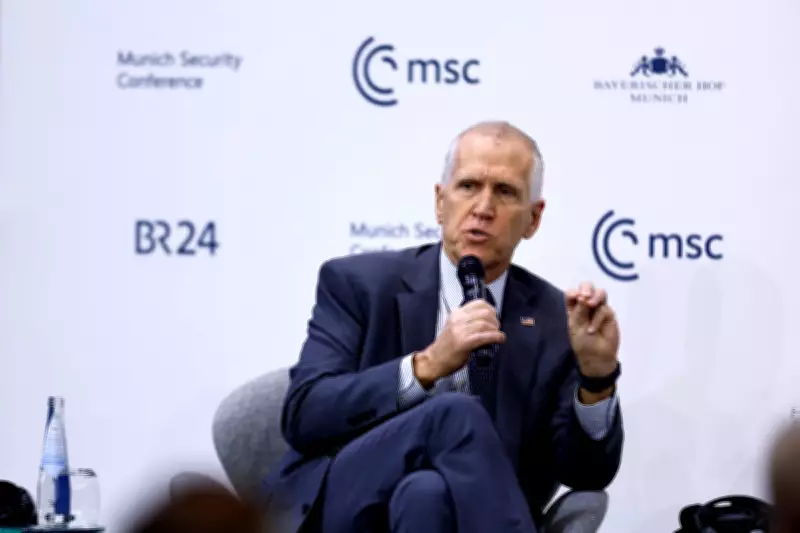
A prominent Republican senator has publicly denounced former President Donald Trump's recent threats towards Greenland, labelling them as "irresponsible" and a significant misstep in foreign policy. Senator Thom Tillis of North Carolina, a frequent critic of Trump on international matters, made these comments during an interview on CBS's Face the Nation with Ed O'Keefe on Sunday.
Tillis Calls for Modernisation of Existing Agreements
Senator Tillis argued that instead of making aggressive statements, the focus should be on updating the 1951 Agreement between the United States, Greenland, and Denmark. This pact grants the U.S. substantial access to Greenland for projecting naval power in the Arctic region. "The reality is, to me, it was irresponsible to go anywhere other than figuring out how we modernise the 1951 Agreement," Tillis stated, emphasising that only Greenland and Denmark have the authority to decide the territory's future.
Criticism of Hyperbolic Language from Both Sides
During the interview, Tillis also blamed European leaders for using "hyperbolic language" in discussions about Greenland and NATO. This criticism came in response to German Chancellor Friedrich Merz's declaration at the Munich Security Conference that the post-war liberal international order was "over." Tillis retorted, "Only if the chancellor allows it to [end]," highlighting tensions within the alliance.

The senator's rift with Trump dates back to 2025 over the passage of the Republican "Big, Beautiful Bill." Since then, Tillis has been a vocal critic from the right on issues such as support for Europe, NATO, and Trump's mass deportation operations led by Kristi Noem and Tom Homan.
NATO Defence Spending and Diplomatic Solutions
Tillis suggested that a friendlier dynamic between the U.S. and its European allies could be achieved if NATO countries acknowledged their past failures in meeting the 2% GDP defence spending benchmark. He noted that this guideline, now met by all alliance members according to NATO data, was not strictly required until 2024. "If the NATO countries who came up short for decades would just admit that that was a mistake and then double, redouble their efforts, I think this goes away just like the hyperbolic language around Greenland," Tillis said, advocating for honest discussions to strengthen the alliance.
Trump's Threats and Subsequent Backdown
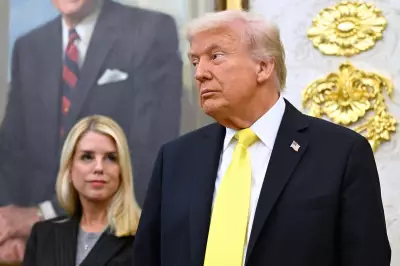
President Trump's threats to Greenland resurfaced in January, causing political upheaval across the Atlantic. In a letter to Norway's prime minister, Trump hinted at using force to acquire the territory, citing being overlooked for the Nobel Peace Prize as a motive. He later told reporters on Air Force One, "If we don't take Greenland, Russia or China will. And I'm not letting that happen," adding it would become a U.S. possession "one way or another."
Aides Stephen Miller and Karoline Leavitt further alarmed observers by not ruling out military action when questioned by journalists. Trump also threatened to impose 10% flat import tariffs on the U.K. and other European nations until Greenland was transferred to the United States.
However, Trump later retracted these threats in a speech at the World Economic Forum in Davos, stating military force was off the table. This announcement brought relief but also concerns about lasting damage to U.S. relations with NATO allies. The White House similarly walked back tariff threats.
NATO's New Defence Spending Goals
During Trump's second term last year, NATO pledged to achieve a new 5% GDP benchmark for defence spending by 2025. However, at least one country, Spain, has indicated it may not meet this target. The United States spent approximately 3.2% of its GDP on defence last year, underscoring ongoing debates about burden-sharing within the alliance.
Senator Tillis's remarks underscore growing Republican dissent over Trump's foreign policy approach, particularly regarding Arctic strategy and NATO cohesion. His call for diplomatic solutions and accountability highlights the complex dynamics shaping U.S.-European relations in the post-Trump era.