Palestinians formed lengthy queues on Tuesday at the Rafah border crossing between Gaza and Egypt, following a tumultuous first day of reopening that was plagued by delays and confusion over entry permissions. The crossing, which had been shut for an extended period, resumed operations on Monday amid a fragile ceasefire brokered in October, but the process quickly encountered significant hurdles.
Patients and Returnees Await Passage
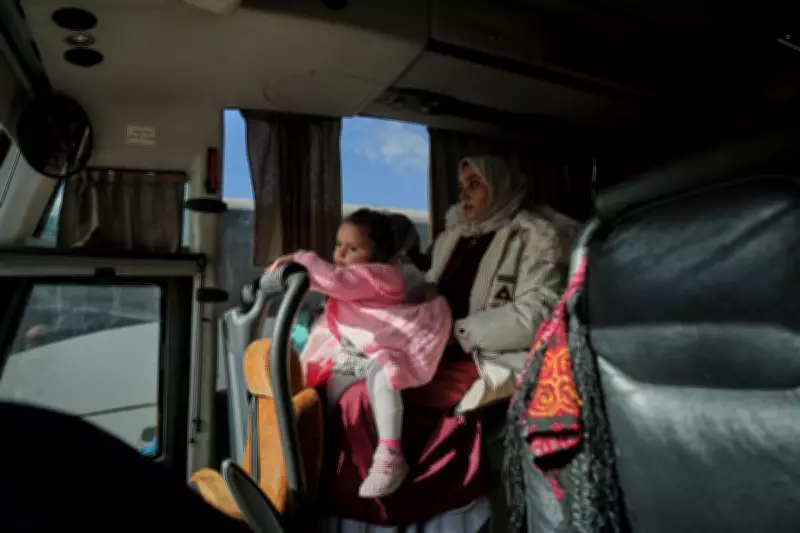
On the Egyptian side of the border, a group of Palestinian patients who had received medical treatment in Egypt gathered, hoping to return to Gaza with their families. These individuals had left Gaza earlier during the Israel-Hamas conflict, as reported by Egypt's state-run Al-Qahera News television. Meanwhile, on the Gaza side, Palestinians in need of urgent medical care unavailable in the territory were transported by the Palestinian Red Crescent from its headquarters, awaiting clearance to cross into Egypt for treatment.
Delays Mar Initial Reopening
The reopening on Monday, though celebrated as a positive step in the U.S.-backed ceasefire, was overshadowed by extensive delays. It took over ten hours for only about a dozen returnees and a small group of medical evacuees to cross in each direction. This fell far short of the 50 people officials had anticipated would be allowed through daily, barely making a dent in Gaza's escalating humanitarian needs. Tens of thousands of Palestinians are currently seeking evacuation for medical treatment or hoping to return home.

Iman Rashwan, who waited for hours in Khan Younis for her mother and sister to return from Egypt, expressed her hopes for broader access. "God willing, the crossing will open for everyone, for all the sick and for all the wounded," she said, adding that everyone desires a return to pre-war normality.
Evacuation Efforts in Khan Younis
On Tuesday morning, evacuation activities centred around a Red Crescent hospital in Khan Younis, where a World Health Organization team arrived and a vehicle carrying patients and relatives entered from another hospital. A convoy of WHO vehicles and Palestinian ambulances then proceeded towards Rafah to await crossing. However, Palestinian Red Crescent spokesperson Raed al-Nims reported that only 16 patients with chronic conditions and war wounds, accompanied by 40 relatives, were brought from Khan Younis to the Gaza side of Rafah. This was significantly fewer than the 45 patients and wounded, along with 90 relatives, that the Red Crescent had been informed would be permitted into Egypt on Tuesday.
Security and Bureaucratic Challenges
Officials have indicated that crossing numbers could gradually increase if the system functions smoothly, with Israel and Egypt vetting individuals allowed in and out. Yet, security concerns and bureaucratic obstacles have quickly dampened expectations, despite weeks of officials promoting the reopening as a key component of the ceasefire deal. On Monday, disagreements over luggage allowances caused further delays, as returnees carried more items than anticipated, necessitating additional negotiations.
Rotana Al-Regeb, who returned to Khan Younis around midnight on Monday, described the restrictions: "They didn't let us cross with anything. They emptied everything before letting us through. We were only allowed to take the clothes on our backs and one bag per person."
Symbolic Initial Numbers
The initial number of Palestinians allowed to cross is largely symbolic. Israeli and Egyptian officials have stated that 50 medical evacuees would depart, each with two caretaker escorts, and 50 Palestinians who left during the war would return. Since the conflict began, over 10,000 patients have been evacuated from Gaza, according to the WHO, but the pace slowed dramatically after Israel seized the crossing in May 2024, averaging only 17 patients per week until the ceasefire.
At a rate of about 50 crossings per day, many of the roughly 20,000 sick and wounded individuals identified by Gaza's Health Ministry as needing treatment abroad will face prolonged waits. Egyptian authorities have noted that approximately 150 hospitals across Egypt are prepared to receive patients.

Ongoing Tensions and Casualties
The issue of who and what is permitted through Rafah remains a central concern for both Israel and Egypt. Israeli Prime Minister Benjamin Netanyahu has asserted that anyone wishing to leave will eventually be allowed, but Egypt, fearing that Israel might use the crossing to displace Palestinians from Gaza, has insisted it must operate in both directions.
In a separate incident on Tuesday, Nasser Hospital in Khan Younis reported that Ahmed Abdel-Al, a 19-year-old, was shot and killed by Israeli troops in a part of southern Gaza some distance from the area under Israeli military control. Israel's military did not immediately respond to inquiries about the shooting. Abdel-Al is among the more than 520 Palestinians killed by Israeli fire since the ceasefire began on October 10, according to Gaza's health ministry, which has recorded over 71,800 Palestinian deaths since the war started. The ministry, part of Gaza's Hamas-led government, maintains detailed casualty records generally regarded as reliable by U.N. agencies and independent experts.