A senior Kremlin adviser has described high-stakes discussions between American and Russian officials as 'very useful', while cautioning that significant obstacles remain on the path to a potential peace deal for Ukraine.
Kremlin Meeting Fails to Yield Breakthrough
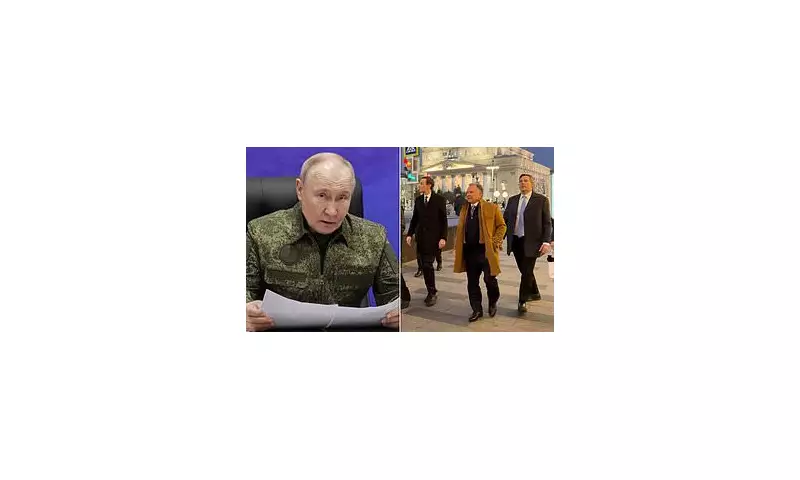
Russian President Vladimir Putin hosted Donald Trump's top envoys, Special Envoy Steve Witkoff and the former president's son-in-law Jared Kushner, for a face-to-face meeting in Moscow on Tuesday, December 2, 2025. The summit, aimed at discussing proposals to end the nearly four-year-long invasion of Ukraine, lasted for five hours but concluded without a compromise.
Putin's top foreign policy aide, Yuri Ushakov, who attended the talks, later told reporters the dialogue was 'constructive, very useful and substantive'. He noted, 'Some American draft proposals look more or less acceptable, but they need to be discussed. There is still a lot of work to be done.' Kremlin economic envoy Kirill Dmitriev echoed the sentiment on social media, simply posting that the meeting was 'productive' alongside a dove emoji.
Putin's Warning and Accusations Against Europe
Prior to the meeting, President Putin issued a stark warning, declaring that Russia is 'ready right now' for a war with Europe if one were to begin. He accused Kyiv's European allies of sabotaging US-led peace efforts, stating, 'They don't have a peace agenda, they're on the side of the war.'
Putin claimed Europe had amended peace proposals with demands unacceptable to Moscow, thereby 'blocking the entire peace process' only to later blame Russia for the lack of progress. He also asserted that Europe had locked itself out of negotiations by cutting off contact with Russia following the February 2022 invasion.
Details of Leaked US Peace Plan and Zelensky's Response
The diplomatic push follows the leak late last month of a 28-point peace plan associated with Donald Trump. The draft agreement, which was criticised by European allies for granting excessive concessions to Russia, proposed:
- Allowing Russia to keep occupied territories including Crimea, Donetsk, and Luhansk.
- Freezing the conflict front lines, enabling Russia to hold strategic areas like Mariupol.
- Barring Ukraine from ever joining NATO.
- Lifting sanctions and reintegrating Russia into the global economy.
In exchange, Ukraine would receive security guarantees from the US and NATO. A separate draft suggested NATO could treat an attack on Ukraine as an attack on the entire transatlantic community.
Ukrainian President Volodymyr Zelensky, speaking from Dublin, revealed he and Trump had worked out a separate 20-point plan following talks in Florida. He called the moment 'one of the most challenging and yet optimistic' for peace, adding, 'Now more than ever, there is a chance to end this war.' He stressed the need for a 'dignified peace' that ends the conflict permanently, not just pauses it.
Critical Context and Next Steps
The US-Russia meeting occurs at a critical juncture. Russian forces have made recent advances in eastern Ukraine, and Kyiv faces internal challenges including graft scandals. Moscow has also intensified drone and missile attacks across Ukraine.
The American envoys are expected to present a revised version of the US peace plan to Putin, following concerns the initial draft was too favourable to Moscow. A Ukrainian delegation could meet with Witkoff and Kushner as soon as Wednesday, potentially in Brussels.
EU defence official Andrius Kubilius urged Europe to develop its own geopolitical stance, stating, 'It would be very good for us to have our own plan... to see what is good, what we want to discuss.' He emphasised the need for greater independence in defence and geopolitical standing.