Russian President Vladimir Putin engaged in marathon late-night discussions with envoys representing former US President Donald Trump, setting the stage for the first trilateral peace negotiations concerning Ukraine scheduled to take place in the United Arab Emirates. The Kremlin described the Moscow talks, which commenced just before midnight local time and lasted nearly four hours, as both "frank" and "constructive," highlighting the perceived urgency ahead of the upcoming diplomatic gathering.
Territorial Dispute Remains Central to Negotiations
During the extended meeting, Putin emphasised to Trump's representatives, Steve Witkoff and Jared Kushner, that achieving a lasting settlement would be impossible without addressing the contentious territorial issue. This pointed reference alludes to Moscow's longstanding demand for Kyiv to withdraw its military forces from regions that Russia has illegally annexed since the conflict began. Kremlin aide Yuri Ushakov later reinforced this position, stating that Russia remains "sincerely interested" in a diplomatic resolution but warned that without resolving territorial disputes according to previously agreed formulas, there is little hope for a permanent solution.
Zelensky's Scathing Critique of European Allies
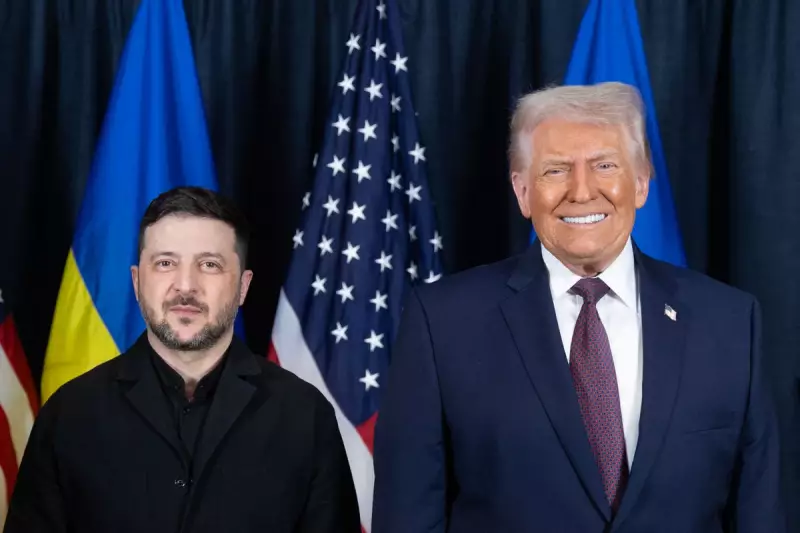
Meanwhile, Ukrainian President Volodymyr Zelensky delivered a sharply critical address at the World Economic Forum in Davos, Switzerland, expressing profound frustration with European allies over what he characterised as insufficient support and slow response times. Drawing a poignant comparison to the film Groundhog Day, Zelensky lamented that he finds himself repeating the same urgent appeals for European defence solidarity year after year, with little tangible progress. His exasperated tone strongly suggests that he does not anticipate an imminent ceasefire, despite the scheduled diplomatic engagements.

Zelensky confirmed that the upcoming trilateral talks in Abu Dhabi are planned to span two days and will involve officials operating at a "technical level." He stressed that compromise must come from all parties involved, stating unequivocally that "Russians have to be ready for compromises, not just Ukraine." This statement underscores the Ukrainian leadership's insistence that diplomatic concessions cannot be unilateral.
Strategic Data Sharing and Military Developments
In a significant parallel development, Ukraine's newly appointed Defence Minister, Mykhailo Fedorov, announced plans to establish a system allowing allied nations to train their artificial intelligence models using combat data meticulously gathered throughout the nearly four-year conflict. This valuable wartime intelligence, collected since Russia's full-scale invasion in February 2022, represents a strategic asset that Kyiv intends to leverage in ongoing negotiations with partner countries.
Fedorov, who recently transitioned from his role as digitalisation minister to oversee comprehensive reforms within Ukraine's defence ministry and armed forces, described this data trove as a crucial "card" in diplomatic dealings. This initiative highlights how technological and informational resources are becoming increasingly central to modern warfare and international diplomacy.
International Perspectives and Continued Hostilities
While diplomatic efforts intensify, military operations persist unabated. Ushakov cautioned that until territorial issues are satisfactorily resolved, Russia will continue to pursue the objectives of what it terms its "special military operation," particularly on battlefields where Russian forces currently maintain strategic initiative. This dual-track approach—combining negotiation with continued military pressure—characterises the current phase of the protracted conflict.
Finnish President Alexander Stubb offered a contrasting assessment during a separate Davos panel discussion, branding Russia's war in Ukraine a "complete strategic failure" for Vladimir Putin. Stubb argued that the conflict has inadvertently strengthened European integration, unity, and defence investment while expanding NATO's reach—outcomes directly contrary to Moscow's apparent objectives.

The complex diplomatic landscape is further complicated by varying international perspectives. Former President Trump, speaking to reporters, expressed optimism about potential concessions from Putin while notably downplaying the war's direct impact on the United States, describing it as geographically distant and suggesting that European nations have greater stakes in the resolution. This stance highlights ongoing transatlantic differences in prioritisation and engagement regarding the Ukrainian crisis.
As preparations for the Abu Dhabi talks proceed, the late-night Moscow discussions between Putin and Trump's envoys have established clear Russian parameters for negotiation, centred firmly on territorial concessions. Meanwhile, Zelensky's public frustrations and Ukraine's strategic data-sharing initiative illustrate alternative pressure points and diplomatic tools being deployed by Kyiv. The coming days will reveal whether these parallel diplomatic tracks can converge toward meaningful progress or will instead reinforce the cyclical patterns of disappointment that Zelensky so vividly described.