Putin Orders Nuclear Drills as Trump Threatens NATO Breakup
Putin Nuclear Drills Amid Trump NATO Threat

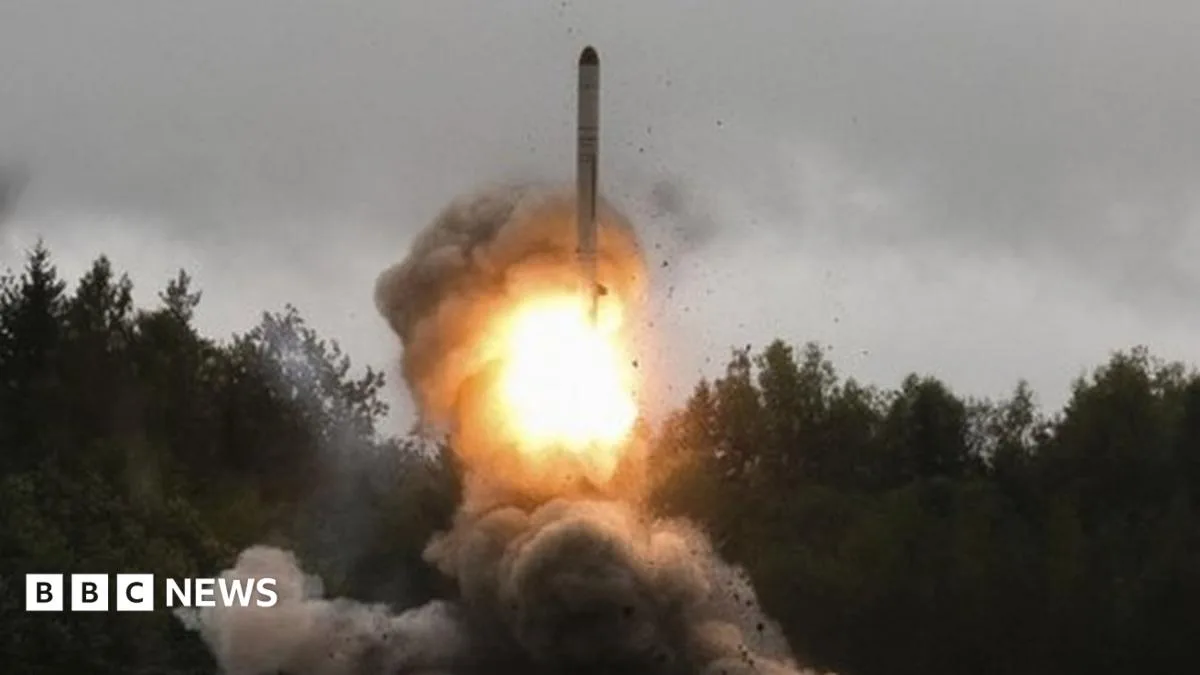
Russia has conducted full-scale nuclear drills with its intercontinental ballistic missiles, issuing a stark warning to the West as former US President Donald Trump threatens to dismantle the NATO alliance. The exercises, ordered by Vladimir Putin, involved the deployment of Yars missiles in Siberia, showcasing Russia's strategic nuclear capabilities amid heightened geopolitical tensions.

Nuclear Drills in Siberia

The Russian government released images of massive Yars intercontinental ballistic missiles being transported through snowy terrain as part of the drills. Crews from Russia's strategic missile forces engaged in war games, simulating responses to enemy attacks and countering air assault weapons. The exercises included deployment to field launch sites, movement through areas with simulated radioactive contamination, and the use of engineering equipment, camouflage, and security measures.

Yars Missile Capabilities

The RS-24 Yars missile is a formidable component of Russia's nuclear arsenal, typically carrying three or four nuclear warheads. Each warhead has an estimated yield between 100 and 300 kilotons, making them seven to twenty times more powerful than the bomb dropped on Hiroshima. Some reports suggest the missile can be configured for up to six smaller warheads, though this is not standard.

Wide Pickt banner — collaborative shopping lists app for Telegram, phone mockup with grocery list

With a speed of Mach 25, reaching approximately 19,000 miles per hour, and a range of up to 7,500 miles, the Yars missile can target locations across the United States and Europe. It currently serves as the primary element of Russia's ground-based strategic nuclear force, underscoring its role in global military posturing.

Trump's NATO Threats

Concurrently, Donald Trump has reiterated threats to withdraw the United States from NATO, labeling the alliance a "paper tiger" following its reluctance to engage in America's conflict with Iran. Trump's criticism stems from NATO allies refusing his demands to deploy warships to the Strait of Hormuz, a move that has sparked concerns over the alliance's cohesion and future.

Implications for European Security

If Trump follows through on his threats to break up NATO, it could result in significant nuclear superiority for Russia in Europe, critically weakening the defensive capabilities of democratic nations on the continent. The Kremlin's regular nuclear exercises are designed to test combat readiness and send warning signals to Western adversaries, particularly amid ongoing tensions over the war in Ukraine.

The Siberian drills focused on enhancing combat readiness in field conditions using mobile missile systems. Crews practiced camouflage techniques, withdrawal from simulated enemy attacks, and countermeasures against air threats. A mock enemy sabotage group was reportedly "killed" by gunfire during the exercises, highlighting the realistic nature of the training.

This escalation in nuclear posturing by Russia, coupled with Trump's divisive rhetoric, raises alarms about global stability and the future of international alliances. The interplay between military drills and political threats underscores the fragile state of East-West relations, with potential ramifications for security and diplomacy worldwide.

Pickt after-article banner — collaborative shopping lists app with family illustration




