Prince William's Pivotal Saudi Arabia Visit Commences
The Prince of Wales has embarked on what is being described as the most significant foreign engagement of his public career, arriving in Saudi Arabia for a crucial three-day diplomatic mission. William traveled at the specific request of the British Government, aiming to reinforce ties with one of the United Kingdom's most important Middle Eastern allies.
High-Stakes Meetings with Crown Prince Mohammed bin Salman
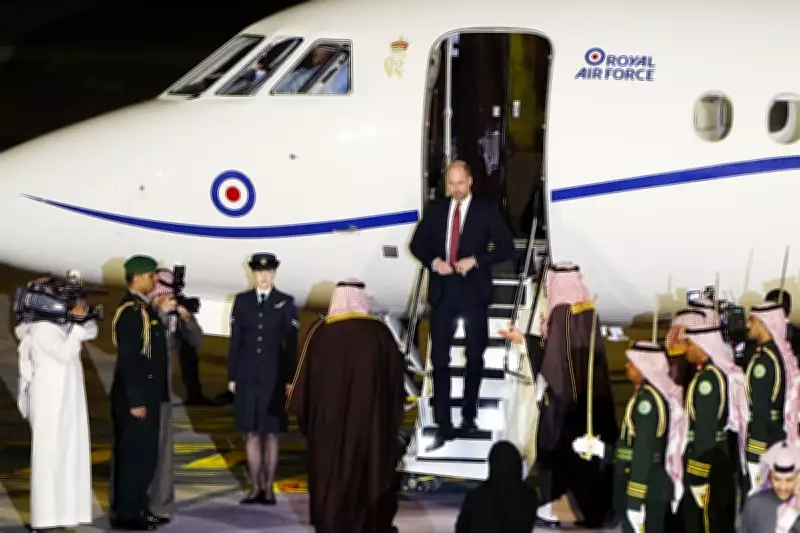
Upon arrival at King Khalid International Airport via RAF aircraft, William was formally greeted by Prince Mohammed bin Abdulrahman bin Abdulaziz, the deputy governor of Riyadh. Following traditional Arabic coffee and brief discussions with dignitaries, the Prince of Wales proceeded directly to his first engagement with the country's controversial leader, Crown Prince Mohammed bin Salman.
The two royals, who have met previously, toured the UNESCO World Heritage Site At-Turaif in Diriyah—the historic birthplace of the Saudi Kingdom. They spent twenty-five minutes exploring the beautifully restored mud brick city, including its mosques, palace rooms, and the notable Arabian Horse gallery showcasing purebred heritage.

London and Riyadh both express strong hopes that these interactions will foster a meaningful personal connection between the future British monarch and the Saudi crown prince. Such a relationship could potentially define Anglo-Saudi diplomatic relations for decades to come.
Private Discussions and Diplomatic Sensitivities
The formal talks between William and Mohammed bin Salman were followed by an intimate private dinner at the crown prince's farm within the UNESCO site. In keeping with local customs that favor discreet discussions on sensitive matters, the exact content of their conversations remains undisclosed. It is unknown whether human rights issues were addressed during these private exchanges.
A Saudi source revealed significant enthusiasm about the visit, stating: "They are delighted that he's here. The fact that he's a prince and the future king matters enormously. They want it to be a friendship that lasts."
William prepared extensively for this mission, consulting with his father King Charles III—who has made multiple visits to Saudi Arabia—and receiving briefings from UK ambassador Stephen Hitchen.
Navigating Controversy and Human Rights Concerns
The visit occurs against a complex backdrop of international criticism directed at Crown Prince Mohammed bin Salman. The Saudi leader's reputation suffered significant damage following a US intelligence determination that he ordered the 2018 killing of journalist Jamal Khashoggi. His regime has faced persistent accusations of human rights violations.
Felix Jakens, head of campaigns at Amnesty International, urged Prince William to intervene in specific cases: "We've asked Prince William to raise the case of British national Ahmed Al Doush, who was arrested visiting Saudi Arabia on holiday in 2024, and sentenced to 10 years in prison for tweets from 2018. Any influence Prince William is able to exert behind closed doors could be critical in securing his release."
Jakens further noted that despite Saudi Arabia's Vision 2030 modernization program—which aims to transform the kingdom into a diversified economy and has introduced greater freedoms for women—the country's human rights record remains deeply concerning, with execution rates reaching record levels.
Epstein Scandal Statement Precedes Visit
Hours before departing for Riyadh, William and Princess Catherine issued their first public statement regarding the Jeffrey Epstein scandal, which has implicated the prince's uncle, Andrew Mountbatten-Windsor. A Kensington Palace spokesperson confirmed: "I can confirm that the Prince and Princess of Wales have been deeply concerned by the continued revelations. Their thoughts remain focused on the victims."
This carefully timed statement appeared designed to address the escalating controversy—which intensified after Thames Valley Police announced it was assessing claims about Andrew sharing confidential trade documents—allowing William to focus fully on his diplomatic mission without distraction.

As the Prince of Wales engages in these delicate discussions, his ability to balance diplomatic objectives with ethical considerations will be closely watched by international observers, with potential implications for both royal diplomacy and UK foreign policy in the Middle East.