Prince William's High-Stakes Saudi Arabia Visit for Crown Prince Talks
The Prince of Wales has commenced a significant three-day diplomatic mission to Saudi Arabia, at the explicit request of the British government. This strategic visit aims to fortify relations with a crucial Middle Eastern ally and major regional power, setting the stage for future Anglo-Saudi cooperation.
Royal Engagement with Controversial Leadership
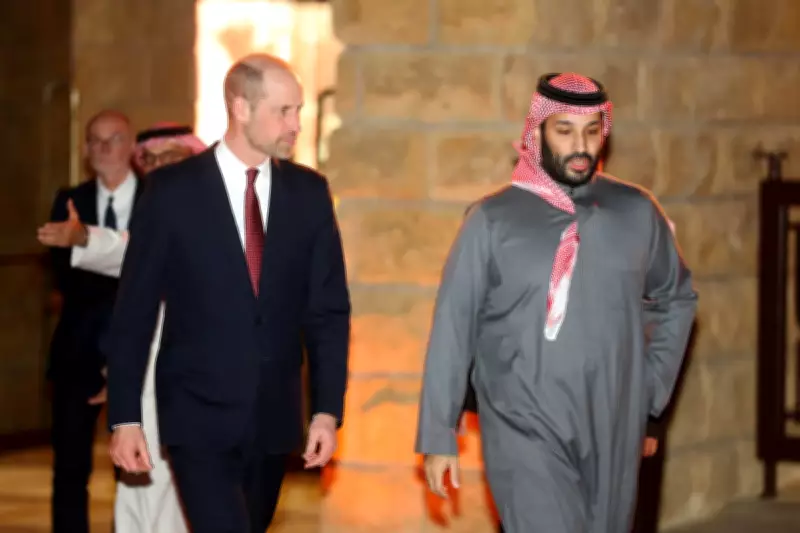
Upon arrival at King Khalid International Airport via RAF aircraft, Prince William was formally greeted by Prince Mohammed bin Abdulrahman bin Abdulaziz, the Deputy Governor of Riyadh. Following traditional Arabic coffee and brief courtesies, the Prince of Wales proceeded to his primary engagement: talks with Crown Prince Mohammed bin Salman, the nation's de facto ruler.
The two royals toured the UNESCO World Heritage Site At-Turaif in Diriyah, the historic birthplace of the Saudi Kingdom. They spent twenty-five minutes exploring the meticulously restored mud-brick complex, which features ancient mosques, palace chambers, and the notable Arabian Horse gallery. Subsequently, they held formal discussions followed by an intimate private dinner at the Crown Prince's farm.

This burgeoning relationship between the future British monarch and the Saudi leader is anticipated to define bilateral relations for decades. A source close to the Saudi delegation remarked, "They are delighted that he's here. The fact that he's a prince and the future king matters enormously. They want it to be a friendship that lasts."
Navigating Diplomatic and Ethical Complexities
Prince William prepared extensively for this sensitive visit, consulting with his father, King Charles III, who has substantial experience with Saudi engagements. He also received briefings from UK Ambassador to Saudi Arabia, Stephen Hitchen. The trip occurs against a backdrop of significant controversy surrounding Crown Prince Mohammed bin Salman, known as MBS.
The Crown Prince leads an absolute monarchy frequently criticized for human rights violations. His reputation was particularly marred by a US intelligence assessment alleging he ordered the 2018 killing of journalist Jamal Khashoggi. While the content of the private talks remains undisclosed, cultural norms in Saudi Arabia typically favour discreet discussions on sensitive matters rather than public confrontations.
Felix Jakens, Head of Campaigns at Amnesty International, urged Prince William to leverage his influence privately. "We've asked Prince William to raise the case of British national Ahmed Al Doush, arrested in 2024 and sentenced to ten years over historical tweets. Any influence Prince William is able to exert behind closed doors could be critical in securing his release," Jakens stated.
Vision 2030 and the Visit's Broader Agenda
The Crown Prince is the architect of Saudi Arabia's Vision 2030, an ambitious blueprint to transform the kingdom into a diversified, sustainable economy and global hub. This includes goals to attract foreign investment, empower women—evidenced by the 2018 lifting of the driving ban—and enhance quality of life.
Prince William's itinerary reflects these modernization efforts. As President of the Football Association, he will visit Misk Sports City to observe young Saudi girls learning football skills, highlighting growing female participation in sports. He will also tour the 83-mile Sports Boulevard, an Earthshot Prize-nominated project creating green cultural pathways through Riyadh, aligning with Vision 2030's environmental and lifestyle objectives.
However, human rights organizations caution that progress coexists with severe repression. Jakens added, "Saudi Arabia's Vision 2030 aims to reposition the country as a tourist hotspot. But visitors should be aware that the country's human rights record remains grim, with record executions last year and severe punishments for critics."

Epstein Scandal Shadows Royal Departure
Shortly before his departure, the Prince and Princess of Wales issued their first public statement regarding the Jeffrey Epstein scandal, which implicated Prince William's uncle, Andrew Mountbatten-Windsor. A Kensington Palace spokesperson confirmed, "I can confirm that the Prince and Princess of Wales have been deeply concerned by the continued revelations. Their thoughts remain focused on the victims."
This statement, released hours before the Riyadh arrival, was strategically timed to clarify the royal couple's position, allowing Prince William to concentrate fully on his diplomatic duties without the scandal dominating discourse. The Epstein case further escalated as Thames Valley Police assessed claims that Andrew shared confidential trade envoy reports.
This visit represents a delicate balancing act for the Prince of Wales: advancing UK strategic interests with a vital ally while navigating the ethical complexities associated with Saudi leadership. The outcomes of these private discussions may significantly influence both bilateral relations and the future king's diplomatic approach.