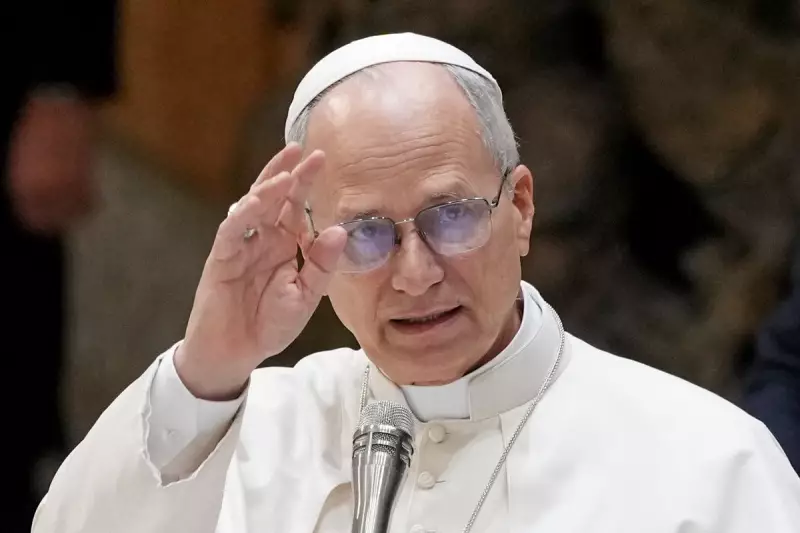
Pope Leo is currently engaged in careful deliberation after receiving a formal invitation to join former US President Donald Trump's proposed "Board of Peace," according to a significant announcement from the Vatican's highest diplomatic authority. Cardinal Pietro Parolin, the Holy See's Secretary of State, confirmed on Wednesday that the Pontiff is thoughtfully weighing his options regarding this controversial international initiative.
Vatican Confirms Deliberation Process
Cardinal Parolin addressed journalists with measured words, stating, "The pope has received an invitation and we are considering what to do. I believe it will be something that requires a bit of time for consideration before giving a response." This cautious approach reflects the Vatican's traditional diplomatic prudence, particularly given the substantial implications of such a decision.
The Vatican press office has not provided additional commentary following Cardinal Parolin's remarks, maintaining the institution's characteristic discretion regarding sensitive diplomatic matters. Pope Leo, who made history last May as the first American-born pontiff, has previously expressed criticism of certain Trump administration policies, adding complexity to this diplomatic consideration.

The Board's Controversial Framework
The proposed Board of Peace, initially conceived to address the ongoing conflict in Gaza, has evolved under Trump's vision into a much broader mechanism for resolving global disputes. According to a draft charter obtained by The Associated Press, substantial authority would be concentrated in Trump's hands, and a staggering $1 billion contribution would secure permanent membership status for participating nations.
In invitation letters dispatched to various world leaders last Friday, Trump positioned the board as embarking on "a bold new approach to resolving global conflict," suggesting it could potentially function as a rival to the United Nations Security Council. This prospect has raised significant concerns among diplomatic circles about undermining the established international order created after World War Two.
Global Reactions and Diplomatic Implications
While Israel and Egypt have reportedly accepted invitations to participate, numerous other nations have expressed caution or skepticism about the initiative. Diplomats from various countries have warned that the board's activities could potentially compromise the work of existing United Nations mechanisms and create parallel structures for international conflict resolution.
The Vatican maintains permanent observer status at the United Nations and operates an extensive diplomatic service that regularly engages in UN debates. Pope Leo himself has demonstrated particular concern for Middle Eastern conflicts, delivering a powerful Christmas Eve sermon condemning the conditions faced by Palestinians in Gaza and advocating for peaceful resolution.
The pontiff's characteristic diplomatic approach combines robust moral positions with quiet behind-the-scenes engagement, making this public deliberation particularly noteworthy. As leader of the world's 1.4 billion Catholics, Pope Leo rarely participates in international boards or similar structures, preferring the Vatican's established diplomatic channels.
Broader Context and Future Considerations
The Trump administration now envisions the Board of Peace with an expanded scope extending far beyond its original Gaza focus. This development occurs alongside other controversial Trump proposals, including threatened 200% tariffs on French wine and invitations to other world leaders like Vladimir Putin to participate in the peace initiative.
As the Vatican continues its deliberation process, observers note that the substantial membership fee alone presents significant ethical and practical considerations for an institution dedicated to charitable works and diplomatic neutrality. The outcome of Pope Leo's decision will likely influence how other nations approach this unconventional peace initiative and could shape perceptions of Vatican-United States relations in the coming years.