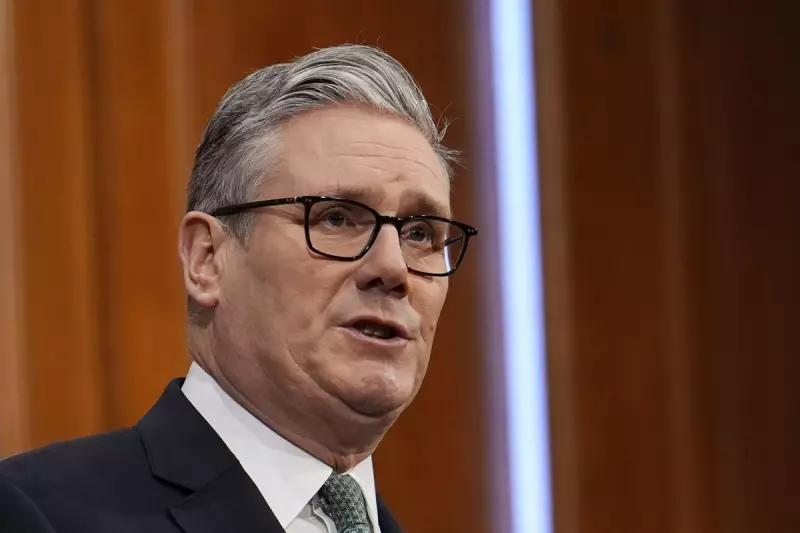
Prime Minister Sir Keir Starmer has declared that the "hard yards" of strengthening Arctic security can now commence, following US President Donald Trump's decision to withdraw tariff threats against European nations opposed to his ambitions to annex Greenland. Speaking during a visit to Hertfordshire on Thursday, Sir Keir labelled the presidential shift in position as "a good thing," concluding weeks of intense pressure that had pushed Europe and America to the brink of a trade war.
Diplomatic Breakthrough After Davos Meeting
President Trump rescinded his threats on Wednesday evening after a meeting with NATO Secretary-General Mark Rutte on the sidelines of the World Economic Forum in Davos, Switzerland. The discussion centred on Trump's prior decision to impose new 10% tariffs in response to opposition to his plans for the mineral-rich territory of Greenland. Following the talks, the US president announced they had "formed the framework of a future deal" for security in the Arctic region.
"I think you will have noticed that the last few days have been incredibly serious in relation to big things happening on the world stage," Sir Keir told local residents. "And you may have seen but it is a good thing that yesterday, the threat of tariffs against the United Kingdom was lifted and now we can start hard yards and finding a way forward on security in the Arctic, which may seem a long way away, pretty remote, but actually it does matter to all of us in terms of the safety and security of our country."

British Approach Vindicated
The Prime Minister emphasised that the UK had navigated the recent tensions through "a mix of British pragmatism, common sense, but also that British sense of sticking to our values and our principles." He added, "But now, as I say, the hard yards of actually finding a better way for security for our country, for Europe and across the globe."
In a post on his Truth Social platform, President Trump stated, "Based upon this understanding, I will not be imposing the tariffs that were scheduled to go into effect on February 1st." He described the discussed solution as one that "if consummated, will be a great one for the United States of America, and all NATO nations." However, the specific terms of any potential agreement remain notably unclear.
Sovereignty Questions and Diplomatic Moves
Following the talks, Secretary-General Rutte informed Fox News that the issue of sovereignty "did not come up anymore in my conversations tonight with the president." When questioned by reporters, President Trump characterised it as a "long-term deal" and an "infinite deal," but declined to directly confirm whether the agreement involved any US ownership of the semi-autonomous territory within the Kingdom of Denmark.
Danish Prime Minister Mette Frederiksen is scheduled to visit Britain on Thursday to meet with Sir Keir, with Greenland's sovereignty expected to be a key topic on the agenda. The Prime Minister confirmed he had not yet spoken to President Trump since the tariff threats were lifted but indicated to BBC Three Counties Radio that he would do so "very soon."
Government and International Reaction
Insiders within the UK Government expressed satisfaction that Sir Keir's diplomatic approach—advocating for calm and diplomacy rather than launching direct attacks on President Trump—had proven effective. This comes after the Prime Minister's firmest statement of opposition to date in the House of Commons on Wednesday, where he vowed he would "not yield" on the stance over Greenland and pledged to uphold British principles.
Foreign Secretary Yvette Cooper, speaking to broadcasters on Thursday morning, stated the shift in position was "a reflection of the strength of our connections in Washington." She told Sky News, "I hope this now means we are in a much better place to actually focus on what the real issues should be, which is our collective Arctic security, how NATO countries work together, respecting sovereignty, respecting our shared collective security in the face of shared threats, particularly from Russia."

Ms Cooper emphasised that "Greenland sovereignty is not up for negotiation" and expressed hope that "direct discussions" between the US, Greenland, and Denmark could resume. She also called for the exploration of an "Arctic sentry"—a proposed collective security framework for the region involving NATO members.
Market Relief and Economic Implications
The diplomatic reprieve triggered a positive reaction in financial markets. European stock markets surged higher on Thursday morning as investors welcomed the apparent avoidance of further tariffs. The UK's FTSE 100 index jumped by approximately 0.8% in early trading, while Germany's Dax index climbed by about 1.2%, and France's Cac 40 rose by 1%. This followed a rally in US stock markets overnight, with the S&P 500 and Dow Jones indexes closing around 1.2% higher.
The developments mark a significant de-escalation in transatlantic tensions, allowing attention to turn towards the complex and crucial task of enhancing Arctic security cooperation among allied nations.