Pete Hegseth Issues Dire Warning on US Casualties in Potential Iran Conflict
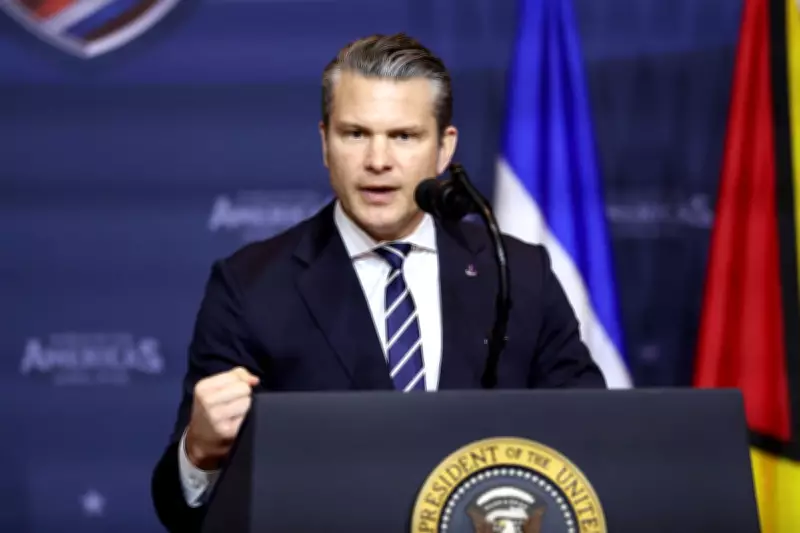
Fox News host and former military officer Pete Hegseth has made a stark prediction about the human cost of a potential war between the United States and Iran, warning of significant US casualties that could result from such a conflict. His comments, delivered during a recent broadcast, have ignited a heated debate among policymakers, military analysts, and the public regarding the risks and implications of escalating tensions with Iran.
Hegseth's Military Background Informs His Assessment
Drawing on his experience as a US Army veteran, Hegseth emphasized that any military engagement with Iran would likely be far more complex and costly than previous conflicts in the Middle East. He pointed to Iran's advanced missile capabilities, proxy networks across the region, and fortified military infrastructure as key factors that could lead to a high number of American casualties. "We're not talking about a simple skirmish here," Hegseth stated, "Iran has spent decades preparing for this scenario, and our troops would face unprecedented challenges on the ground and in the air."
Geopolitical Context and Rising Tensions
The warning comes amid ongoing geopolitical tensions between the US and Iran, which have simmered for years over issues such as nuclear proliferation, regional influence, and economic sanctions. Recent incidents, including attacks on shipping lanes and diplomatic standoffs, have raised fears of a broader confrontation. Hegseth argued that policymakers must carefully weigh the potential human toll before considering military action, noting that casualty estimates could range into the thousands depending on the scale and duration of the conflict.
Reactions from Experts and the Public
Responses to Hegseth's prediction have been mixed:
- Supporters praise his candid assessment, viewing it as a necessary reality check for those advocating a more aggressive stance toward Iran.
- Critics accuse him of fearmongering and argue that his comments could undermine diplomatic efforts or embolden adversaries.
- Military analysts have engaged in detailed discussions, with some corroborating his concerns about Iran's defensive capabilities, while others suggest technological advantages might mitigate risks.
The debate has spilled over into social media and news outlets, highlighting deep divisions in American foreign policy discourse. Many are calling for a renewed focus on diplomacy and de-escalation to avoid the catastrophic outcomes Hegseth described.
Broader Implications for US Foreign Policy
Hegseth's warning underscores broader questions about US military strategy in the Middle East and the ethical considerations of engaging in high-casualty conflicts. It has prompted discussions about the need for clear exit strategies, robust intelligence gathering, and alliances with regional partners to reduce risks. As tensions persist, his comments serve as a poignant reminder of the human cost of war, urging leaders to prioritize peaceful resolutions wherever possible.
In conclusion, while the prospect of a US-Iran war remains uncertain, Pete Hegseth's sobering prediction has added a critical voice to the conversation, emphasizing that any decision to escalate must account for the potential loss of American lives. The ongoing dialogue reflects the complex interplay of military, political, and moral factors shaping US foreign policy in a volatile global landscape.