Israeli Authorities Halt Centuries-Old Palm Sunday Tradition at Holy Sepulchre
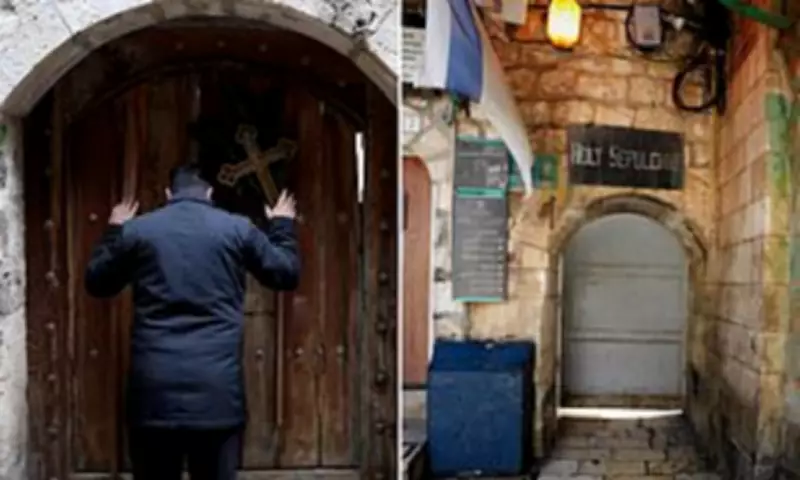
In an unprecedented move that has broken with centuries of tradition, Israeli police prevented Catholic leaders from entering the Church of the Holy Sepulchre in Jerusalem to celebrate a private Mass on Palm Sunday. This significant Christian holiday, which commemorates Jesus' triumphant entry into Jerusalem and marks the beginning of Holy Week leading to Easter, was disrupted for the first time in living memory due to security restrictions linked to the ongoing conflict with Iran.
Security Concerns Clash with Religious Freedom
The Latin Patriarchate in Jerusalem strongly condemned the police decision, describing it as 'a manifestly unreasonable and grossly disproportionate measure.' The action specifically blocked two of the church's most senior religious figures—Cardinal Pierbattista Pizzaballa, the Latin Patriarch, and the Custos of the Holy Land—from conducting Palm Sunday ceremonies at Christianity's holiest site, believed to be the location of Jesus' crucifixion.
Israeli authorities defended their position, stating they had informed church officials on Saturday that no Mass could proceed due to safety considerations. Police cited the narrow alleys of Jerusalem's Old City, which hinder emergency vehicle access, and insufficient shelter facilities as primary concerns. However, the Latin Patriarchate countered that private Masses had been conducted at the Holy Sepulchre since the Iran war began on February 28th, making Sunday's restriction particularly puzzling.

International Condemnation and Diplomatic Fallout
The closure triggered immediate criticism from multiple nations, including Israel's closest ally, the United States. U.S. Ambassador Mike Huckabee, a prominent evangelical Christian, labeled the incident 'an unfortunate overreach,' noting that the proposed private ceremony with Cardinal Pizzaballa would have involved fewer than 50 participants—well within established gathering limits.
French President Emmanuel Macron expressed grave concern, stating the action contributed to a 'concerning increase in violations of the status of the Holy Sites in Jerusalem.' He emphasized that the free exercise of worship in Jerusalem must be guaranteed for all religions. Meanwhile, Italian authorities across the political spectrum united in condemnation, with Premier Giorgia Meloni declaring the police action 'constitutes an offense not only against believers but against every community that recognises religious freedom.'
Alternative Arrangements and Ongoing Negotiations
With access to the Holy Sepulchre denied, Cardinal Pizzaballa celebrated Mass at the nearby St. Savior's Monastery, located adjacent to an underground music school designated as a safe shelter by Israeli military authorities. Later on Sunday, he conducted a prayer for peace at the Dominus Flevit Shrine on the Mount of Olives, carefully avoiding direct reference to the morning's controversial incident in his homily.
Israeli Prime Minister Benjamin Netanyahu asserted there was no 'malicious intent' behind the decision, attributing it solely to safety concerns. He announced that security agencies were developing a plan to partially reopen the Church of the Holy Sepulchre in the coming days to accommodate church leaders during the sacred Easter period. Cardinal Pizzaballa acknowledged ongoing discussions with Israeli authorities, describing them as polite despite differences of opinion regarding church access.
Broader Context of Religious Restrictions
The Holy Sepulchre closure occurred within a broader framework of security measures affecting Jerusalem's holy sites. The Western Wall, Judaism's holiest prayer site, remains largely closed due to safety issues, though authorities permit up to 50 people at a time to pray in an enclosed adjacent area. Smaller churches, synagogues, and mosques in the Old City may operate if they are located within designated distances from approved bomb shelters and maintain gatherings below the 50-person threshold.

The traditional Palm Sunday procession, which normally attracts tens of thousands of Christians walking from the Mount of Olives toward the Old City while waving palm fronds and singing, was cancelled last week due to safety concerns. The Latin Patriarchate had already been conducting Masses limited to fewer than 50 worshippers in compliance with Israeli military guidelines before Sunday's complete access denial.
Pope Leo XIV, concluding Palm Sunday Mass in St. Peter's Square, offered prayers for Middle Eastern Christians enduring what he described as an 'atrocious' conflict, noting that many cannot fully participate in holy day rituals. The Vatican has not yet commented specifically on the Jerusalem incident.