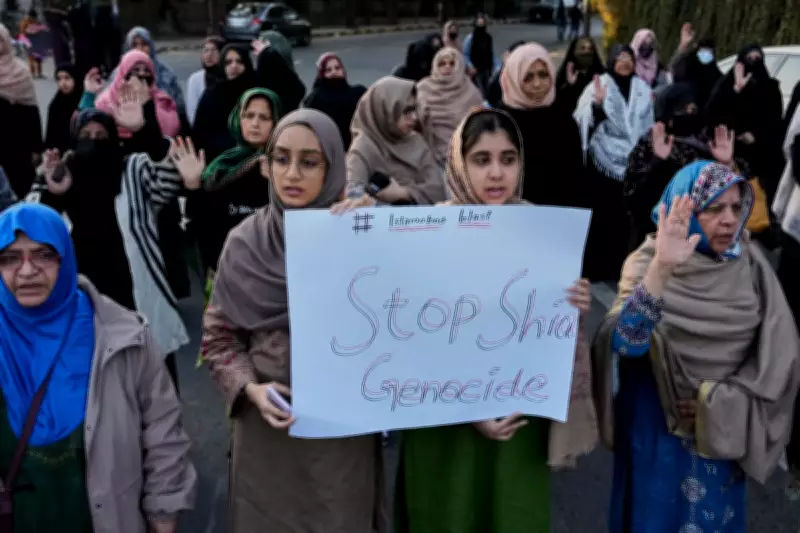
Pakistan's President Asif Ali Zardari has delivered a grave warning, stating that the Taliban government in Afghanistan has established conditions "similar to or worse than" those preceding the September 11, 2001 terrorist attacks. This unusually strong diplomatic statement signals escalating regional tensions following last week's devastating suicide bombing at a Shiite mosque in Islamabad, which claimed 31 lives and injured 169 worshippers.
Direct Accusations and Regional Implications
In a formal statement issued on Sunday, President Zardari explicitly declared that Pakistan "takes strong exception to the situation in Afghanistan where the Taliban regime has created conditions similar to or worse than pre-9/11, when terror organizations posed threats to global peace." The Pakistani leader emphasized that terrorism cannot be effectively confronted by any single nation working in isolation, calling for coordinated international action.
While expressing gratitude for global condemnation of Friday's mosque attack, Zardari pointedly accused Pakistan's eastern neighbor India of "assisting the Taliban regime and threatening not only Pakistan but regional and global peace." These direct allegations are likely to strain diplomatic relations with both Kabul and New Delhi, despite both governments having already condemned the Islamic State-claimed attack and denied any involvement.

Historical Parallels and Contemporary Concerns
The historical comparison carries significant weight, as the previous Taliban government that ruled Afghanistan from 1996 to 2001 was widely blamed for sheltering al-Qaida leader Osama bin Laden, who masterminded the 9/11 attacks that killed over 3,000 people in the United States. During that period, the Afghan Taliban permitted al-Qaida to operate training camps within Afghanistan despite repeated international warnings.
Pakistan's Interior Minister Mohsin Naqvi revealed that the Islamabad mosque bomber was a Pakistani national trained by the Islamic State group in Afghanistan. Security forces have arrested four suspects, including an Afghan national allegedly linked to the militant group and accused of helping mastermind the attack. Among the detainees were the bomber's mother and brother-in-law, though Pakistani authorities have not yet disclosed full details about the family's involvement.
Analyst Perspectives and Regional Dynamics
Asif Durrani, Pakistan's former special representative for Afghanistan, interpreted Zardari's warning as "unambiguous: terrorism thrives where it is tolerated, facilitated, or used as a proxy." In a social media post, Durrani cautioned that "allowing terrorist groups to operate from Afghan soil and India's use of proxies to destabilize Pakistan is a dangerous path with grave regional and global consequences."
Islamabad-based security analyst Abdullah Khan noted that preliminary findings suggest the mosque attack may reflect a pattern seen in some Islamic State operations involving close family networks. "The IS affiliates have at times recruited entire families," Khan observed, referencing similar patterns in past attacks in Pakistan and Indonesia.
International Response and Security Challenges
On Monday, Interior Minister Naqvi received telephone calls from Italian counterpart Matteo Piantedosi and European Commissioner Magnus Brunner, both condemning the mosque attack. According to an official government statement, Naqvi maintained that "Pakistan is a shield for the world against terrorism and emphasized that strong global-level measures are needed today to protect the world from terrorism."
Pakistan has experienced a concerning resurgence of militant violence in recent months, with much of the violence attributed to Baloch separatist groups and the Pakistani Taliban (Tehrik-e-Taliban Pakistan), which operates separately from but maintains alliances with Afghanistan's Taliban government. The Islamic State's regional affiliate, a major Taliban rival, has meanwhile carried out numerous attacks across Afghanistan.

Afghanistan's Defense Ministry and the Indian government have previously rejected Pakistani allegations, characterizing Islamabad's attempts to link them to terrorist attacks as irresponsible. Pakistan frequently accuses the Afghan Taliban, who returned to power in August 2021, of supporting militants including the Pakistani Taliban, though both consistently deny these accusations.