The Oscars' Bloated Best Picture Category Exposed as a Two-Horse Race
At the 98th Academy Awards, the ceremony's central tension was not among ten nominees, but between two cinematic titans. Despite the Academy's expansion of the Best Picture category to ten films in 2009, this year's event starkly revealed that only two movies—Paul Thomas Anderson's One Battle After Another and Ryan Coogler's Sinners—were genuine contenders. The rivalry between these blockbusters dominated the evening, rendering the other eight nominees largely irrelevant and sparking renewed debate about the need for a major overhaul.
A History of Expansion and Its Consequences
The Academy's decision to increase Best Picture nominees from five to ten was officially framed as an effort to "recognise and include" films that might otherwise be overlooked. Unofficially, it was a response to the controversial omission of Christopher Nolan's The Dark Knight from the 2009 nominations. This move aimed to address criticism that the Oscars often neglect commercially successful and widely seen films. However, nearly two decades later, the execution has proven problematic, diluting the prestige of the category and creating a field cluttered with what many perceive as filler.
This year, nominees like the staid Netflix film Train Dreams, Brad Pitt's F1, and Yorgos Lanthimos's divisive comedy Bugonia felt like afterthoughts. They received perfunctory mentions in montages but were otherwise ignored during the broadcast. Their stars did not present awards, and host Conan O'Brien's monologue bypassed them entirely. Notably, the snubbed horror film Weapons generated more comedic material than these official contenders.
The Real Contest: Sinners vs. One Battle
The true drama of the night unfolded between Sinners and One Battle After Another. These films share striking parallels: both explore themes of race, power, and rebellion; both are high-budget Warner Bros. productions; and both sparked debates about original storytelling in Hollywood and the drawing power of star actors. Their releases were shadowed by questions about what their success or failure would mean for the industry's future.
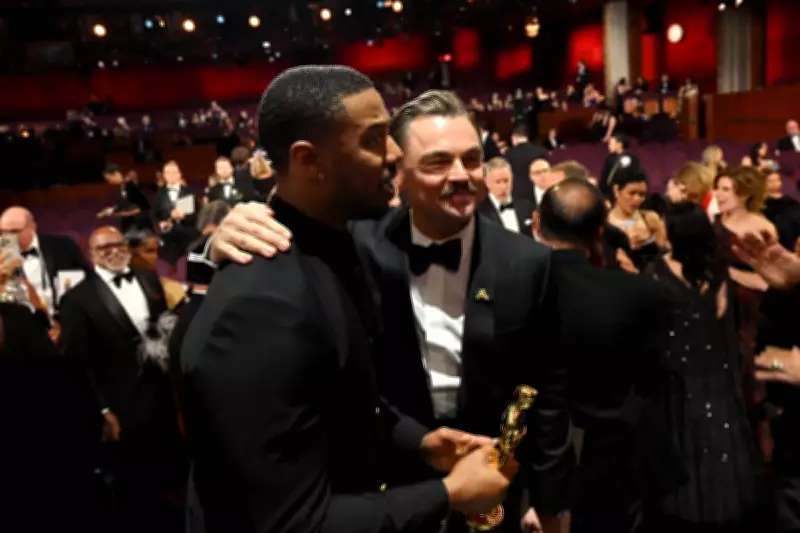
As the ceremony progressed, the rivalry provided the only genuine suspense. Shocks included Teyana Taylor and Wunmi Mosuku losing Best Supporting Actress to Weapons' Amy Madigan, while One Battle claimed the inaugural Best Casting award and Sinners took Cinematography. The Best Actor category saw Michael B. Jordan triumph over Leonardo DiCaprio, and Paul Thomas Anderson edged out Ryan Coogler for Best Director. This back-and-forth created bursts of excitement in an otherwise languid evening.
The Fallout and Calls for Change
In the aftermath, social media erupted with disgruntled Sinners fans lamenting its Best Picture loss and critics of One Battle dissecting its perceived flaws. This passionate discourse underscores how these two films ignited widespread conversation and functioned as proper, maximalist big-screen events. Yet, they also serve as the worst possible advertisement for a ten-film lineup filled with what many deem "dead wood."
Films like Marty Supreme went home entirely empty-handed, and despite early buzz and Jessie Buckley's Best Actress wins, Hamnet felt curiously irrelevant by ceremony night. The Brazilian thriller The Secret Agent also left without awards. There was a palpable sense that few of the ten nominees truly mattered to the film culture of the past year.
A Return to Focus: The Case for Five Nominees
Advocates for change argue that reverting to a tight five-film category, as in the halcyon days of 1975, would restore focus and more accurately reflect the films that captivated audiences over the past twelve months. This shift would not exclude potential Dark Knight-style snubs, as today's Oscar voting body is younger, more diverse, and less stuffy, likely recognizing such films on merit rather than relying on an expanded field to guarantee nominations.
As Paul Thomas Anderson reflected in his acceptance speech, citing the legendary 1975 lineup—Dog Day Afternoon, Jaws, Barry Lyndon, Nashville, and One Flew Over the Cuckoo's Nest—there is often no single "best" film, just what the mood favors. However, this year's Oscars proved that when only two films genuinely compete, the expanded category becomes redundant. The Academy must now seriously consider whether a return to five nominees would better serve the integrity and excitement of the awards.