The expiration of the final nuclear weapons treaty between the United States and Russia has not triggered the immediate alarm many feared, with analysts suggesting long-range arms controls have become largely irrelevant in today's strategic environment. The New Start treaty, which set limits on long-range nuclear missiles and warheads, officially ended on Thursday 5 February 2026, yet the world has not descended into a new arms race as some predicted.
A Changing Global Context
Mary Dejevsky argues that the entire nuclear arms control framework represents a Cold War and post-Cold War phenomenon with limited relevance to contemporary geopolitics. This perspective gains credence from the relatively muted global response as the New Start expiry date approached, particularly given that all other nuclear arms treaties had already been abandoned or lapsed, including the crucial Intermediate-Range Nuclear Forces treaty of 1987.
Technological and Strategic Shifts
Many traditional constraints have become obsolete with the development of entirely new weapon classes, most notably Russia's hypersonic missiles, alongside increasingly sophisticated satellite surveillance capabilities. Modern monitoring technology allows nations to observe each other's military activities with unprecedented detail and accuracy, raising questions about whether formal treaties remain necessary for oversight.

The geopolitical landscape has transformed dramatically since the Cold War era. The Yalta principles governing European peace became irrelevant following the Berlin Wall's fall and Soviet Union's collapse, though Russia's designation as the Soviet successor state allowed arms control agreements to continue temporarily. NATO's expansion to include Baltic states and former Warsaw Pact nations further complicated missile-counting arrangements and strategic calculations.
The China Factor
Perhaps the most significant contextual change has been China's emergence as a military superpower with rapidly expanding nuclear capabilities. US officials periodically suggest that any future nuclear arms control framework must include China, though Beijing's enthusiasm for such participation remains uncertain. Russia's continued perception of itself as America's sole superpower counterpart further complicates potential multilateral arrangements.
New Nuclear Powers and Old Realities
The nuclear landscape now includes relative newcomers like India and Pakistan, who operate outside traditional arms control frameworks. Their example suggests nuclear capability might function as its own constraint, with both sides recognizing the risks of mutually assured destruction that characterized Cold War deterrence strategies.
Last-Minute Diplomacy and Strategic Calculations
Despite the treaty's expiration, the United States engaged in eleventh-hour discussions about extending New Start, a move likely initiated by President Donald Trump. This suggests even this administration recognizes value in preserving elements of the nuclear arms control process, at least temporarily.
Multiple Considerations for Extension
First, maintaining dialogue sends Moscow an important message that Washington remains open to communication and wants to stabilize relations. The diplomatic costs of continuing talks are minimal compared to potential benefits, including making Russia feel more secure within its borders.
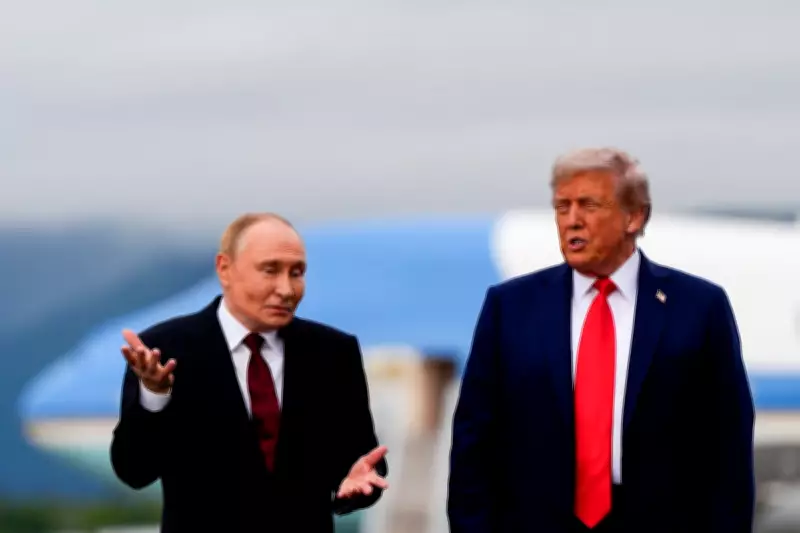
Second, weapons control has historically provided formal communication channels when other diplomatic avenues closed. Nuclear talks served as the starting point for Ronald Reagan and Mikhail Gorbachev's relationship with the INF treaty signing, and provided the official framework for Donald Trump and Vladimir Putin's controversial Helsinki meeting during Trump's first term.
Third, a more nebulous but potentially significant consideration involves nuclear rhetoric during the Ukraine conflict. Loose talk about potential nuclear weapons use from various quarters, including suggestions that actual strikes might not be catastrophic, reflects concerning attitudes toward nuclear deterrence. For those who remember Hiroshima, Nagasaki, and the Cuban missile crisis, preserving even vestigial arms control mechanisms seems preferable to complete abandonment without considering alternatives.

Arms control and security arrangements have remained central to US-Russia discussions since the beginning of Trump's second term, serving as a diplomatic fallback when relations become particularly strained. While the New Start treaty has technically expired, the possibility of a "new New Start" remains on the horizon, suggesting that nuclear arms control, though transformed, may not be entirely obsolete in our increasingly multipolar world.