NBC's Muted Boos for JD Vance at Olympics Spark Reality Distortion Debate
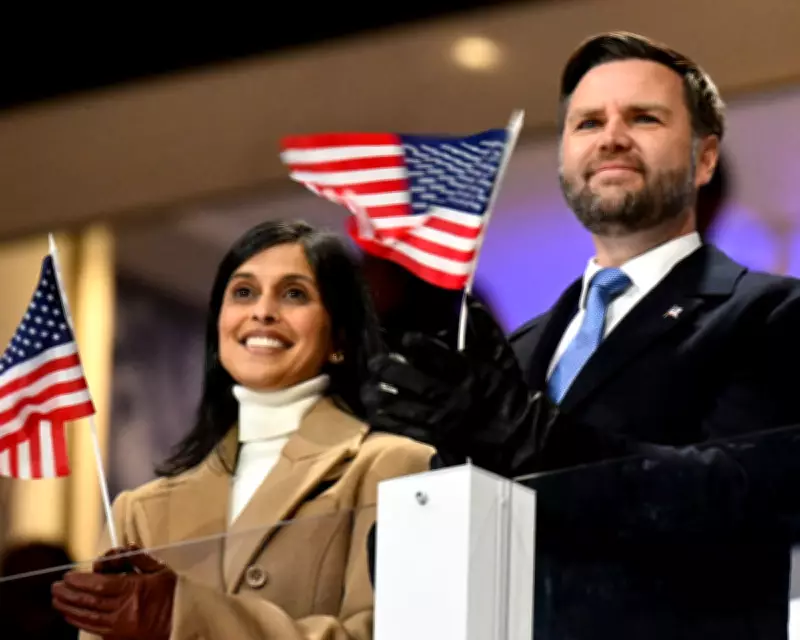
During the opening ceremony of the Winter Olympics in Milan, a stark contrast emerged between live experience and broadcast reality. As Team USA entered the San Siro stadium, speed skater Erin Jackson was met with enthusiastic cheers. However, when cameras shifted to US Vice-President JD Vance and Second Lady Usha Vance, large sections of the crowd responded with audible, sustained boos.
Global Audiences Hear What NBC Did Not Show
Canadian viewers, journalists in the press tribunes, and international broadcasters like CBC and the BBC clearly heard the dissent. Yet, American audiences watching NBC's coverage were unaware, as the network appeared to cut the booing from its broadcast. This editorial choice, once potentially unnoticed, now stands exposed in the modern media landscape where no single broadcaster controls the narrative.
Fans quickly clipped and shared versions of the event online, some with boos and some without, turning a routine production decision into a case study in information asymmetry. The incident underscores how it is becoming increasingly difficult to curate reality when the rest of the world holds up its own camera angles.

Implications for Future US-Hosted Events
This raises uncomfortable questions as the United States prepares to host major sporting events, including the 2026 Men's World Cup and the 2028 Los Angeles Olympics. If a US administration figure is booed at these events, will domestic broadcasts mute or avoid mentioning crowd audio? What happens when the world feed or foreign broadcasters show something entirely different, or when thousands of smartphones in the stadium upload real-time versions?
The risk extends beyond viewers seeing through the manipulation. Attempts to manage the narrative can make American broadcasters appear less credible, not more. Audiences now assume there is always another angle, and every trade of credibility for insulation is eventually noticed.
Structural Pressures and Editorial Choices
Behind such decisions lie deeper structural pressures. The Trump era has been marked by sustained hostility toward media institutions, influencing editorial choices in high-stakes live broadcasts tied to billion-dollar rights deals. However, there is a critical difference between contextual pressure and visible reality distortion.
When global audiences can compare feeds in real time, the latter begins to resemble narrative management rather than editorial judgment. Comparisons to Soviet-style state-controlled broadcasting models, once seen as hyperbolic, are starting to feel less exaggerated.
The Olympic Ideal and Political Reality
Ironically, the Olympics are built on the idea that sport can coexist with political tension without pretending it does not exist. The International Olympic Committee's stance that athletes should not be punished for governments' actions implicitly acknowledges that governments are part of the Olympic theater.
Friday night in Milan illustrated this perfectly: American athletes were cheered, while political emissaries faced mixed reactions. Crowd dissent is not a failure of the Olympic ideal; in open societies, it is a legitimate expression of public sentiment. Attempting to erase one side of this equation risks flattening reality into something audiences no longer trust.
Looking Ahead to the 2028 Los Angeles Olympics
If Milan was a warning shot, Los Angeles represents the main event. There will be no hiding from an opening ceremony where the host country's head of state must officially declare the Games open. With 200 international broadcasters covering the moment, narrative control becomes impossible.
Should Donald Trump be in the White House in 2028, he would stand before a global television audience in a politically hostile environment, potentially in the backyard of a Democratic presidential candidate. Cheers, boos, and everything in between will be unavoidable. The real risk for American broadcasters is not that dissent will be visible, but that audiences will start assuming anything not shown is being hidden.

In an era of fragile institutional trust, this is a dangerous position. The Olympics have always been political, but what has changed is the impossibility of containing the optics. Milan may be remembered as a small moment, but it previews a future where narrative control is shared, contested, and instantly verifiable. The world is watching, and this time, it is also recording.