NATO Activates Air Defences as Putin Launches Major Assault
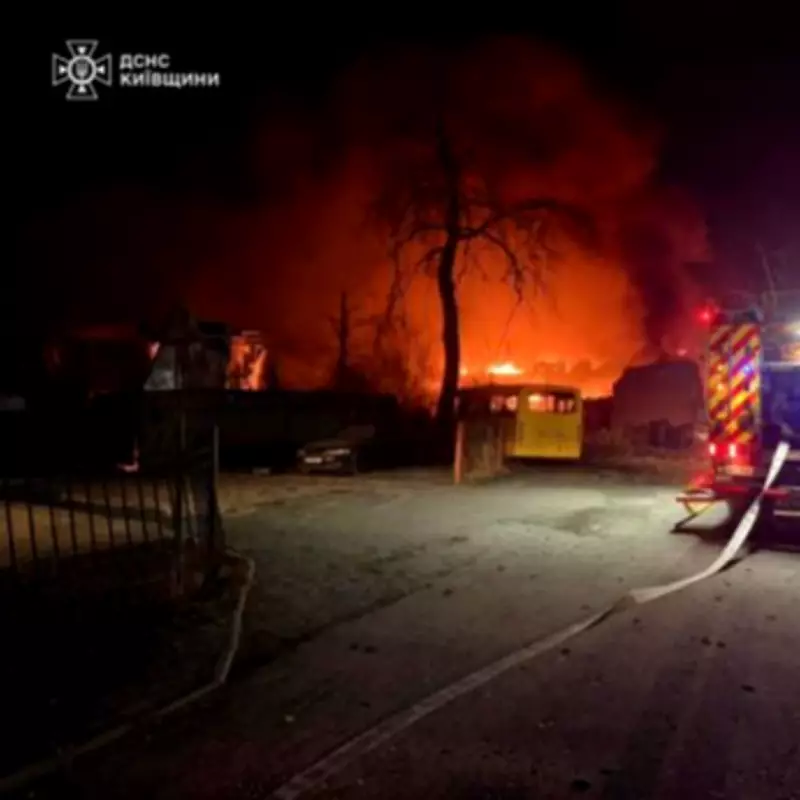
NATO forces have been compelled to scramble fighter jets along the alliance's eastern border following a severe overnight missile and drone offensive ordered by Russian President Vladimir Putin. This aggressive action represents one of the most intense attacks on Ukraine this year, resulting in significant casualties and widespread destruction across the Kyiv region.
Strategic Bombers Deployed in Conventional Strike
In a show of force, Putin utilised his Tu-95MS and Tu-160 strategic bombers, which form a crucial component of Russia's nuclear attack capabilities, to launch conventional missiles targeting civilian energy infrastructure in Ukraine. According to military reports, the assault involved 68 missiles, including advanced Kalibr, Kh-101, and Iskander systems, alongside 430 drones.
Remarkably, approximately 250 of these drones were identified as Iranian-designed Shahed models, similar to those currently being deployed by Tehran in Middle Eastern conflicts. Ukrainian air defences managed to intercept or disrupt all but six missiles and 28 drones, demonstrating considerable resilience against the onslaught.
NATO's Immediate Response and Regional Alert
In response to the heightened threat, NATO activated quick-reaction fighter pairs and deployed an airborne early-warning surveillance aircraft over Poland, which neighbours Ukraine. This precautionary measure followed similar scrambles of warplanes over Romanian airspace just a day earlier.
A statement from Warsaw's operational command confirmed: "Due to the activity of long-range aviation of the Russian Federation carrying out strikes on the territory of Ukraine, Polish and allied aircraft have begun operating in our airspace. The Operational Commander of the Armed Forces has activated the necessary forces and assets at his disposal."
Ground-based air-defence systems and radar reconnaissance units were also placed at their highest state of readiness across the region, underscoring the seriousness of the situation.
Civilian Casualties and Infrastructure Damage
The human cost of the attack was severe, with five people confirmed killed and fifteen wounded in the Kyiv region alone. Russian military sources claimed their strikes successfully hit power plants supplying Ukrainian military facilities, while additional damage was reported at warehouses and production sites in Brovary, a city situated close to the capital.
Further afield, the Dnipropetrovsk region experienced intense missile bombardment, resulting in injuries to four individuals, including children aged 11 and 16 in Zaporizhzhia. In Kharkiv region, a suburban train was struck during the offensive, highlighting the widespread nature of the attacks.
Ukrainian Counterstrikes and Broader Context
Ukrainian forces responded with strikes of their own, setting ablaze the Afipsky oil refinery and targeting the port of Kavkaz, both located in Russia's Krasnodar region. Significant explosions were also reported in occupied Crimea, where Russian Nebo-U radar installations sustained damage.
This escalation follows diplomatic tensions surrounding Putin's recent proposal regarding enriched uranium from Iran, which was reportedly declined by the United States. A senior American official commented on the Moscow initiative, stating: "It hasn't been accepted. The US position is we need to see the uranium secured."
The situation continues to develop as NATO maintains heightened alert levels along its eastern flank, while Ukrainian authorities assess the full extent of damage from what appears to be a coordinated multi-front assault by Russian forces.