
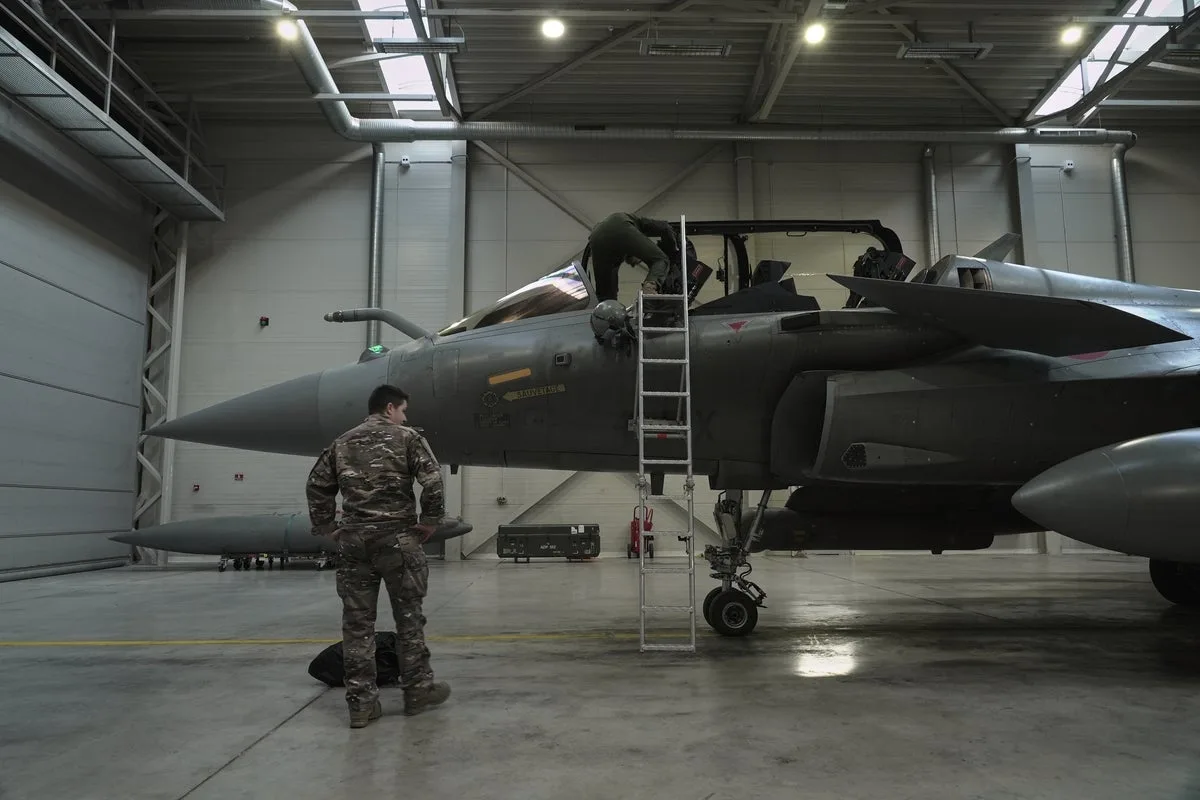
French fighter pilots scrambled from Šiauliai Air Base in Lithuania this week to intercept Russian aircraft over the Baltic Sea, in a routine but tense operation that underscores the delicate balance between deterrence and provocation. Within minutes of takeoff, they intercepted a Russian Il-20 reconnaissance aircraft and later tailed supersonic bombers and fighter escorts near Nato airspace.
The missions, part of Nato's air-policing rotation on the eastern flank, occur hundreds of times a year. Pilots on both sides maintain distance, with missiles visible but unused, in what Lieutenant Colonel Alexandre, commander of a French Rafale detachment, described as a “game of cat and mouse, or rather cat and cat.” He added, “We watch each other, scrutinize each other and try to make sure that it doesn't go any further.”
Nato scrambles jets when Russian planes fly without transponders, flight plans, or radio contact, violating International Civil Aviation Organization rules. Colonel Mihaita Marin, commanding a Romanian F-16 detachment, said interceptions are “getting close to daily” and will increase with better weather. On Monday, French jets shadowed Russian Tu-22M3 bombers, escorted by Su-30 and Su-35 fighters, which flew near Finland, Estonia, Latvia, Lithuania, and Poland before turning back near Denmark.
Lieutenant Colonel Alexandre noted uncertainty about Russian motives, saying, “We don’t know if it’s lack of professionalism or just a means for them to test us.” Nato commanders stress their goal is to deter, not provoke, reassuring Baltic states that lack their own airpower to counter potential Russian aggression.




