Myanmar's military-aligned Union Solidarity and Development Party has announced a decisive victory in the nation's first electoral contest since the armed forces seized power in a 2021 coup, setting the stage for a new administration under continued military influence.
Contested Election Amid Widespread Exclusion
The triumph of the party, which is led by a former general, was widely anticipated given that major opposition factions were barred from participating and dissent was rigorously suppressed throughout the process. Furthermore, the military automatically retains twenty-five percent of parliamentary seats, a constitutional provision that effectively ensures dominance by the armed forces and their preferred political allies.
Critics and human rights observers have condemned the polls, organized by the military junta, as neither free nor fair. They characterize the election as a calculated attempt to legitimize military rule following the overthrow of Aung San Suu Kyi's democratically elected government. That takeover ignited widespread civil resistance and plunged Myanmar into a protracted and devastating civil conflict.

Phased Voting and Reduced Participation
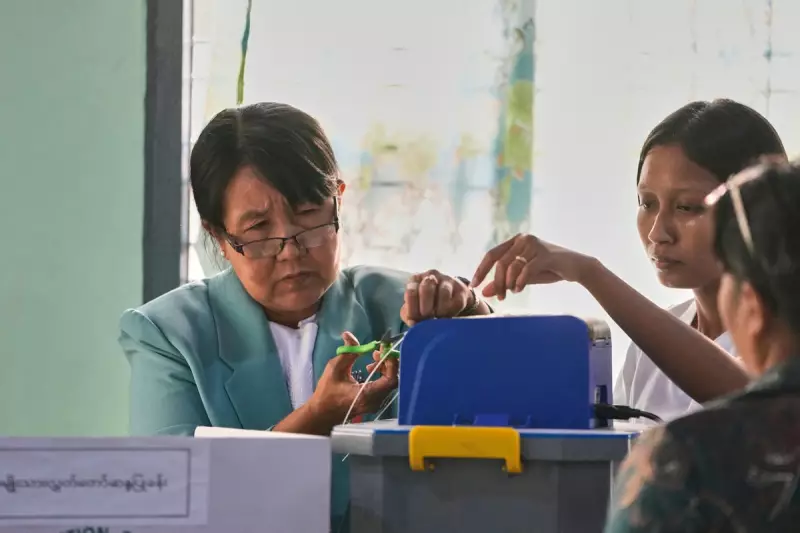
The election was conducted in three distinct phases on December 28, January 11, and January 25. Voting did not occur in sixty-seven of the country's total 330 townships, primarily areas under the control of armed opposition groups. This reduced the available seats in the 664-member national parliament to 586.
More than 4,800 candidates from fifty-seven political parties competed for positions in both national and regional legislatures, though only six parties fielded candidates nationwide. A senior USDP official, speaking anonymously to The Associated Press, confirmed the party secured fifty-seven of the sixty-one lower house seats contested in Sunday's final voting round.
Parliamentary Mathematics and Government Formation
Current projections indicate the USDP will hold at least 290 seats across Parliament's two chambers. Combined with the military's constitutionally allocated 166 seats, this coalition commands well over 450 seats, surpassing the 294 required to form a government. Final results for all seats are anticipated later this week.
Once results are certified, the newly elected parliamentarians and military appointees will nominate three presidential candidates, electing one as president while the other two assume vice-presidential roles. Senior General Min Aung Hlaing, who leads the current military government, is widely expected to become president when the new Parliament convenes.
International Condemnation and Domestic Defiance
Tom Andrews, the United Nations Special Rapporteur on human rights in Myanmar, urged the international community on Friday to reject the election results and any subsequent power arrangements derived from them.
Senior General Min Aung Hlaing directly addressed these criticisms on Sunday, asserting, "the people who live in Myanmar are the ones who vote. Not those from outside." He added, "We are not concerned whether this is recognized by foreign countries or not. We recognize the people's vote. It should be like that," signaling a dismissive stance toward international opinion.
The election outcome solidifies the military's political control but occurs against a backdrop of ongoing civil war and profound international skepticism regarding the legitimacy of the entire electoral process.