Military-Backed Party Poised for Victory as Myanmar's Controversial Election Concludes
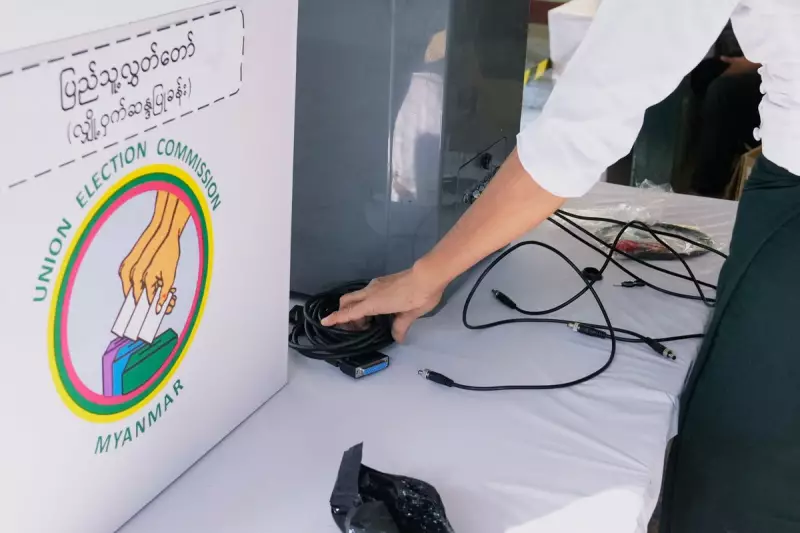
A military-aligned political party is expected to form Myanmar's next government following the conclusion of the third and final phase of the country's general election on Sunday. The voting process, orchestrated by the ruling military junta amidst an ongoing civil war and widespread ethnic conflict, has been denounced by numerous critics as neither free nor fair.
First Election Since the 2021 Coup
This marks the first general election held since the military overthrew the democratically elected government led by Aung San Suu Kyi in a February 2021 coup. Ms Suu Kyi, now 80 years old, remains imprisoned, and her political party, the National League for Democracy (NLD), has been banned from participating in the electoral process.
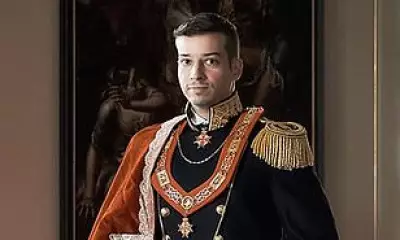
Junta leader Min Aung Hlaing has consistently defended the election, insisting it was conducted in a "free and fair" manner. He has argued that the poll offers Myanmar a crucial opportunity to return to a path of democracy and national stability.

Parliamentary Control Assured for Military
The military-backed Union Solidarity and Development Party is already positioned to secure a parliamentary majority, having won most seats during the initial two rounds of voting. General Hlaing is anticipated to assume the presidency once the new parliament convenes.
Control of the legislature is virtually guaranteed for the military and its allies, as the constitution reserves at least 25 per cent of seats in both parliamentary houses for military appointees.
International Condemnation and Junta's Response
The junta leader has openly dismissed international criticism of the election. In an apparent rebuke to neighbouring Malaysia's condemnation, he stated, "the people who live in Myanmar are the ones who vote, not those outside."
Earlier in the week, Malaysian Foreign Minister Mohamad Hasan confirmed that the Association of Southeast Asian Nations (ASEAN), of which Myanmar is a member, would neither send observers nor certify the election due to serious concerns over its lack of inclusivity and freedom.
"We are not concerned whether this is recognised by foreign countries or not. We recognise the people's vote. It should be like that," General Hlaing told reporters after visiting a polling station in Mandalay, Myanmar's second-largest city.
A Restricted Political Landscape
Although 57 parties were registered for the election, only six were listed as options on ballots nationwide. Notably, none of these parties campaigned on an explicitly anti-military platform.
According to the election monitoring group Anfrel, more than half of the parties that contested the previous general election in 2020 no longer exist. The NLD, which secured landslide victories in both 2015 and 2020, was forcibly dissolved in 2023 after refusing to register under new military-imposed rules.
Several other opposition groups also refused to register or declined to participate under what they described as unfair conditions set by the junta. Some factions actively called for a voter boycott.
Security Concerns and Disrupted Voting
The army's 2021 takeover ignited widespread public opposition, plunging Myanmar into a protracted civil war. Security threats stemming from the conflict meant that voting could not be held in over a fifth of the country's 330 townships. This significant limitation is a primary reason many observers have labelled the entire process a "sham."
Polling commenced at 6am on Sunday across 61 townships. Voter sentiment appeared mixed, with some expressing apathy and others citing a desire for peace.
Soe Tint, an 86-year-old voter in Yangon, said he cast his ballot in the hope that the country would achieve peace and development "in all sectors, including education."
In contrast, Lae Lae Yi, 62, expressed little optimism. "I'm not expecting anything at all, because there is no motivation," she remarked.

Violence and Reduced Electoral Scope
The first two rounds of voting, held on 28 December and 11 January across 202 townships, were marred by violence. Armed groups opposed to military rule carried out attacks on polling stations and government buildings in several areas, resulting in the deaths of at least two officials, according to government reports.
A total of 67 townships—primarily regions controlled by armed opposition groups—did not participate in the election at all. This has reduced the total number of seats in the national parliament from 664 to 586.
Final results for all contested seats are expected to be announced later this week. The military government has stated that the new parliament will convene in March, with the incoming government scheduled to assume its duties in April.