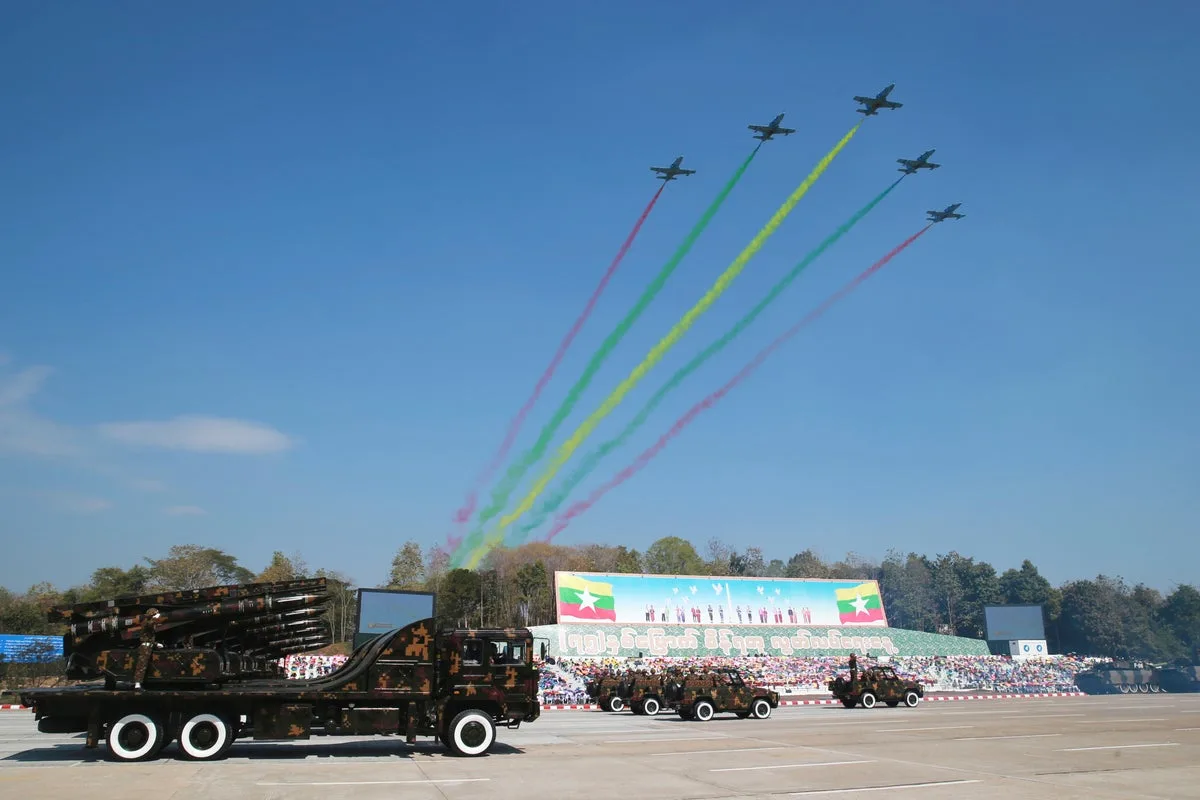
Myanmar's military regime is employing sophisticated maritime deception tactics, reminiscent of sanctioned nations like Russia and Iran, to clandestinely import aviation fuel for its devastating air attacks in the ongoing civil war, according to a major new report from Amnesty International.
Sanction-Busting Tactics Exposed
The London-based human rights organisation revealed on Monday that its comprehensive investigation, analysing trade data, shipping records, satellite imagery and port authority information, indicates the Myanmar junta is utilising "ghost ships" to import jet fuel. These vessels deliberately disable their Automatic Identification System (AIS) location-tracking radios to avoid detection by international monitors.
Sharp Increase in Fuel Imports
Amnesty's report documents that Myanmar imported over 109,000 tonnes of aviation fuel during 2025 alone. This represents a staggering 69% increase compared to the previous year and marks the highest volume since the military overthrew the democratically elected government of Aung San Suu Kyi in 2021.
"Five years after the coup, our analysis shows that the Myanmar junta continues to evade sanctions and find new ways to import the jet fuel it uses to bomb its own civilians," stated Montse Ferrer, Amnesty's regional research director. "2025 was the deadliest year on record for aerial attacks since the junta takeover."
Civilian Casualties Mount
Opposition groups fighting Myanmar's military government have repeatedly emphasised that cutting off aviation fuel supplies represents a crucial strategy for limiting the regime's war-making capabilities. While exact numbers of civilians killed specifically in airstrikes remain unclear, the Assistance Association for Political Prisoners – a monitoring organisation tracking political arrests and casualties – reports that more than 7,700 civilians have been killed by state security forces since the military takeover sparked nationwide resistance.
Ineffective International Sanctions
According to Amnesty's findings, various international sanctions led primarily by the United States and Britain have proven largely ineffective in halting the aerial assaults. These attacks target communities with no meaningful defence capabilities against military aircraft. The organisation notes that the military's actions receive additional support through arms supplies, predominantly from Russia and China, both major allies of Myanmar's ruling generals.
Detailed Investigation Findings
Amnesty's investigation confirmed at least nine separate shipments of aviation fuel delivered to Myanmar by four different vessels between mid-2024 and the end of 2025. The research uncovered significant changes in how aviation fuel enters the country during this period, including:
- Utilisation of ghost ships with AIS radios either switched off or broadcasting false positional data
- Vessels that repeatedly alter their names, flags or ownership details
- Frequent use of open-water ship-to-ship transfers rather than conventional port and terminal loading
Myanmar's military government has not responded to questions regarding Amnesty's report. These evasion tactics mirror methods employed for several years by oil exporters including Iran, Venezuela and particularly Russia following sanctions imposed after its 2022 invasion of Ukraine. North Korea, an oil importer, has also been reported to utilise similar "shadow fleet" operations.
Supply Chain Obscurity
While Amnesty acknowledged it could not definitively confirm the suppliers or origins of the aviation fuel, the organisation noted that the evasion techniques "mirror methods commonly used by tankers that move sanctioned fuel from Iran." The human rights group has called for a comprehensive ban on shipping aviation fuel to Myanmar and urged all companies involved in the supply chain to withdraw their participation to prevent further civilian harm.
Historical Context and Previous Revelations
A previous Amnesty report issued in 2022 revealed that multinational companies based in Singapore and Thailand formed part of a supply chain delivering aviation fuel to Myanmar. Following sanctions imposed on elements of this supply chain, "fuel was bought and resold multiple times to obscure its origin," according to the organisation. At least nine shipments reached Myanmar during 2023 and early 2024, with many routed through a Vietnamese storage facility, demonstrating deliberate sanctions-evasion strategies.






