Myanmar Junta Expels Timor-Leste Diplomat Over War Crimes Investigation
Myanmar's military government has expelled the top diplomat from Timor-Leste after the Southeast Asian island nation initiated a legal case against the regime for alleged war crimes and crimes against humanity. This move represents a significant escalation in regional tensions, as Timor-Leste becomes the first member of the Association of Southeast Asian Nations (ASEAN) to launch such an investigation against a fellow bloc member.
A Bold Diplomatic Stand
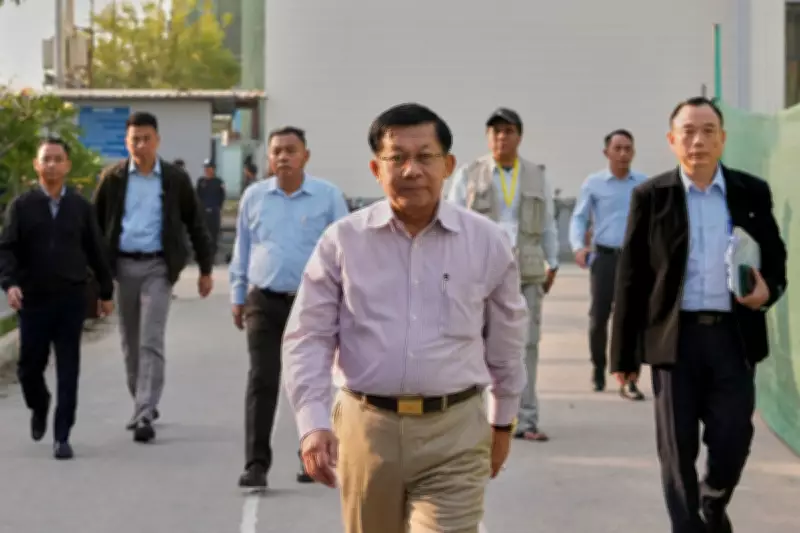
Timor-Leste, which gained independence from Indonesia in 2002 and joined ASEAN in 2025, has taken a bold stance by accepting a criminal complaint from the Chin Human Rights Organization (CHRO). The complaint targets Myanmar's military leadership, including Senior General Min Aung Hlaing, for atrocities committed during the ongoing civil war. Myanmar's foreign ministry has informed Elisio do Rosario de Sousa, the charge d'affaires at Timor-Leste's embassy in Yangon, to leave the country by 20 February.
The junta has condemned the investigation as a "great disappointment" and accused Timor-Leste of violating ASEAN Charter principles that emphasize sovereignty and non-interference. This diplomatic rift follows Myanmar's earlier threats to obstruct Timor-Leste's ASEAN membership bid, which ultimately failed when Timor-Leste was admitted as the bloc's 11th member in October last year.

Details of the Allegations
The CHRO's case includes harrowing evidence of human rights abuses, such as gang rape, the massacre of ten individuals including a journalist, the deaths of Christian religious figures, and airstrikes targeting hospitals and religious buildings. A senior Timorese prosecutor has been appointed to examine the criminal file presented by the organization, which represents Myanmar's Chin ethnic minority.
Timor-Leste's President Jose Ramos-Horta, a Nobel Peace Prize laureate and outspoken critic of Myanmar's military, has championed this legal action. Despite Myanmar's strong condemnation through diplomatic channels, Ramos-Horta engaged with CHRO and accepted their complaint, reinforcing Timor-Leste's commitment to international accountability.
Broader Context and Implications
Myanmar's military, which seized power in a 2021 coup overthrowing Aung San Suu Kyi's democratically elected government, faces longstanding accusations of war crimes and rights abuses against ethnic minorities. The coup triggered massive nonviolent resistance that has since evolved into a full-scale civil war, with various militia groups now controlling parts of the country.
This investigation adds to Myanmar's legal challenges, as the regime already defends itself at the International Court of Justice in The Hague over genocide allegations against the Rohingya minority, a case brought by The Gambia. Timor-Leste asserts that under its domestic laws, its courts have jurisdiction to investigate and prosecute serious international crimes regardless of where they occurred or who committed them.
With a population of 1.4 million, Timor-Leste (also known as East Timor) is located on the eastern half of the island of Timor, northwest of Australia, and shares a land border with Indonesia. This case highlights the growing international pressure on Myanmar's junta and the complex dynamics within ASEAN as member states navigate issues of sovereignty and human rights.